

 InfoSearched
Every soldier who makes it through Army basic training has one memory in common: the moment their eyes, nose, and throat caught fire inside a sealed room full of gas.
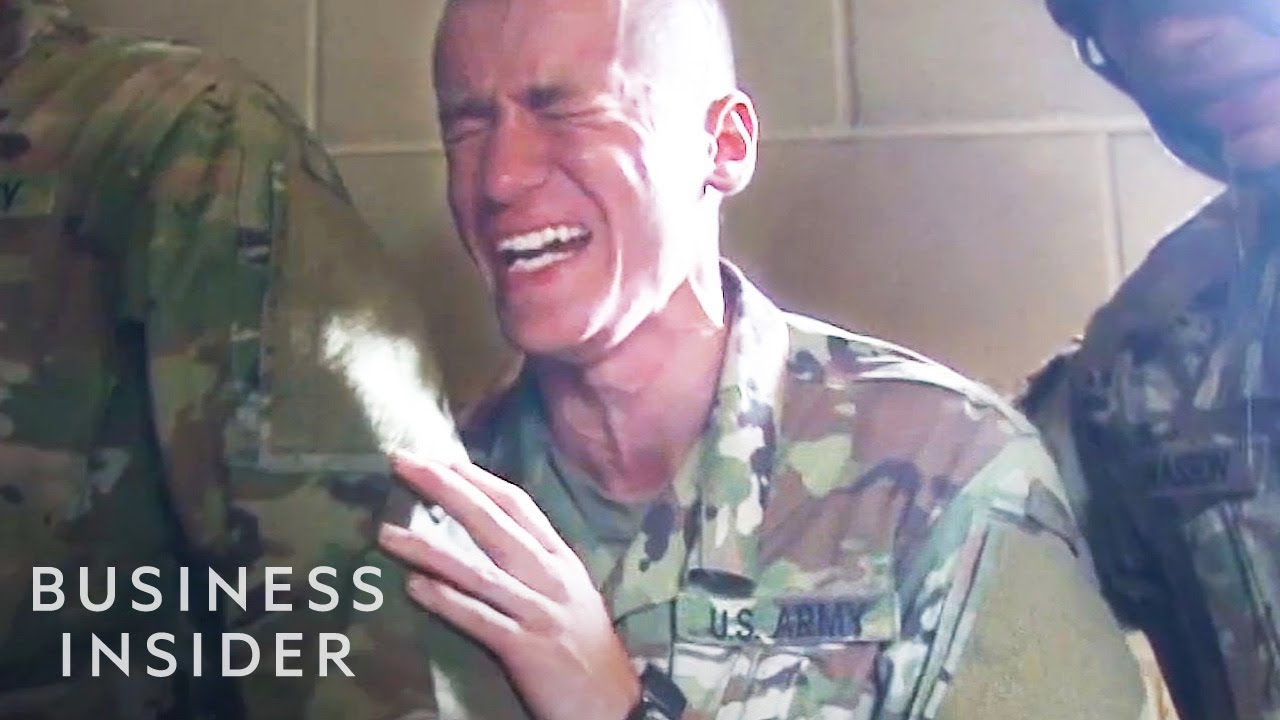
Business Insider senior video correspondent Graham Flanagan spent four days embedded at the Maneuver Center of Excellence on Fort Benning, the sprawling Army installation near Columbus, Georgia, to document one of boot camp’s most feared rites of passage. His “Boot Camp” series episode goes inside the gas chamber where recruits are deliberately exposed to CS gas, the same riot-control agent used in tear gas canisters, to prove their protective masks actually work.
- Recruits enter the chamber wearing standard-issue protective masks and spend roughly five minutes performing physical movements while CS tablets burn and fill the room with gas.
- Drill sergeants order trainees to break the seal or remove their masks entirely inside the gas, forcing them to recite their name, rank, and Social Security number before they’re allowed to exit.
- Once outside, recruits are told not to touch their eyes; instead they flap their arms, keep their eyes open, and breathe deeply so fresh air clears the irritant within minutes.
Inside the Chamber
The exercise takes place in a sealed room where instructors burn CS tablets, or ortho-chlorobenzylidene-malononitrile, the compound that gives tear gas its bite. Recruits file in wearing their gas masks and run through basic drills for about five minutes, a stretch designed to build muscle memory and confidence that the mask’s seal will hold under stress. It’s less about combat simulation than proof of concept: the equipment works, and soldiers can trust it with their lives.
That trust only means something once it’s tested. So drill sergeants make recruits break the mask’s seal, or strip it off altogether, while still standing in the gas. Some are made to answer questions or recite personal information, forcing them to inhale the fumes mid-sentence. It’s the same logic that runs through other punishing benchmarks Business Insider has documented, including the grueling entry standards covered in the Air Force Special Warfare PAST test: put the stress in front of the trainee now, under supervision, so panic doesn’t take over later when it’s not a drill.
Physiological Effects of CS Gas
The physiological hit is immediate and unmistakable. Exposed skin burns, eyes stream and swell shut, and recruits break into violent coughing fits accompanied by heavy mucus and saliva discharge. It’s uncomfortable by design, a controlled dose of exactly the kind of chemical agent a soldier might encounter in a contaminated environment overseas.
Recruits are ordered to remove their masks and recite their name, rank, and Social Security number before drill sergeants let them out.
That’s the entire point of what the Army calls the confidence chamber: recruits leave knowing exactly how fast an unprotected soldier goes down, and exactly how much protection a properly sealed mask provides. There’s no ambiguity left after four minutes of burning eyes and a locked mask you can trust.
Getting Out Without Making It Worse
The exit is its own lesson. Drill sergeants bark at recruits not to rub or touch their eyes, since that only grinds the irritant deeper and prolongs the pain. Instead, trainees stumble into the open air flapping their arms, forcing their eyes to stay open, and taking deep breaths. Within a few minutes, oxygen exposure flushes the CS gas out of their system, and recruits who looked like they were falling apart seconds earlier are back on their feet.
It’s a small, deliberately engineered crisis with a fast recovery, which is exactly why the Army keeps using it. Recruits find out in real time that the panic passes, the mask works, and they can function through something that felt unbearable thirty seconds before. That kind of lesson shows up again and again across the military’s toughest training pipelines, the same throughline Business Insider traced in its look at why you never mess with elite special forces.
Flanagan’s four days on the ground at Fort Benning capture the whole arc in real time — recruits filing in nervous, gasping their way out seconds later, and walking away from the confidence chamber having already survived the worst part of the story they’ll tell for years.








I Will Survive | Gloria Gaynor | funk cover ft. Mario Jose
Most PAINFUL experience of my life ???? Samoan Traditional TATTOO
How To Install Epoxy Floors In A 2000 sq ft Home | Step By step Explained
School Bus Converted To Incredible Off-Grid Home
Top 5 Deadliest Substances on Earth