

 InfoSearched
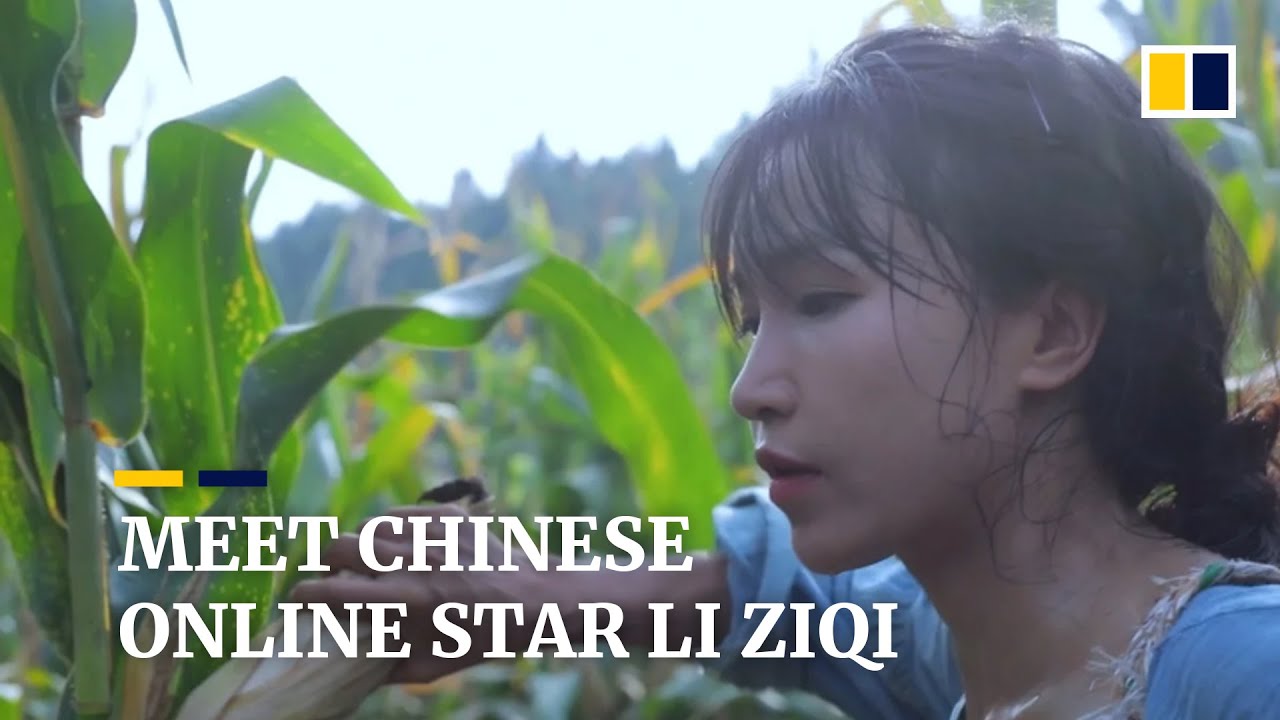
A young woman chopping bamboo and stirring a wood-fired wok in a Sichuan valley has become one of the most-watched Chinese creators on the internet.
Li Ziqi doesn’t narrate her videos in English, rarely speaks at all, and still built an audience that spans continents by filming herself planting rice, carving furniture and cooking multi-course meals from scratch in the mountains of Pingwu County. Her clips move at the pace of the seasons rather than the news cycle, and that’s precisely the appeal for viewers worn down by city life. By early January 2020, that formula had turned her into a genuine cultural export.
- Born Li Jiajia in July 1990, she was raised in poverty by her grandparents after being orphaned early, then worked city jobs before returning to her village in Pingwu County, Mianyang, Sichuan province, in 2012 to care for her ailing grandmother.
- She began posting to the Meipai platform in 2015 and launched her YouTube channel in 2017; by early 2020 that channel had surpassed 7 to 8 million subscribers, making her one of the platform’s most-followed Chinese creators, while her Sina Weibo following topped 20 million.
- In December 2019, state broadcaster CCTV and the People’s Daily singled her out as an effective cultural ambassador, praising her for projecting soft power internationally without speaking a word of English.
From City Jobs to the Sichuan Countryside
Li Ziqi’s story didn’t start with a production budget. Orphaned young and raised by her grandparents, she left the countryside for city work before circumstances pulled her back in 2012, when she returned to her home village to look after her grandmother’s declining health. What began as a practical decision to care for family turned into the raw material for a video career built almost entirely on things she already knew how to do: farming, foraging, preserving, building.
That backstory gives her videos a credibility that a studio set couldn’t fake. When she hand-carves a wooden chair or ferments rice wine from grain she grew herself, it reads as documentation of a life already being lived, not a performance staged for the camera. Viewers who followed her from the early Meipai days in 2015 into her 2017 YouTube debut watched that authenticity scale from a regional following into a global one.
The Craft Behind the Camera
Each video is less a tutorial than a process, often stretching a single dish or object across an entire episode: growing the vegetables, harvesting them, cooking them, and finally eating in near-silence at a rough wooden table. She’s made paper by hand, built furniture from raw timber, and brewed wine using traditional methods, all without cutting away to shortcuts. It’s slow television for viewers who don’t have slow lives of their own.
Li Ziqi has maintained that her videos simply represent a tranquil lifestyle and cultural heritage that modern people yearn to see.
That framing matters, because it’s her own explanation for why the format works. She isn’t selling nostalgia as a gimmick; she’s presenting it as something closer to a documentation of continuity, a way of living that existed long before smartphones and hasn’t entirely disappeared.
State Media Embrace and the Authenticity Debate
The praise from CCTV and the People’s Daily in December 2019 wasn’t incidental. Chinese state media has increasingly looked for figures who can carry a positive national image abroad without the friction of language or politics, and Li Ziqi fit the brief: a rural creator whose videos require no subtitles to land emotionally. That official embrace, though, ran alongside sharper questions from critics and cultural commentators over whether her idyllic Sichuan is representative of rural China at all, or a gentrified fantasy that skips past the harder realities of agricultural poverty.
Both things can be true at once. Her cooking and craft videos sit comfortably alongside other slow-living and self-sufficiency content that’s found an audience well beyond China, from off-grid builds to permaculture projects like this quarter-acre permaculture setup, and hand-craft pieces such as this pine-needle basket build. The pull isn’t unique to China; it’s the same appetite for visible, tactile skill that’s driving attention to rural and traditional-craft content everywhere.
What’s notable heading into 2020 is the trajectory rather than any single video: a channel that didn’t exist before 2017 sitting past 7 million subscribers and a Weibo audience over 20 million, with state media now actively pointing to her as proof that quiet, wordless content can travel further than any officially sanctioned campaign.





Searching The Maya Underworld
Beautiful close encounter with manatees seeking refuge in Florida.
The Man Behind the Most Grueling Footrace on Earth
The Darkest Black on Earth? Why Scientists & Artists Want the World’s Blackest Substances
Stealth Camping In Airport Parking Lot With SUV (Highly Patrolled)