

 InfoSearched
A leather craftsman just proved that a $5,000 Hermès wallet is mostly markup, not magic.
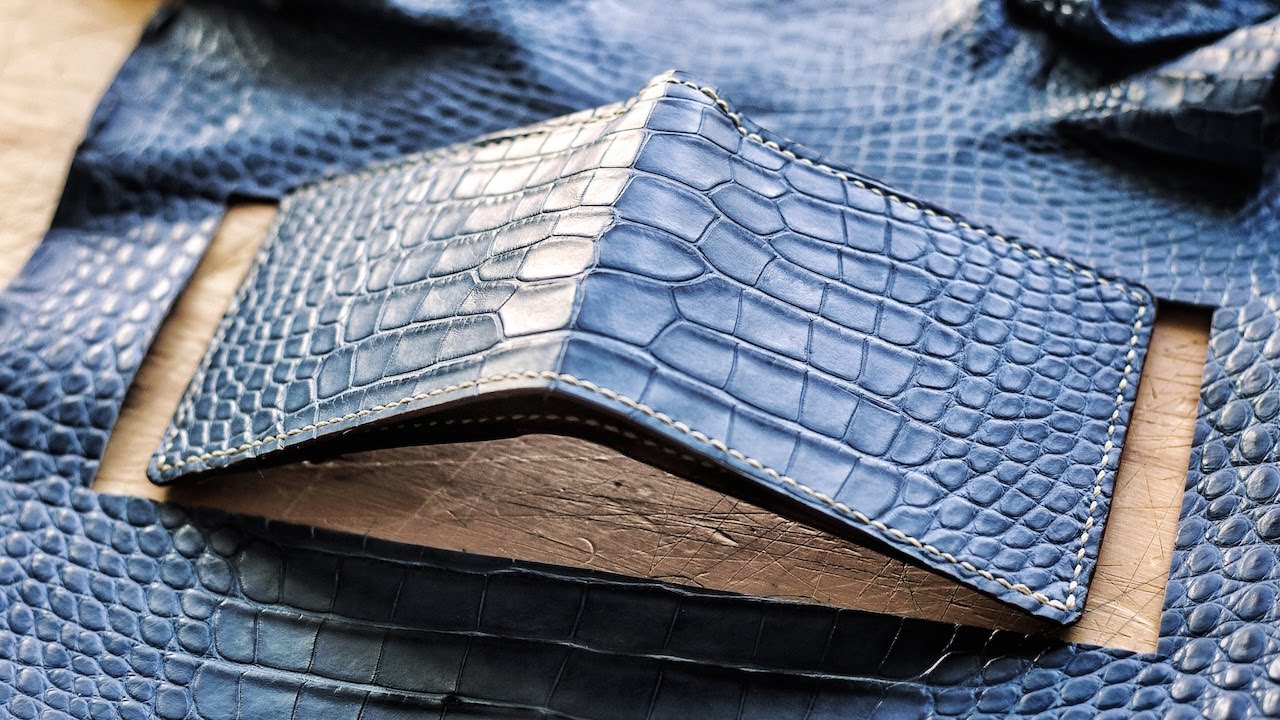
Eric Heins, the independent leathercraft artisan behind Corter Leather, set out to answer a question a lot of luxury shoppers quietly ask themselves: what does the stuff inside a five-figure accessory actually cost? In his video “We Made a $5,000 Hermès Wallet for $70!” Heins builds a wallet inspired by an exotic Hermès design, then tallies the receipts. He isn’t faking logos or selling counterfeits — he’s showing his work.
- Heins built a wallet modeled on an exotic Hermès design that retails for upwards of $5,000.
- The direct bill of materials — leather, edge paint, thread, and hardware — came to approximately $70.
- The build required cutting, skiving, lining, saddle stitching, and multi-layer edge burnishing to match the luxury piece’s structure.
Breaking Down the Bill of Materials
Heins sources high-grade leather along with the edge paints, waxed thread, and hardware needed to replicate the wallet’s structural complexity — the layered panels, card slots, and bill compartments that give a Hermès piece its heft. Once he adds it all up, the number lands right around $70, a figure he lays out piece by piece rather than asserting outright. For anyone who’s priced a single hide of quality vegetable-tanned leather, that total is more believable than it sounds.
The gap between that $70 and the $5,000 sticker isn’t a mystery Heins tries to explain away — he uses it as the entire point of the video. Raw materials, he demonstrates, are a rounding error next to what the finished product costs at retail.
The Handwork Behind the Markup
What separates a $70 pile of leather from a wallet that resembles a Hermès original is bench time. Heins walks through precise cutting to pattern, skiving the leather down to reduce bulk at the folds, lining each panel, and saddle stitching by hand — the same two-needle technique saddlers have used for over a century because it won’t unravel like machine stitching if a thread breaks. He finishes the edges in multiple passes of burnishing and paint, the detail that gives high-end leather goods their glassy, rounded edge instead of a raw-cut one.
The physical materials run about $70 — the rest of that $5,000 price tag is labor, skill, pattern development, tooling, and the name on the box.
Heins is upfront that this labor, along with pattern development and tooling overhead, accounts for the bulk of what a customer actually pays for. He’s not arguing the wallet is a rip-off — he’s arguing the price reflects craftsmanship and brand prestige far more than it reflects the cost of hides and thread.
An Educational Build, Not a Knockoff
Corter Leather frames the project as a teaching tool rather than a counterfeiting how-to. Heins partnered with leathercraft suppliers to provide templates, tools, and materials so hobbyists could practice the same high-end benchwork — skiving, saddle stitching, edge finishing — without buying anything branded. The goal is skill-building, aimed at leatherworkers who want to understand luxury-grade construction rather than pass off a fake.
That approach fits a broader trend of makers pulling back the curtain on what expensive goods actually cost to build, the same instinct that drives builders to publish real numbers on how much a custom structure costs versus what it sells for. Heins applies that same materials-versus-price breakdown to a wallet instead of a house.
Significance of the Seventy Dollar Figure
Heins never claims his build is indistinguishable from a real Hermès wallet, and he doesn’t need to for the video’s point to land. The saddle stitching, the skived edges, the burnished layers — all of it takes real hours and real skill to execute well, and that’s exactly what a customer is paying for when they buy the original. The $70 figure isolates one variable: raw materials. It was never meant to isolate the price of expertise.
Corter Leather’s channel has built its audience on exactly this kind of transparent, tools-out breakdown of luxury leathergoods, the same curiosity that draws readers to stories about how legacy luxury houses built their reputations in the first place. Heins isn’t done with these teardown builds — expect the next one to pick apart whatever six-figure leather good catches his eye next, with the same $70-ish bill of materials waiting underneath.








The Man Living in Complete Isolation for 40 Years (Part 4/4) | Far Out
Monaco – The secrets of a true luxury stay – LUXE.TV
I was sex trafficked for years. Brothels are hidden in plain sight
Magical Hobbit-Like Eco Cave House
What Army Recruits Go Through At Boot Camp