

 InfoSearched
There’s exactly one place on Earth where you can move in tomorrow, no visa, no work permit, no residency application — as long as you can survive the polar night.
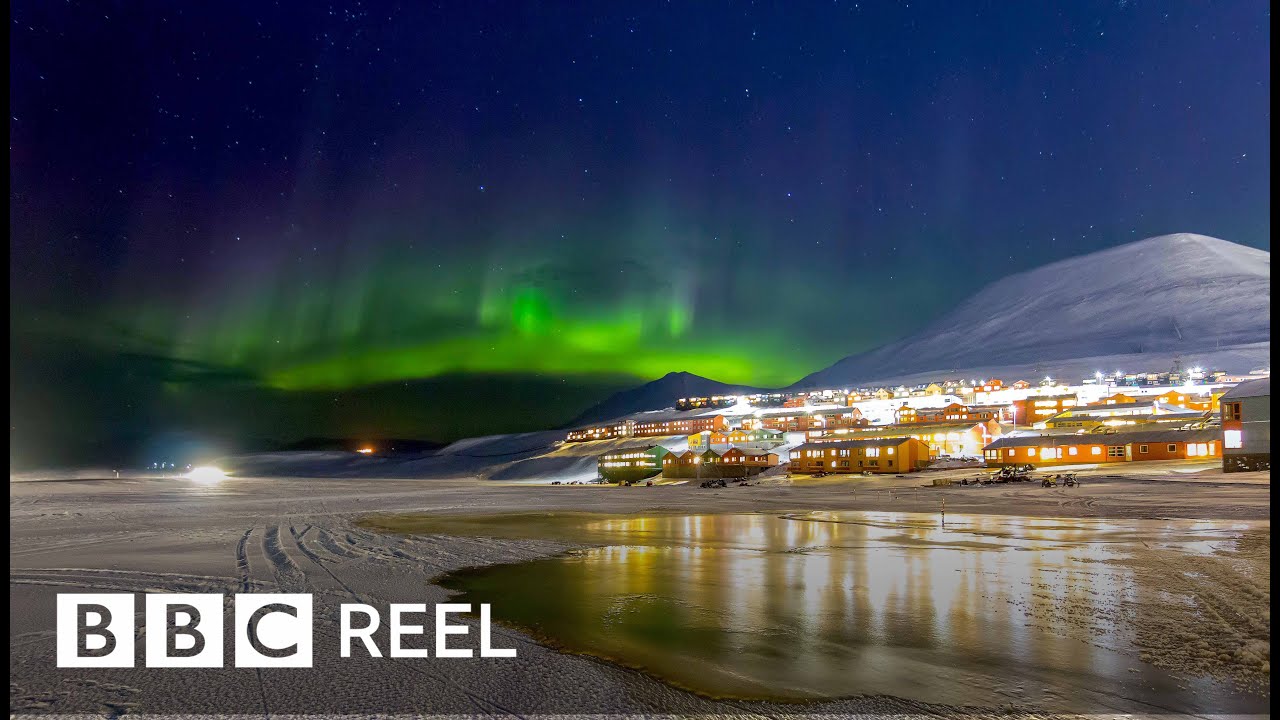
Longyearbyen sits at 78 degrees north, the administrative hub of Norway’s Svalbard archipelago and the world’s northernmost permanently inhabited town. Roughly 2,500 people from about 50 different countries live there, drawn by a legal quirk that exists nowhere else on the map: anyone, from any nation, can show up and stay indefinitely without a visa. BBC Reel’s feature on the settlement digs into how that open-border arrangement actually works — and what it costs the people who take it.
- Under the 1920 Svalbard Treaty and Norway’s 1925 Svalbard Act, the mainland Norwegian Immigration Act simply doesn’t apply — Norway holds sovereignty but treats treaty signatories and non-signatory nationals the same, granting open residency to all.
- The Governor of Svalbard can expel anyone who can’t demonstrate financial self-sufficiency or who breaks local rules, since there is no public welfare safety net for unemployed non-citizens on the archipelago.
- Time spent living in Longyearbyen does not count toward Norwegian mainland permanent residency or citizenship, and because Svalbard sits outside the Schengen Zone, travelers transiting mainland Norway may still need a double-entry Schengen visa.
An Open Door With No Visa Stamp
The legal mechanics are almost absurdly simple compared to how immigration works everywhere else: there’s no work permit application, no residence card, no points system. A person can land in Longyearbyen and, provided they line up a job and a place to live, start their life there with none of the paperwork that would apply on the Norwegian mainland just a few hundred miles south. That framework traces directly back to the Svalbard Treaty signed in 1920 and the Svalbard Act Norway passed in 1925 to govern the territory.
What makes it unusual is that Norway doesn’t distinguish between treaty countries and everyone else. In practice, a Thai chef, a Filipino hotel worker, or a Russian coal miner has the same right to move to Longyearbyen as a Norwegian or a Swede. That’s the detail that separates this corner of the Arctic from any other “easy visa” destination people talk about — there isn’t a visa category to qualify for in the first place.
The Fine Print Nobody Mentions
The catch is that “no visa required” doesn’t mean “no conditions.” Newcomers have to secure their own employment and housing before or immediately after arriving, and they need to prove they can support themselves financially. Svalbard has no welfare system for people who lose their jobs, so the Governor of Svalbard holds legal authority to expel residents who can’t sustain themselves or who violate local regulations.
There’s no safety net waiting if the job falls through — just a governor with the power to send you home.
That enforcement mechanism is what keeps Longyearbyen functional despite having essentially no immigration screening. It’s a self-selecting population: people who can’t hold down work or housing don’t stay long, because there’s no bureaucracy to catch them if they fall.
Life Under the Polar Night
Even for those who qualify to stay, daily existence in Longyearbyen is shaped entirely by its geography. Residents deal with months of polar night when the sun doesn’t rise at all, brutal cold, and a standing rule that anyone heading outside the settlement boundaries carries a firearm because of the risk of encountering polar bears. It’s not a lifestyle destination in the way a warm-weather visa-free zone might be — it’s a genuinely harsh Arctic outpost that happens to have thrown its doors open to the world.
That mix of extreme conditions and total legal openness is part of why the population skews so international — around 50 nationalities packed into a town of 2,500 — while also staying fairly small. The environment itself does a lot of the filtering that immigration law would normally do elsewhere. It’s a dynamic not unlike the extreme self-reliance required on the smallest inhabited islands in the Caribbean, just inverted for cold instead of isolation at sea.
Lack of Further Career Progression
One detail the BBC Reel piece is careful to spell out: none of the time spent in Svalbard counts toward permanent residency or citizenship on the Norwegian mainland. Longyearbyen is a closed loop — you can live there for decades under the treaty’s open-border terms, but it never converts into a foothold in Norway proper. And because Svalbard sits outside the Schengen Zone entirely, anyone connecting through mainland Norway to get there may still need a double-entry Schengen visa if their passport requires one for Norway itself.
It’s a reminder that “visa-free” here is a very specific, very narrow legal carve-out — not a backdoor into the EU’s passport-free travel zone, and not a stepping stone into Norwegian citizenship. It’s its own self-contained arrangement, similar in spirit to the unusual property and residency loopholes chronicled in Italy’s $1 homes, except Svalbard’s version applies to an entire town rather than a handful of abandoned houses.
What keeps Longyearbyen from turning into a magnet for anyone dodging immigration rules elsewhere is the arithmetic: no job, no housing, no welfare cushion, and a governor who can put you on the next flight out. The visa-free part is real. Surviving the rest of it is the actual barrier.









We Invited 50 Followers to JOIN US ON SAFARI!!
Alaskan 12×16 Shed Tiny House – Living In Style On A Budget
How To Install Epoxy Floors In A 2000 sq ft Home | Step By step Explained
GoPro Awards: Million Dollar Challenge Highlight in 4K
Cuba’s Scariest Food!!