

 InfoSearched
Madagascar’s forests hide a predator that looks like nothing else on Earth.
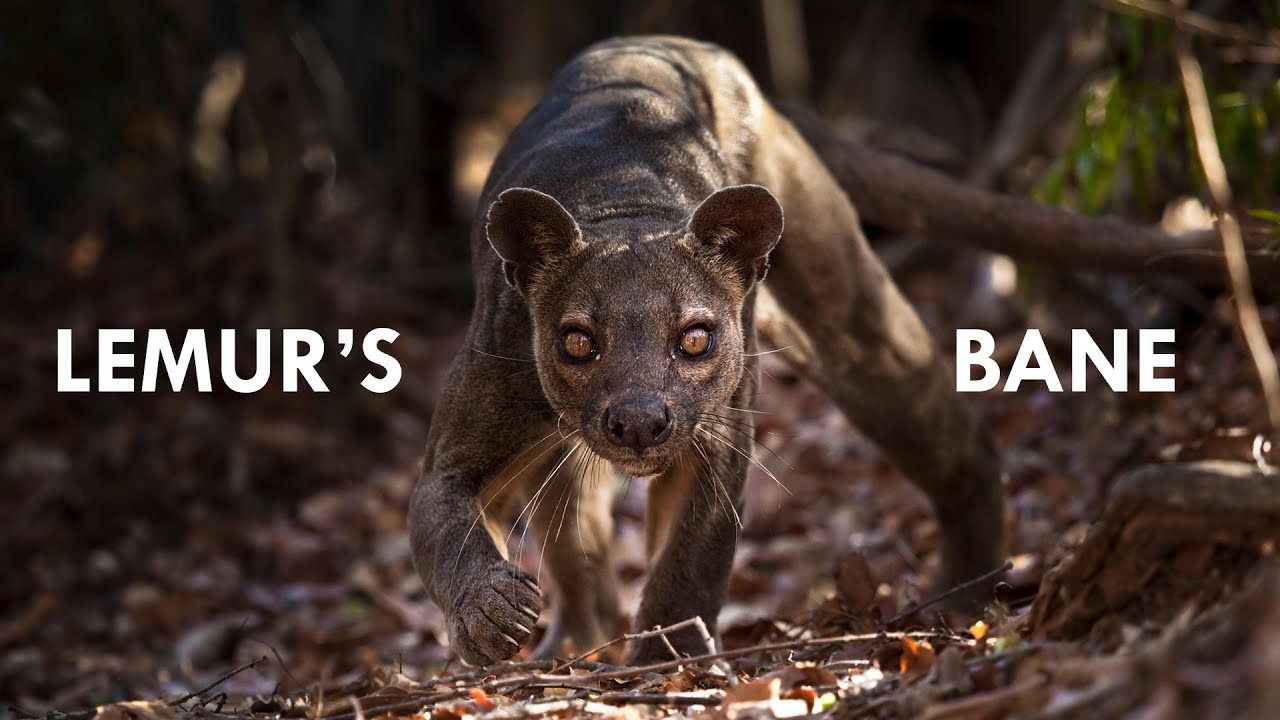
It moves like a cat, hunts like a mongoose, and sprints headfirst down tree trunks that would send most mammals tumbling. Animalogic’s documentary feature Fossa: The King of Madagascar breaks down the biology behind Cryptoprocta ferox, the island’s apex predator, and explains why millions of years of isolation produced an animal that scientists still struggle to classify cleanly. There’s no shortage of odd creatures on Madagascar, but none sit atop the food chain the way the fossa does.
- Fossas measure up to 3 feet (70-80 cm) head-to-body with a counterbalancing tail nearly as long, and males typically outweigh females within the 6-to-12-kilogram range.
- Lemurs make up more than 50 percent of the fossa’s diet, supplemented by birds, rodents, tenrecs, and reptiles.
- The species is listed as Vulnerable on the IUCN Red List due to habitat fragmentation, deforestation, agricultural expansion, and retaliatory hunting.
An Apex Predator Built by Isolation
Madagascar split off from mainland Africa long before true wild felines ever evolved, which left an empty niche at the top of the food chain. The fossa filled it through convergent evolution, developing a body plan that looks like a cross between a cougar and a mongoose without actually belonging to either family. Taxonomically, it sits in Eupleridae, a carnivore family closely related to Herpestidae — the mongooses — not to cats at all.
That distinction matters because it explains why the fossa behaves the way it does. Without competition from big cats, it evolved to dominate both the forest canopy and the forest floor, a dual-terrain hunting style that few predators anywhere else on the planet need to master.
The Anatomy Behind the Myth
The fossa’s build is engineered for vertical hunting. Semi-retractable claws and ankle joints that rotate roughly 180 degrees let it climb trees with ease and then run straight down a trunk headfirst, a maneuver that would be a death sentence for most arboreal mammals. Robust shoulders provide the strength for that descent, while the long tail acts as a counterbalance during high-speed pursuits through the canopy.
Documentaries covering unusual predator adaptations, like Animalogic’s own breakdown of The Blind Assassin of the Desert, tend to circle back to the same theme: isolation breeds specialization. The fossa is a textbook case, built almost entirely around solving Madagascar’s specific canopy-to-ground hunting problem.
Hunting Grounds and Diet
Lemurs constitute the fossa’s primary food source, accounting for more than half of its overall diet. It rounds that out with birds, rodents, tenrecs, and reptiles, making it the only mammalian predator on the island capable of consistently taking down adult lemurs of significant size. Fossas are cathemeral, meaning they hunt across both day and night cycles rather than sticking to a strict nocturnal or diurnal pattern.
They’re also solitary and territorial, using scent markings to claim and defend large individual ranges. That territoriality, combined with their agility, is what lets a single fossa control access to prey across a wide stretch of forest — a dynamic not unlike the predator hierarchies covered in Here’s What a Lion Does After Being Banished From the Pride, where territory determines survival as much as strength does.
A Mating Ritual Unlike Any Other
Fossa reproduction is one of the stranger rituals in the mammal world. Multiple males converge on a single dominant female perched high in what’s known as a traditional mating tree, engaging in aggressive territorial displays before copulation that can stretch on for several hours.
Female fossa juveniles temporarily develop a pseudo-penis that later recedes — an evolutionary safeguard believed to shield young females from aggressive adult males.
That transient masculinization is a rare enough trait in mammals that it’s become one of the most studied aspects of fossa biology, offering researchers a case study in how predator societies evolve protective mechanisms for their youngest members.
A Vulnerable Future
The IUCN Red List classifies the fossa as Vulnerable, and the pressures are straightforward: habitat fragmentation, rampant deforestation, and agricultural expansion are shrinking the forest corridors the species depends on for both hunting and its territorial mating structure. Retaliatory hunting by farmers responding to livestock losses adds another layer of pressure on top of habitat loss.
Because the fossa sits at the top of Madagascar’s food chain, its decline has ripple effects across the ecosystem it regulates — particularly for the lemur populations it keeps in check. Conservationists tracking the species point to forest protection, rather than any single intervention, as the factor that will determine whether fossa numbers stabilize in the coming years.









I Built My House By Myself – 3 Year Timelapse – Off Grid – Debt Free
EJ is 18. He told me he has been homeless for 11 years.
10 FASHION TRENDS FOR 2019 // Fashion Mumblr
Breeding Maggots in a Tree (Auto Fish ‘Vending Machine’!) | Survival Fishing Challenge
36 FUNNY FOOD LIFE HACKS AND PRANKS || Easy Recipes, Cooking Tips And Kitchen Hacks