

 InfoSearched
New York City flushes away roughly a billion gallons of wastewater a day, and almost a fifth of it runs through a single plant on the edge of Brooklyn.
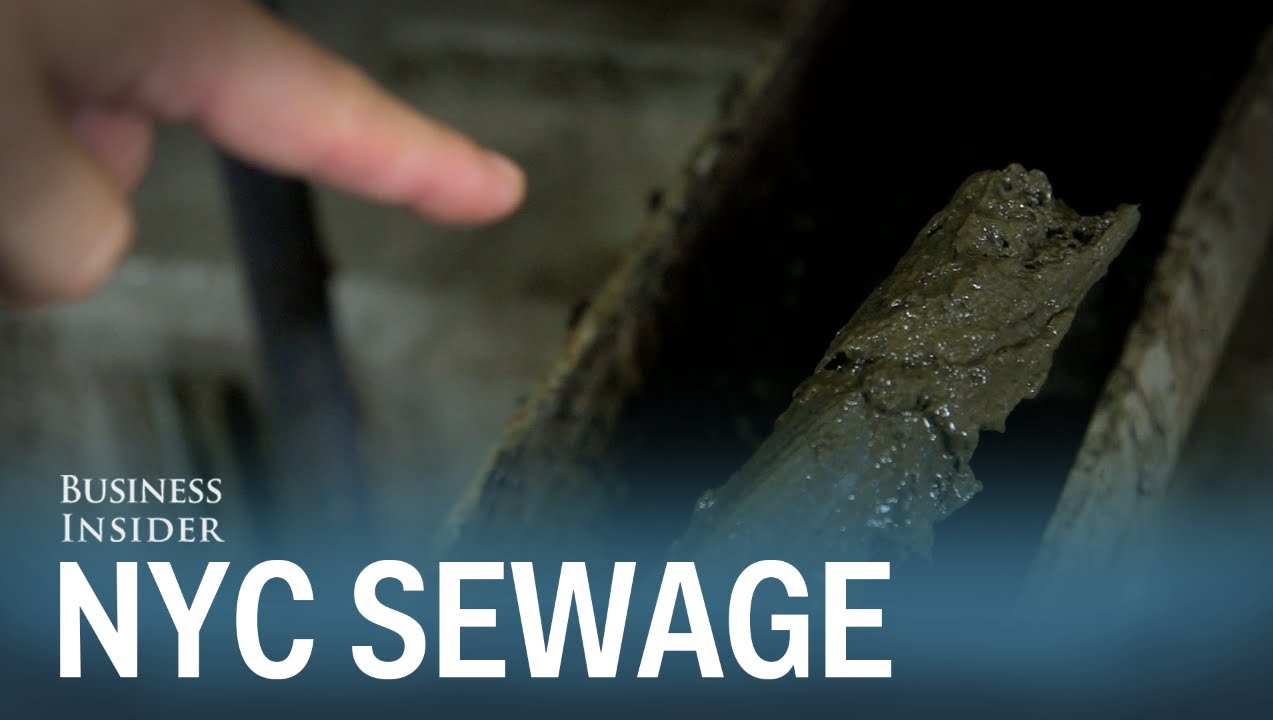
Every toilet flush, shower drain, and kitchen sink in New York City feeds into a sprawling underground network that most residents never think twice about. With 8.4 million people generating sewage around the clock, the city relies on 14 wastewater treatment plants scattered across the five boroughs to keep that flow from turning into a public health disaster. A Business Insider field report went inside the largest of them, the Newtown Creek Wastewater Treatment Plant in Greenpoint, Brooklyn, to trace exactly where all that waste goes — and what happens to it before it reaches the harbor.
- Newtown Creek serves more than 1 million residents across northern Brooklyn, Queens, and lower Manhattan, treating an average of 250 million gallons of wastewater daily with a peak capacity of 310 million gallons — about 18 percent of New York City’s total wastewater flow.
- The plant purifies sewage in stages: mechanical bar screens and grit chambers pull out trash and debris, primary settling tanks separate sludge and skim off lighter material, and aeration tanks use oxygen and microorganisms to break down organic waste before disinfection and release into local waterways.
- Its signature 140-foot stainless-steel “digester eggs,” designed by Ennead Architects, heat concentrated sludge to about 98 degrees Fahrenheit so bacteria can decompose it without oxygen, producing biogas and cutting pathogen levels.
Final Destination of City Sewage
Newtown Creek isn’t just the biggest of the city’s 14 plants — it’s the workhorse. Handling up to 310 million gallons on its busiest days, the facility processes wastewater piped in from three boroughs before releasing treated effluent back into the surrounding waterways. That single plant accounts for close to one-fifth of everything New York flushes on a given day, a scale that puts it in the same conversation as the city’s biggest infrastructure projects, including massive residential builds like Building New York’s $200M Apartment.
The Multi-Step Purification Process
Raw sewage arriving at Newtown Creek doesn’t go straight into any tank — it first passes through mechanical bar screens and grit chambers that strip out trash, plastics, and coarse debris. From there, primary settling tanks let heavier solids sink into sludge while lighter matter gets skimmed off the surface. The water then moves into aeration tanks, where activated sludge introduces oxygen and microorganisms that biologically digest the remaining organic waste, before the effluent is treated, disinfected, and discharged into local waterways.
Inside the Digester Eggs
The plant’s most recognizable feature is a row of 140-foot stainless-steel digester eggs, designed by Ennead Architects and visible from the Brooklyn-Queens Expressway. Inside these anaerobic digestion tanks, concentrated sludge is heated to roughly 98 degrees Fahrenheit, where bacteria break down organic matter in the absence of oxygen — generating methane biogas and reducing pathogens in the process. One detail that surprised the reporting team touring the site: there’s remarkably little odor, thanks to industrial filtration systems designed to capture offensive gases before they escape.
Newtown Creek processes an average of 250 million gallons of wastewater a day, with capacity to handle up to 310 million — roughly 18 percent of New York City’s total sewage flow, all through one plant in Greenpoint.
The Overflow Problem That Modernization Hasn’t Solved
Newtown Creek completed a comprehensive modernization in 2014, but the plant — and the city’s broader sewer network — still has a weak spot. During heavy rainstorms, combined sewer overflows can overwhelm the system’s capacity, occasionally sending untreated runoff and wastewater directly into Newtown Creek and New York Harbor rather than through the full treatment process. It’s a limitation shared by aging infrastructure elsewhere, not unlike the engineering trade-offs seen in how waste is dealt with on the world’s largest cruise ship, where treatment systems also have to be built around hard capacity limits.
That overflow risk is the one thing a $1.6 billion-plus round of upgrades hasn’t fully erased: the next big rainstorm to hit the five boroughs will still test whether Newtown Creek’s 310-million-gallon ceiling holds, or whether Greenpoint’s creek takes the overflow again.








Quarantine at the Edge of the World
Is your campfire trying to kill you? Exploding Rocks & Concrete
Wearable Fashion Trends 2021 for Women Over 40
Watch This Caterpillar Turn Into A Puss Moth
Man captures all walks of life crossing log bridge