

Money-Laundering FBI Expert Rates 8 Money-Laundering Scams In Movies and TV | How Real Is It?
 InfoSearched
Hollywood loves a good money-laundering scheme, but a 26-year FBI veteran says most of the on-screen tricks aren’t nearly as easy as the movies make them look.
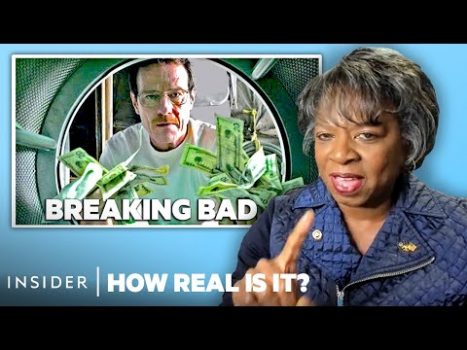
Retired FBI Special Agent Jerri Williams spent 26 years chasing major economic fraud and corruption cases before she started grading Hollywood’s homework. In Insider’s “How Real Is It?” series, released in early June 2021, Williams runs through eight money-laundering setups pulled from films and TV — Breaking Bad, Blood Diamond, The Wolf of Wall Street, Casino Royale, Ozark, Ocean’s Eleven, The Sopranos, and Mr. Robot — and scores each one against how federal financial-crime investigations actually work.
- Williams, a four-time recipient of the U.S. Attorney Award for Distinguished Service, evaluates laundering scenes from eight titles, including Breaking Bad‘s car wash, Ozark‘s shell companies, and Ocean’s Eleven‘s casino scheme.
- She defines money laundering as concealing the origin of illicit cash so criminals never have to explain where it came from — and points to cash-heavy businesses like strip clubs, restaurants, bars, laundromats, and salons as the classic vehicles for commingling dirty money with legitimate revenue.
- She explains two real legal hurdles prosecutors face: proving funds trace back to a Specified Unlawful Activity (SUA), and applying the federal “spending statute” once laundered money moves through a bank.
Grading the Cash Businesses
Williams starts where most laundering schemes actually start in real life: the cash register. Breaking Bad‘s reliance on a car wash to blend drug proceeds with legitimate receipts tracks closely with how real operators work, she notes, because high-volume, cash-intensive businesses are exactly what agents look for when they suspect laundering. Strip clubs, restaurants, bars, laundromats, and salons all serve the same function — they generate enough legitimate cash flow that a smaller amount of dirty money can hide inside it without raising immediate red flags.
That’s the mechanic Williams keeps returning to throughout the episode: it’s never really about hiding money outright, it’s about making illegal cash look like it came from somewhere boring and legal. Ozark‘s use of shell companies gets a similar nod for capturing that logic, even if the show compresses timelines and skips steps real operators can’t skip.
Money laundering, at its core, is about concealing where the money came from so nobody ever has to explain it.
Common Shortcuts in Movie Production
Higher-end schemes get more mixed marks. Williams weighs the diamond trade in Blood Diamond, the offshore accounts in The Wolf of Wall Street, the art auction in Casino Royale, and the real estate dealings woven through The Sopranos — all plausible avenues for laundering in the real world, she says, but each one glosses over how slow and paperwork-heavy these methods actually are for federal investigators to unwind. Real estate and art transactions move high-value assets in ways that can obscure a money trail, but building a prosecutable case still comes down to proving the cash tied back to a Specified Unlawful Activity in the first place.
Ocean’s Eleven‘s casino scheme fares better than expected under Williams’ review — casinos really have been used by organized crime to move money — while Mr. Robot‘s cryptocurrency angle gets credit as the most modern and increasingly common method agents now have to track.
The Legal Mechanics Hollywood Skips
Where the episode adds real value is in the procedure most scripts never bother to show. Williams explains the “spending statute,” the federal tool investigators lean on once laundered funds pass through a bank or financial institution, and the SUA threshold prosecutors have to clear before any laundering charge sticks. None of the films or shows she reviews dramatize that legal grind, because chasing paper trails and proving predicate crimes doesn’t make for gripping television — but it’s the actual job.
Williams draws these breakdowns from her own casework and her book, FBI Myths and Misconceptions: A Manual for Armchair Detectives, along with material she covers regularly on her podcast, FBI Retired Case File Review. Readers who want a deeper look at how dirty money actually moves through cash-heavy fronts can find more ground covered in How Mexican Drug Cartels Make Billions, and the same commingling tactics show up again in The Rise of Money Launderers on Snapchat and Instagram.
Williams doesn’t hand out a single failing grade across all eight — that’s the real takeaway. Hollywood mostly gets the “where” right and skips the “how long it takes and how many subpoenas it requires,” which is exactly the gap a 26-year fraud investigator is built to spot.







The Secret Darker Art of Dr. Seuss
Tiny House Concept Adapted Into Amazing Modern Home
The Tragedy of John Jones | Sealed Forever in a Cave
The Glass Artist Who Hides His Work All Around the World
LIFE HACKS for EMBARRASSING MOMENTS that ACTUALLY WORK