

 InfoSearched
Two men, hand tools, and ten days to raise a house the Anglo-Saxons would recognize.
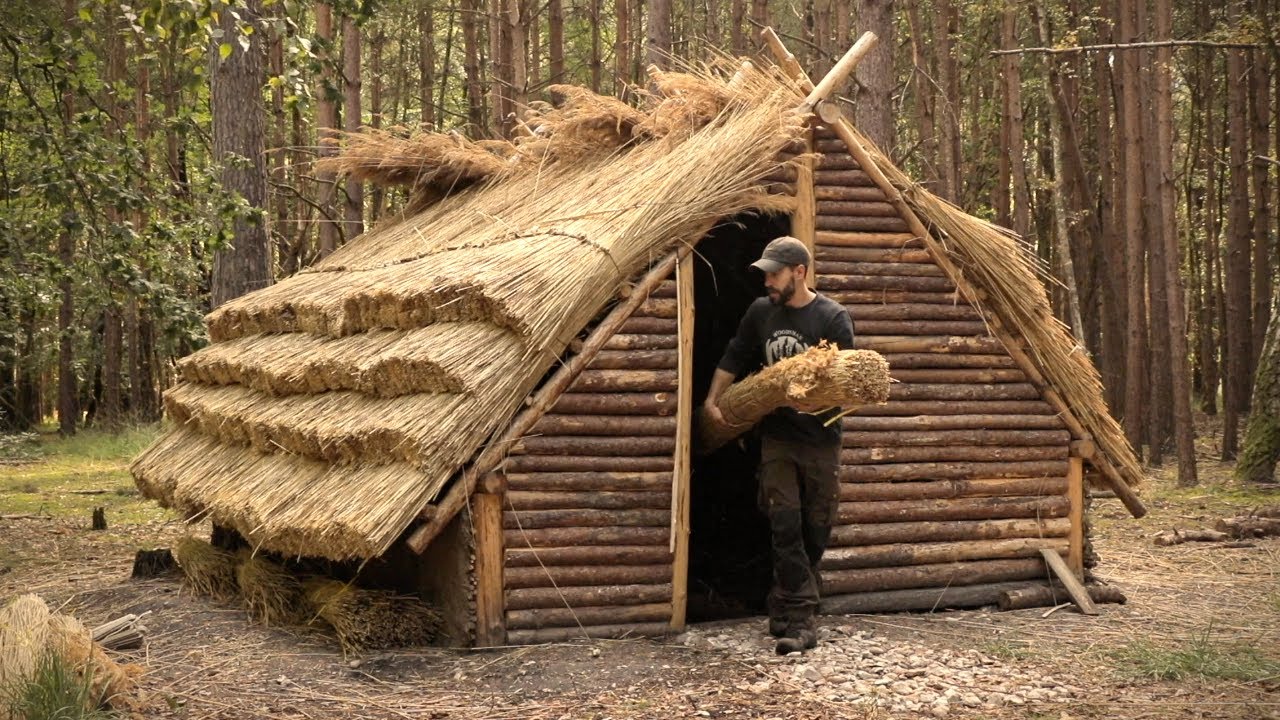
Mike Pullen, who runs the bushcraft channel TA Outdoors, spent ten days in the woods with his father building a working replica of an early medieval English dwelling from scratch. No power tools, no lumber yard, no modern fasteners — just axes, hand saws, knives, a pickaxe, a hand auger, and a drawknife against a patch of forest floor. The video “Building a Medieval House | 10 Day Bushcraft Shelter Build” stitches together their full Saxon House series into one complete build, from the first shovel of dirt to a finished, livable shelter with a thatched roof.
- The design copies the Anglo-Saxon “grubenhaus” — a sunken-featured pit house used across Britain from the 5th to the 11th century.
- The entire structure, from excavating the floor pit to finishing the thatch, was built in 10 days using only manual tools: axes, saws, knives, a pickaxe, a hand auger, and a drawknife.
- The finished shelter includes notched timber uprights, hand-woven wattle wall panels, a framed entryway, and a traditional thatched roof.
Importance of Digging Initial Pits
Before a single upright went in the ground, Pullen and his father excavated a pit for the floor — the defining feature of the grubenhaus style. Sinking the living space into the earth wasn’t a cosmetic choice; Anglo-Saxon builders used the surrounding soil as passive insulation, keeping the interior more stable in both summer heat and winter cold. It also cut down the amount of standing timber needed for the walls, since the earth itself did part of the job a full-height wall would otherwise have to do.
That trade-off — less wood, more digging — shaped the whole build. Every hour spent with the pickaxe against clay and root was an hour saved later notching and hauling upright timbers, a calculation medieval builders would have made out of necessity rather than aesthetics.
Tools of the Build
The kit list stayed deliberately primitive: axes for felling and rough-shaping, hand saws for cross-cuts, knives for fine work, a pickaxe for the earthworks, a hand auger for boring peg and joint holes, and a drawknife for smoothing and shaping timber surfaces. Nothing on that list would have looked out of place in an actual 8th-century toolkit, which was the point — the project wasn’t just about the finished silhouette of a Saxon house, it was about proving the techniques still work when you strip away every modern shortcut.
Ten days, one pit, and a full timber-and-thatch house — built entirely with axes, saws, a pickaxe, an auger, and a drawknife.
That same commitment to period-accurate methods and materials shows up across other bushcraft builds in this space, including the slower, wetter Iron Age roof work done in soaking rain, where getting thatch or turf to hold under bad weather is its own separate fight.
Framing, Wattle, and the Roof
With the pit dug, the pair moved to felling and notching the timber that would carry the structure — uprights set to bear the weight of the roof rafters, joints cut by hand and fitted without nails. Wall sections were filled in with woven wattle panels, a lattice of thin, flexible branches worked between the uprights, and the entryway was framed separately to give the finished house a defined doorway rather than a simple gap in the wall.
The roof came last and took the most patience: a full thatch layer built up over the rafters to shed rain and hold heat in, the same job it was doing for actual Saxon households more than a thousand years ago. By the close of day ten, the shelter had rustic joinery throughout, functional living space inside the pit, and a roofline that would have been recognizable to anyone living in early medieval Britain. Viewers looking for the same blend of manual technique and earthwork elsewhere in the bushcraft space might also check out the pine-needle basketry project on making a basket from pine needles from start to finish.
Pullen has said the individual episodes of the Saxon House series go into more detail on the reasoning behind each step — why the pit came before the framing, why wattle over other wall methods, why the entryway got framed separately — for anyone who wants the ten days broken down rather than compiled into one sitting.








The Incredible Man With Legs Like Scissors
I tried breathwork everyday for 30 days
One of the Oldest Ever People with Progeria (The Disorder That Makes You Age Rapidly)
HOW TO IMPLEMENT A HEALTHY LIFESTYLE | Setting Habits & Wellness Goals
The Story of Quantum Jumping : Does this 80 Year old man really “Jump” Universes?