

This Tiny Home Community Gives Homeless Veterans A Chance – Working To End Veteran Homelessness
 InfoSearched
A village in Kansas City is proving that ending veteran homelessness might come down to something as simple as a front door with a lock on it.
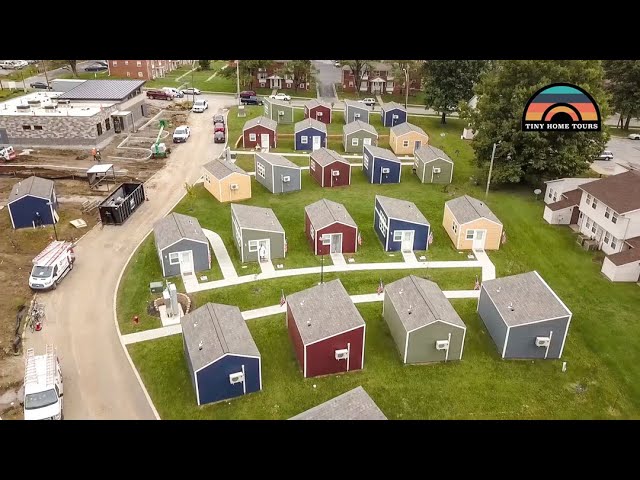
Roughly 37,000 veterans go without stable housing on any given night in the United States, and the standard shelter system rarely fits how many of them actually experienced service and trauma. The Veterans Community Project, founded by combat veterans in Kansas City, Missouri, built something different: a cluster of tiny homes designed specifically around the psychology of returning from war, not just the logistics of a roof. Tiny Home Tours’ feature on the community lays out exactly how the model works, room by room.
- Veterans Community Project (VCP) was founded by combat veterans in Kansas City to provide free, fully furnished tiny homes, roughly 240 square feet each, built with trauma-informed design.
- The village runs an open-door policy, accepting any veteran regardless of discharge status or branch, sidestepping VA exclusions that leave many at-risk veterans unserved.
- Residents get weekly case management, mental health support, substance recovery assistance, VA benefits navigation, and financial literacy training on top of housing.
A Village Built by Veterans, for Veterans
VCP isn’t set up as an emergency shelter — it’s transitional housing, built by people who wore the uniform themselves and understood exactly what the standard system was missing. Instead of a dormitory-style intake facility, the organization built an actual neighborhood of small standalone houses, each one a private, lockable space a resident can call their own from day one.
That structure matters as much as the square footage. A veteran moving into VCP isn’t assigned a bunk or a cot in a shared room; they’re handed keys to a house. For someone coming off the street, that distinction between “bed” and “home” is the whole point.
Homes Designed Around Trauma, Not Just Shelter
The units themselves run around 240 square feet, but the design choices go well beyond efficient use of space. According to reporting on the project, the homes use reinforced sound insulation to cut down on noise that can trigger hypervigilance, and layouts that keep the bed in direct line-of-sight of the door and windows — a deliberate answer to the kind of post-traumatic stress that makes it hard for combat veterans to sleep with their back to an entry point.
Every resident moves in to a home already stocked with new bedding, towels, groceries, and kitchen supplies. Those items stay theirs to keep when they eventually move into permanent housing, which turns the tiny home from a loaner into a genuine starting point for a household.
The beds face the doors and windows, not the walls — a floor plan built for veterans who never stopped scanning the room.
Bypassing the VA’s Red Tape
One of the sharpest edges of the VCP model is who it lets in. The community’s open-door policy accepts any person who served in the U.S. military, regardless of discharge status or branch — a deliberate workaround of rigid VA exclusions that routinely leave veterans with less-than-honorable discharges, or gaps in paperwork, without access to federal housing benefits. That single policy decision closes a gap that has stranded some of the most at-risk veterans outside the system meant to help them.
More Than a Roof: Wraparound Case Management
Housing is the visible part of VCP’s work, but the case management underneath it is where the actual stabilization happens. Residents get weekly, individualized meetings covering mental health support, substance recovery assistance, VA benefits navigation, and financial literacy training — the kind of sustained, person-by-person follow-up that a drop-in shelter simply isn’t built to provide.
The goal isn’t indefinite residency in a tiny home. It’s using the stability of that private space and that weekly check-in to get a veteran to the point where permanent, sustainable housing is realistic — and to send them there with the skills and paperwork already in order.
For Kansas City’s homeless veterans, the address changes but the deal stays the same: a private front door, a fully stocked kitchen that’s theirs to keep, and a case manager who shows up every single week until they don’t need one anymore. It’s a model built by people who served, for people who served — no waiting list logic, no discharge-status gatekeeping, just a key and a plan.








9 Survival Gardening Crops to Grow in a Post Apocalyptic World
Building an Off Grid Woodworking Workshop Log Cabin in the Forest
Secret Service Most Wanted Man Explains How He Swindled Millions from Banks
How Hong Kong Protesters Evade Surveillance With Tech
Harvesting Honey From A FLOW HIVE & Thoughts & Impressions of the Flow Hive