

 InfoSearched
A shipping container full of tilapia is quietly rewriting what urban farming looks like in West Oakland.
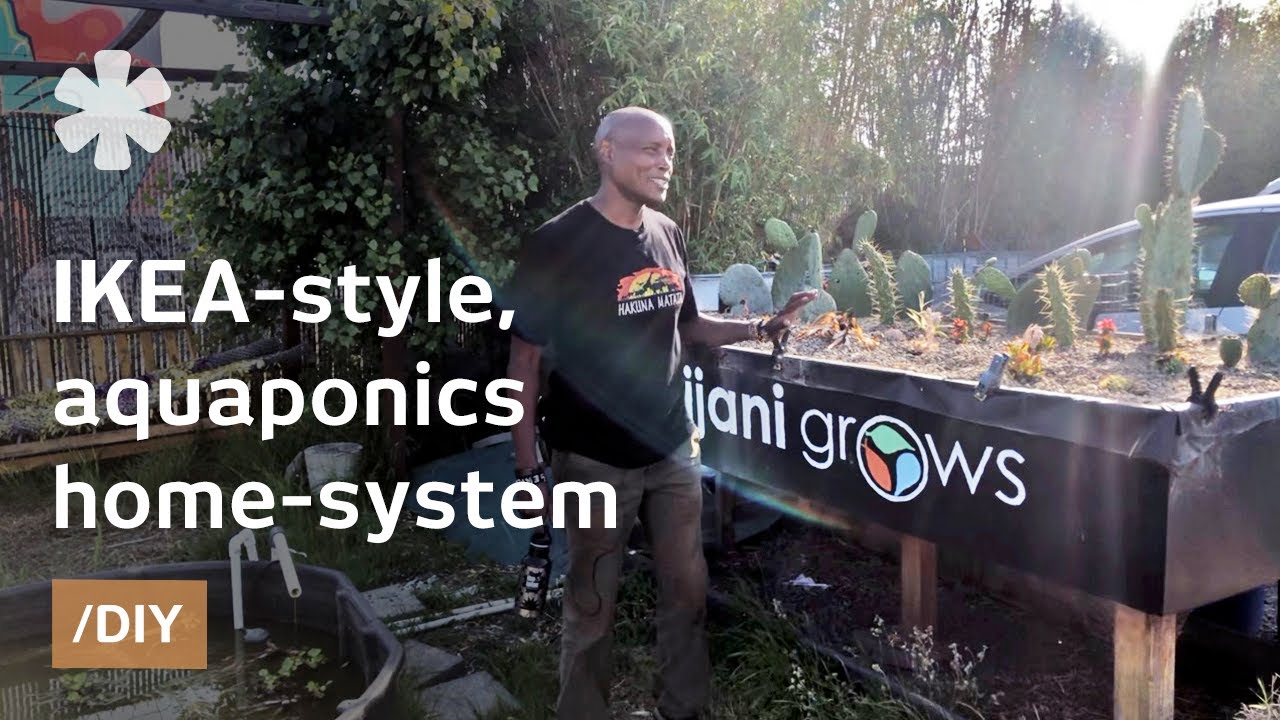
Eric Maundu wants fish farming in every kitchen — or close to it. The Kenyan-born engineer builds smart aquaponics systems that flat-pack and assemble like IKEA furniture, letting anyone raise vegetables and edible fish in a closed loop that skips soil, pesticides, and most of the water a backyard garden would normally need. Filmmaker Kirsten Dirksen profiled Maundu’s work in June 2020, following him from his home setup to an industrial lot in West Oakland where he’s scaling the idea up for entire neighborhoods.
- Maundu’s aquaponics loop uses roughly 90% less water than conventional agriculture by cycling fish waste into plant beds and letting the plants filter the water back to the tank.
- At his West Oakland site, he converted a shipping container into an industrial fish tank paired with large grow beds raising greens and herbs alongside tilapia and catfish.
- His custom Linux- and Arduino-based control boards run more than 10 shields to track pH, water levels, humidity, and light — and can fire off automated alerts or tweets when a tank needs water or a crop is ready to pick.
An Engineer Raised in the Drylands
Maundu trained in industrial electronics and computer science, but the idea for his systems traces back to growing up in arid Kenya, where water scarcity wasn’t an abstraction — it was daily life. That background is what he says pushed him toward aquaponics instead of conventional hydroponics or dirt farming.
“The combination of growing up in deserts and an engineering background puts me in a unique position to address basic human needs using modern technologies.”
That combination became the founding logic of his West Oakland startup, Kijani Grows, which builds and sells the aquaponics hardware he’s spent roughly a decade refining.
Flat-Packed Kits Built on a CNC Mill
Maundu’s smaller units are designed to ship flat and go together without specialized tools, the same pitch as a piece of ready-to-assemble furniture. He runs the parts through CNC milling machines to cut precise components for both indoor and backyard kits, which keeps the system consistent whether it’s landing in a studio apartment or a suburban yard. Readers curious about growing food in tight quarters without soil at all will find a similar instinct in this look at cultivating gourmet and medicinal mushrooms, another closed-space food system built for small footprints.
Scaling Up for Food Deserts
The backyard kits are the entry point, but Maundu’s real target is bigger: neighborhoods with no grocery store selling fresh produce. On the industrial lot in West Oakland, he built a demonstration setup using a retrofitted shipping container as an industrial-scale fish tank, connected to extensive grow beds producing greens and herbs alongside tilapia and catfish raised for food. The pitch is that a system this size could be dropped into a vacant lot in a food desert and run largely on its own sensor network rather than requiring a farm crew.
The Sensor Stack Doing the Work
None of it runs on guesswork. Maundu’s boards combine a Linux computer with an Arduino-style microcontroller and more than 10 shields handling different jobs — pH monitoring, water-level sensing, humidity, and lighting control. The system is configured to send automated status alerts, including tweets, when a tank is low on water or when vegetables in the grow bed are ready to harvest, letting one person effectively manage a system that would otherwise need constant hands-on checking.
Rescue Chickens Get the Same Treatment
Maundu’s automation habit didn’t stay confined to fish and vegetables. After taking in rescue chickens off the street that he couldn’t tend daily, he built them CNC-cut automated feeders and timed doors so the birds could free-range safely without a person opening and closing the coop every morning and night. He argues the same low-labor automation could be scaled for an industry looking to expand free-range poultry without adding daily labor costs — a smaller-scale echo of the same principle running his fish tanks: let the sensors do the watching so people don’t have to.






Inside a $195 Million Bel Air Estate With Secret Tunnels
FLYING Leaf Blower RC airplane Mk2
Fishpeople | Lives Transformed by the Sea
One of the Oldest Ever People with Progeria (The Disorder That Makes You Age Rapidly)
How COVID-19 Is Changing US Army Boot Camp