

 InfoSearched
A newborn iguana sprints for its life across a beach swarming with snakes, and the chase becomes the most talked-about ninety seconds in natural history television.
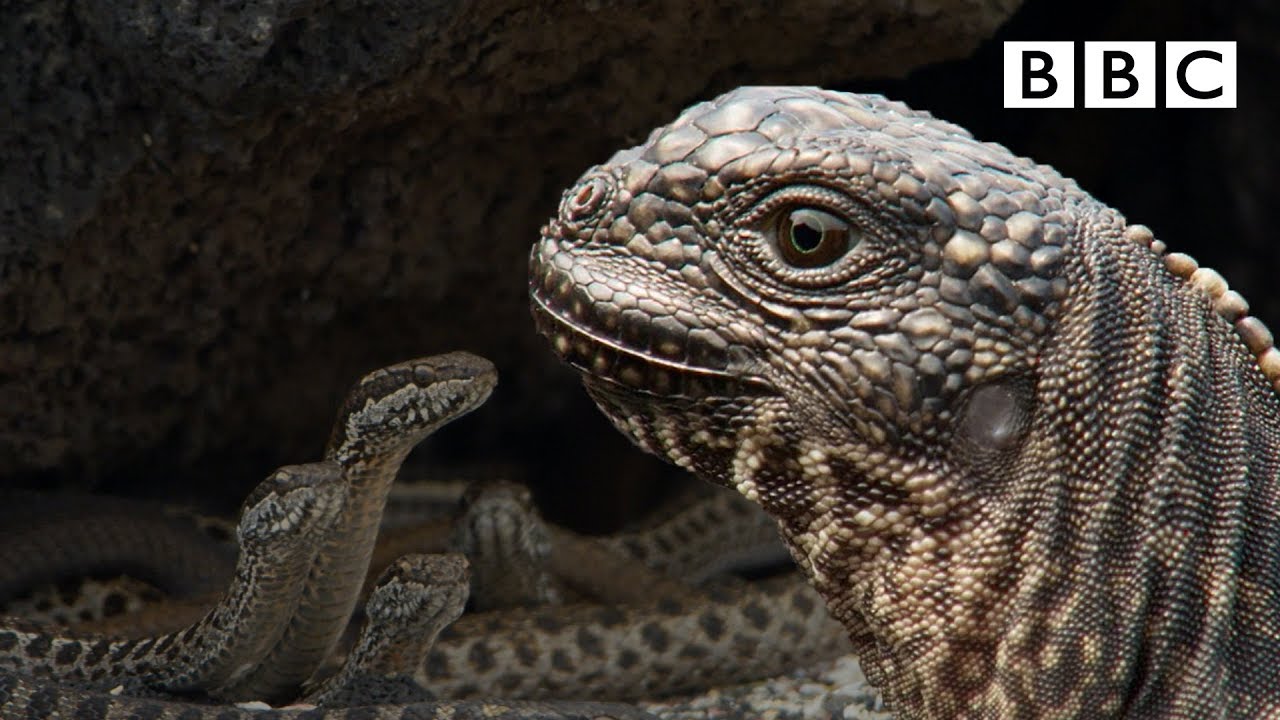
The scene comes from “Islands,” the opening episode of the BBC’s Planet Earth II, which first aired in November 2016 with Sir David Attenborough narrating. Filmed on Fernandina Island in the Galápagos, the sequence follows marine iguana hatchlings as they crawl up out of volcanic sand and try to cross open beach to reach the rocks where the adults gather — all while dozens of Galápagos racer snakes wait in the crevices for exactly this moment.
One hatchling in particular becomes the focus of the whole sequence. It freezes after emerging from the sand, then bolts, and within seconds the racers pour out of the rocks in a coordinated ambush rarely captured on camera. What follows is a scramble across sandbanks, a moment where the iguana is completely engulfed in a writhing knot of snakes, and an escape that turns the clip into one of the most replayed pieces of wildlife footage of the decade.
- The sequence was filmed on Fernandina Island in the Galápagos and features marine iguana hatchlings evading Galápagos racer snakes (Pseudalsophis occidentalis).
- Dozens of racer snakes emerge simultaneously from rock crevices in a rare display of coordinated mass hunting behavior.
- The hatchling is briefly trapped inside a ball of constricting snakes before breaking free and reaching the safety of the high rocks.
The Chase, Shot by Shot
The tension builds from the moment the iguana pokes its head above the sand. It pauses — a beat that reads almost like hesitation — before sprinting across open ground toward the rocky high ground where adult iguanas cluster, out of reach of the snakes. That dash is the trigger. Racers begin streaming out of gaps in the volcanic rock from multiple directions at once, converging on the hatchling faster than it can outrun them.
The iguana is caught, momentarily disappearing beneath a tangle of snake bodies as several racers try to hold and constrict it simultaneously. It twists free, scrambles over loose volcanic rock, leaps to dodge snapping jaws mid-air, and finally hauls itself up to the rocks where the adults are waiting. The entire chase unfolds in real time with no slow motion needed to make it dramatic.
Dozens of racer snakes rapidly emerge from rock crevices in a rare display of coordinated mass hunting — and one hatchling has to out-scramble every single one of them.
Behind the BBC Filming Process
The sequence’s fluid, ground-level camerawork drew immediate speculation about whether it had been staged or heavily manipulated in post-production. The BBC confirmed the chase itself was genuine and filmed on location using modern handheld stabilization equipment, which is what allowed camera operators to move at the same speed as the animals rather than filming from a static tripod.
What the BBC also acknowledged is that the finished sequence is an edit — footage of multiple individual hatchlings and multiple racer snakes, shot across the filming period on Fernandina, cut together to tell one continuous narrative of a single iguana’s escape. That’s standard practice for wildlife documentary editing, but the transparency mattered given how viral the clip became; production teams behind other predator-and-prey sequences, like the crew that spent weeks tracking a harpy eagle for Filming The World’s Deadliest Bird, face the same tightrope between authenticity and storytelling.
Reasons for Viral Clip Success
Within days of the November 2016 broadcast, the iguana-versus-snakes sequence was being clipped, shared, and replayed across social platforms, and it’s routinely cited by critics and viewers as one of the most thrilling scenes Planet Earth II produced across its six episodes. Part of the appeal is the sheer number of snakes on screen at once — a mass predatory response that few camera crews had ever documented in this kind of detail — paired with a genuinely uncertain outcome, since the hatchling’s survival was never guaranteed until the final leap onto the rocks.
It also fit into a broader run of predator-prey sequences that made the series a ratings phenomenon in the UK, sitting alongside other tense wildlife standoffs that fans still compare to clips like The Most Extreme Wild Animals Battles! and the survival gauntlets covered in The Reason Why Kangaroo Abandons Its Baby to Predators.
The Stakes for Marine Iguana Hatchlings
For marine iguanas on Fernandina, this beach dash isn’t a one-off event — it’s an annual bottleneck every hatchling has to survive. The racer snakes time their emergence to the hatching season specifically because the payoff, dozens of slow-moving, defenseless newborns crossing open sand, is worth waiting in the rocks for. Every hatchling that reaches the high ground and joins the adult colony has effectively passed the single most dangerous test of its life within minutes of being born.






Harvesting Honey From A FLOW HIVE & Thoughts & Impressions of the Flow Hive
I’m Coming Out | Diana Ross | funk cover ft. Kenton Chen
$12,000 HOUSE – One Man Renovation
CLIMBING GONE WRONG fails
Gucci Fall Winter 2020 Women’s Fashion Show