

 InfoSearched
Two days is all it takes to hit the highlights of America’s busiest national park, if you know where to point the car.
Josh McNair and his wife Amie spent an early-May trip working through Great Smoky Mountains National Park for their travel channel and site, Through My Lens, and turned it into a tight 13-minute guide called “Great Smoky Mountains Travel Guide: 2 Days Exploring the National Park.” The video lays out a realistic weekend itinerary for anyone tackling the Tennessee and North Carolina sides of the park without burning a whole vacation on it. It’s less a highlight reel than a working plan — drive times, parking realities, and the order that actually makes sense.
- Cades Cove’s 11-mile one-way loop delivers historic homesteads, mountain vistas, and regular black bear and deer sightings.
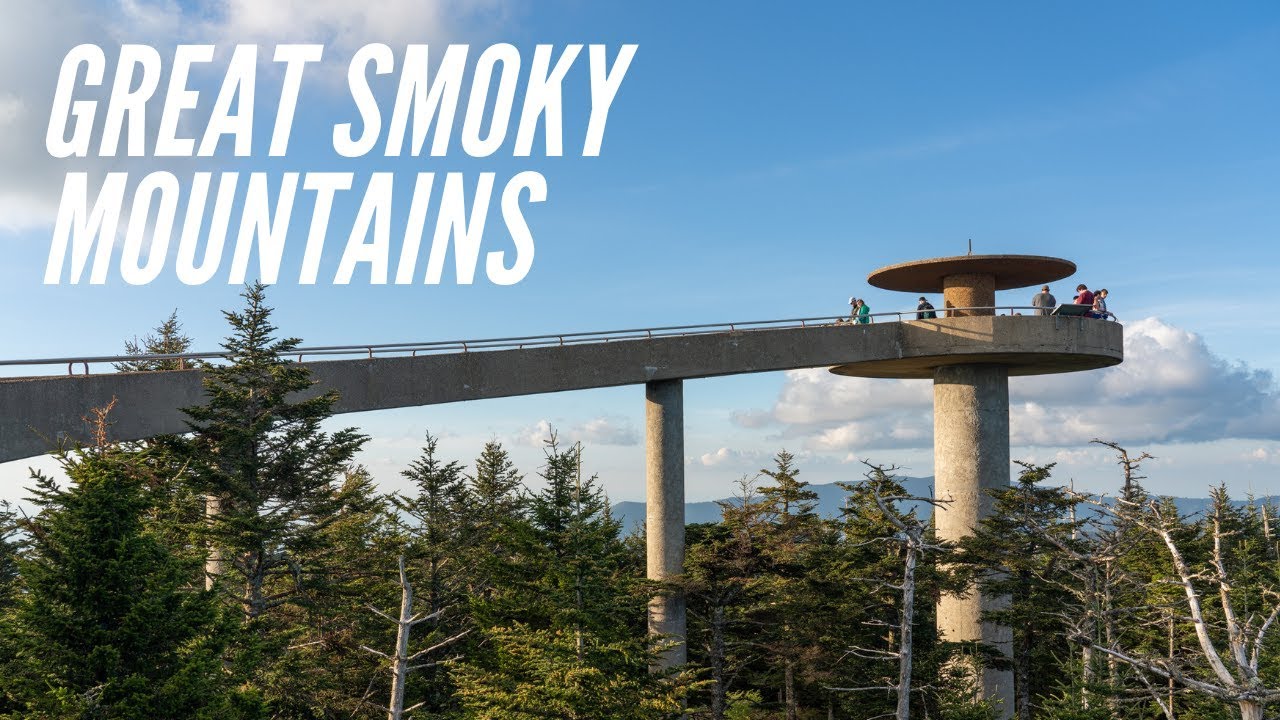
- Clingmans Dome tops out at 6,643 feet — the highest point in the Smokies and on the entire Appalachian Trail — reached by a steep half-mile paved walk to a concrete observation tower.
- Rainbow Falls Trail climbs to an 80-foot waterfall named for the rainbow its mist throws on sunny afternoons.
Day One: Cades Cove Into Clingmans Dome
McNair opens the itinerary at Cades Cove, the valley at the foot of the mountains that draws more traffic than almost anywhere else in the park. The 11-mile loop road, open dawn to dusk, threads past open fields, dense woodland, and restored 19th-century structures, with the Cable Mill Historic Area — home to a working grist mill — as the natural midpoint stop. It’s also prime wildlife territory; black bear and deer sightings along the loop are common enough that slow-moving traffic jams are practically part of the experience.
From there, the guide sends visitors up to Clingmans Dome to close out the first day. At 6,643 feet, it’s the highest point in the park and along the entire Appalachian Trail. The walk to the observation tower is only half a mile, but it’s steep enough to notice, and it’s paved the whole way — accessible for most visitors without technical gear. What waits at the top is a 360-degree view over mist-shrouded ridgelines, the kind of payoff that McNair frames as worth timing for late afternoon light.
Rainbow Falls earns its name on sunny afternoons, when mist off the 80-foot drop bends into a rainbow visitors can walk right up to.
Day Two: Trails and Waterfalls
With more than 800 miles of trail inside the park, day two is where McNair narrows the field to two realistic options. The Rainbow Falls Trail is the headline pick — a 5.5-mile round trip through old-growth forest, moderately difficult with a steady incline and several switchbacks, ending at the 80-foot waterfall. For a shorter alternative, the guide points to Abrams Falls, a 5-mile round trip along Abrams Creek that ends at a 20-foot falls and runs through terrain where deer, black bear, and wild turkeys turn up regularly.
Anyone weighing which trail fits a tight schedule can find similar trade-offs covered in Hiking 70 Miles Alone on the Sawtooth Loop Trail in Idaho, another case of pacing distance and difficulty against a limited window of daylight.
Getting Between the Tennessee and North Carolina Sides
The connective tissue of the trip is the driving, and McNair doesn’t skip over it. Roaring Fork Motor Nature Trail and Newfound Gap Road are the routes that link the Tennessee approach to the North Carolina side, and the guide treats parking limits and midday traffic as real constraints to plan around rather than an afterthought — a practical note for a park that pulls in more annual visitors than any other in the National Park System.
Before heading out, the video stops at Sugarlands Visitor Center near the park entrance, where maps, brochures, and background on the park’s ecology and history are available for anyone building out their own version of the drive. Readers piecing together a broader outdoors itinerary might also find useful overlap in InfoSearched’s Outdoors coverage, which tracks similar trail and trip-planning guides.
McNair wraps the video the way most first-timers actually leave the Smokies: already planning the return trip, because two days barely scratches 800 miles of trail.






How To Turn Your Lawn Into A Vegetable Garden
Make Riptide (Expandable Pen Sword) From Percy Jackson!
Camping In The Multi-Purpose Tracked Crawler
Why people are choosing to quit social media
The Craziest Dictator You’ve Never Heard of | Jean-Bédel Bokassa