

 InfoSearched
A cracked TV screen and a pile of scrap parts turn out to be the cheapest daylight panel you’ll ever build.
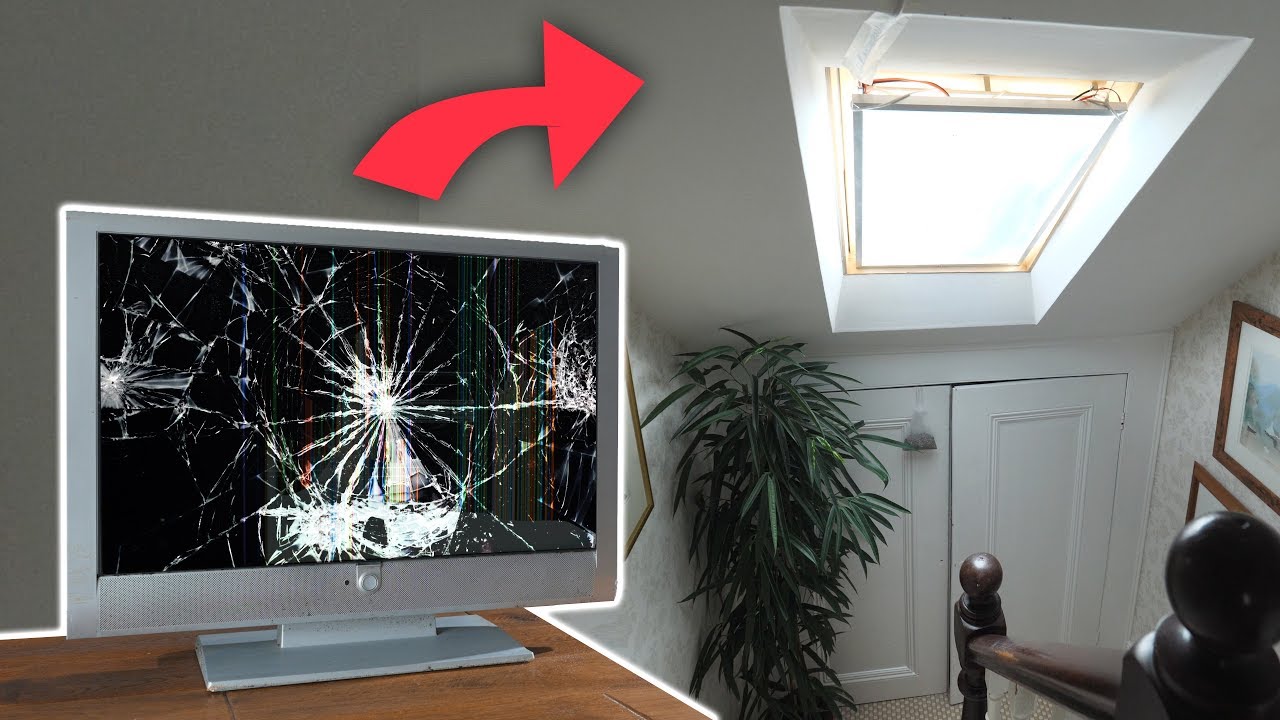
On August 9, 2019, maker Matthew Perks posted a tutorial on his YouTube channel, DIY Perks, titled “Turning Smashed TVs into Realistic Artificial Daylight.” The premise is simple: instead of tossing a broken LCD television or monitor into an e-waste bin, Perks tears it apart, keeps the one component nobody thinks about, and rebuilds it into a flat, glare-free light source that mimics sunlight coming through a window.
- Perks shows how the optical stack behind an LCD panel — acrylic light-guide plates, Fresnel lens sheets, diffusion layers, and reflective backing — already exists to spread light evenly across a screen, and repurposes it to scatter light the way an overcast sky does.
- The build involves disassembling the TV casing, stripping out failed electronics, and removing the shattered LCD glass while leaving the delicate backlight stack untouched.
- Perks swaps out the original illumination — whether high-voltage, mercury-filled CCFLs or proprietary LED driver boards — for adhesive high-CRI LED strips run on safe direct current, then reseats the diffuser stack with a custom metal border or epoxy and wires it to an external power supply.
Dead Screens Outperform Desk Lamps
Most household lighting comes from a point source — a bulb, a bare LED, a lamp — and point sources throw hard-edged shadows because the light rays fan out from one small spot. A television’s backlight was never built to do that. Manufacturers stack Fresnel lenses and diffusion sheets behind the liquid crystal layer specifically to collimate the light and spread it into nearly parallel rays across the whole panel, so brightness looks even from corner to corner on your screen.
Perks’ insight is that this exact optical trick is what a window does with sunlight scattered through the atmosphere. Strip away the cracked glass and the failed electronics, and what’s left is a diffusion engine that throws soft, directional light with none of the harsh shadow lines a bare bulb produces — useful for anyone lighting a room, or lighting a shot for video.
The Teardown, Piece by Piece
The process starts with getting inside the casing safely, since some panels carry real hazards. Older screens use CCFL tubes, which run at high voltage and contain mercury, while many newer LED-backlit panels rely on proprietary driver circuitry that’s difficult to reuse without the original electronics. Perks works around both problems: the internal illumination gets pulled entirely, and the wiring inside gets stripped down to bare frame and optical stack.
The broken front glass — the actual LCD panel that shattered in the first place — comes out too, since it’s the part that failed and the part you don’t need. What Perks preserves is everything behind it: the light-guide plate, the Fresnel sheet, and the diffusion layers, kept intact and undamaged for reassembly.
The screen that broke is trash. The stack of plastic sheets behind it, built to make a TV glow evenly, is the entire product.
Rebuilding It With High-CRI LEDs
Rather than trying to salvage the TV’s original light source, Perks replaces it with adhesive LED strips chosen specifically for high CRI — Color Rendering Index — so the finished panel renders colors accurately instead of washing them out with the greenish or bluish cast cheap LEDs are known for. Running on direct current sidesteps the mercury and high-voltage risk of the CCFL tubes entirely.
Once the new LEDs are in place, the diffuser stack gets reseated into the frame, sometimes held with a custom-fabricated metal border, sometimes with epoxy, and wired out to an external power supply. The result is an ultra-flat panel with none of the glare of a standard fixture — a genuinely reusable outcome for hardware that would otherwise have gone straight into the e-waste stream. Anyone who’s tackled a DIY power project, like running solar panels on a Tesla, will recognize the same instinct here: take a component built for one job and rewire it for another.
It’s the same logic behind other reuse-driven builds InfoSearched has covered, like how recycling machines turn used apparel into new clothes — finding value in materials that were headed for disposal rather than starting from raw stock.
What makes the project stick with viewers isn’t the electronics lesson — it’s that Perks is solving a real problem, broken screens nobody wants, with a part everybody already owns and throws away.








The Godmother Of Drumming Plays “Down With The Sickness”
This Turkish Ice Cream Doesn’t Melt
The Badger that can escape from anywhere! | Honey Badgers: Masters of Mayhem
World’s BIGGEST Flowers!
Super Cool DIY Tiny House With HUGE Movie Theatre Loft