

 InfoSearched
In Hong Kong, a bed-sized cage can cost more per square foot than a Manhattan penthouse.
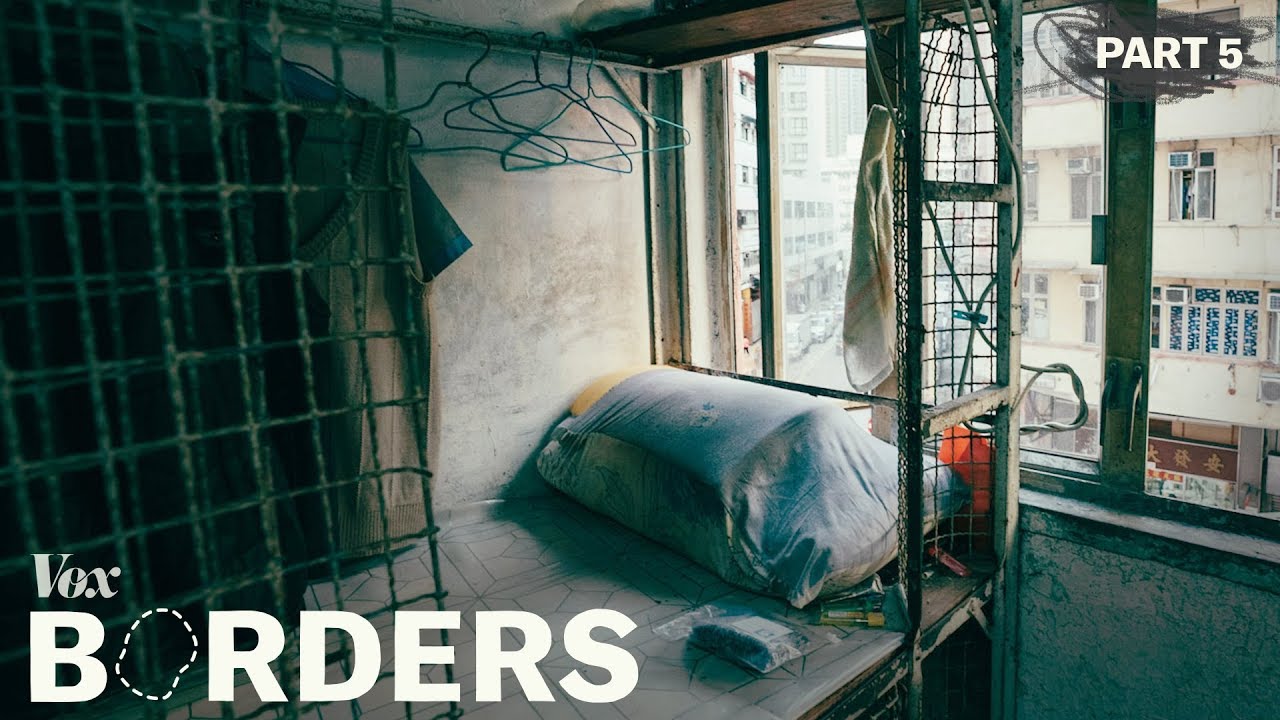
Hong Kong has spent eight straight years ranked as the least affordable housing market on the planet, with median home prices running 19 to 20 times the median annual household income. That math has pushed an estimated 200,000 residents into subdivided flats, wire-mesh cage homes, and coffin-sized cubicles scattered through Kowloon’s aging tenements. Vox’s video report “Inside Hong Kong’s cage homes” goes inside those units to show exactly what that crisis looks like at 15 square feet.
- Typical subdivided units (SDUs) run 75 to 140 square feet — smaller than a standard U.S. parking space, which measures around 150 square feet.
- The most extreme cage homes and coffin cubicles shrink living space to just 15 to 20 square feet, barely room to stretch out.
- Roughly 200,000 people live in these subdivided arrangements across Hong Kong, sharing a single kitchen or bathroom among dozens of tenants.
Life Inside a Cage
The units documented in the video stack metal wire or wooden bunk-style compartments inside single residential apartments, turning one flat into a dozen or more separate “homes.” Tenants sleep on thin mattresses inside partitions that measure roughly 6 feet by 2.5 feet, with barely enough clearance to sit upright. Heat, poor ventilation, and pest infestations are constants, and privacy is essentially nonexistent when the only wall separating neighbors is chicken wire.
These aren’t rural outliers — they’re concentrated in low-income, older neighborhoods like Kowloon, where landlords carve up a single legally-zoned residential unit into a dozen income streams. For that, tenants pay anywhere from $180 to several hundred U.S. dollars a month for a space that would fail almost any habitability standard elsewhere.
Origins of Current Market Conditions
Vox traces the roots of the crisis to decisions made after the 1997 Asian financial crisis, when Hong Kong scaled back public housing targets just as demand kept climbing. The government’s budget leans heavily on land sales to private developers, which creates a structural incentive to keep land scarce and prices high rather than flood the market with affordable supply. Developers, in turn, maximize profit per square foot by building smaller and smaller “micro-apartments” aimed at buyers who can’t afford anything larger.
Median home prices in Hong Kong run 19 to 20 times the median household income — the worst affordability ratio of any housing market on Earth.
The Public Housing Backlog
Public housing exists as an alternative, but demand outpaces available units by tens of thousands of applicants, and waitlists routinely stretch years. Elderly residents and the working poor make up a disproportionate share of that backlog, which is exactly the population the video finds crammed into cage homes and coffin cubicles while they wait for something better. For many, the subdivided flat isn’t a stopgap — it’s the only option they can afford while the queue for public housing barely moves.
The scale of Hong Kong’s housing squeeze is easier to grasp against other extremes covered elsewhere — from Italy’s $1 homes on the opposite end of the affordability spectrum, to the sheer excess of New York’s $200 million apartment going up at the same time some Hongkongers were paying a few hundred dollars a month for 15 square feet.
None of the fixes floated by Hong Kong’s government have closed the gap between what land sales generate and what public housing actually needs, which is why the waitlist keeps growing even as officials announce new targets. Until that math changes, the coffin cubicles and cage homes documented in Kowloon aren’t a relic of the city’s colonial past — they’re still the going rate for a bed in Hong Kong.







Man Quits $80K Job to Work in Grocery Store Part Time
Testing the Stinger Tactical Whip (Spoiler: It Hurts) | Better Than a Baton?
CLEAREST WATER EVER | Catch And Cook
Make Soda Bottle String (Cool Survival Hack) | How To Make Rope From Plastic Bottle
$120 Million Private Island With Private Airfield – Bahamas