

 InfoSearched
Kevin Kohler puts a fire pit through the one test every camping guide warns you never to try — and blows the rocks apart to prove the point.
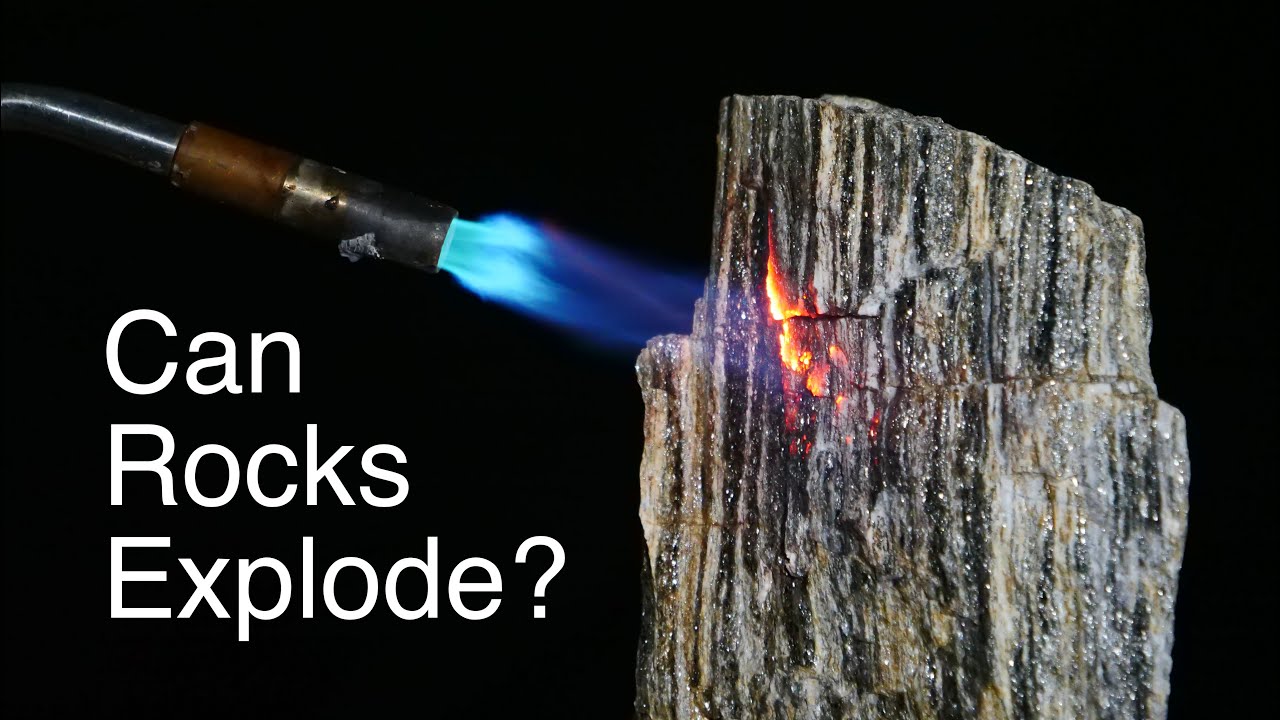
TheBackyardScientist, the YouTube creator known for turning kitchen-table curiosities into full-blown experiments, tackles a warning that’s been passed down at campgrounds for generations: never toss a wet rock into your fire. In “Don’t Put Wet Rocks In A Campfire,” Kevin Kohler stages the demonstration properly, showing exactly what happens inside a porous stone once it’s been soaking in a creek bed or damp soil and then gets stacked into a fire ring.
- Kohler demonstrates that water trapped inside porous rocks like sandstone and river stones turns to superheated steam under campfire heat, with nowhere to escape through the rock’s dense outer layers.
- The buildup in internal pressure overwhelms the rock’s structural strength, causing violent fractures, spalling, and explosive ruptures rather than a gradual crack.
- By contrast, low-porosity granite resists this failure because it doesn’t hold moisture the same way, while standard concrete shares the same vulnerability as porous stone, suffering thermal spalling when trapped moisture expands inside its matrix.
Porosity Determines the Final Outcome
The whole experiment hinges on one property: how much space a rock’s internal structure leaves for water to hide. Sandstone and river rocks are riddled with tiny pore networks that soak up moisture every time it rains or every time they sit at the edge of a stream. Kohler’s demonstration shows that once that water is sealed inside and hit with campfire-level heat, it doesn’t just evaporate quietly — it flashes into steam and expands far faster than the surrounding stone can accommodate.
That mismatch between rapid internal expansion and a rigid, low-permeability shell is what turns a rock into a projectile. There’s no slow venting process happening here; the pressure simply builds until the rock’s structural limit gives out.
Trapped moisture turning to steam inside a sealed rock doesn’t leak out slowly — it builds pressure until the stone fractures violently, sending shrapnel outward.
Granite’s Advantage and Concrete’s Shared Weakness
Kohler’s side-by-side comparison is the part that actually changes how viewers should think about fire-ring material. Granite, being dense and far less porous than sandstone or river rock, simply doesn’t give steam the same internal highways to build pressure in — which is why it holds up so much better around an open flame.
Concrete, though, doesn’t get the same pass. Despite feeling solid and inert, standard concrete has a matrix that holds moisture much like porous stone does, and Kohler notes it can suffer the same kind of thermal spalling and fragmentation when superheated water expands inside it. That’s a detail worth remembering for anyone who assumes a poured concrete slab or block is automatically safer than a stack of creek rocks — for readers curious about how concrete actually behaves under different conditions, the mix and curing process covered in how to make a concrete curb for a fence shows just how much water gets worked into the material before it ever hardens.
The Practical Takeaway for Campers
The video’s core warning is straightforward: don’t grab stones straight out of a damp riverbank or wet soil to ring a fire pit. Anyone setting up a site the way Kohler recommends should treat rock selection with the same care given to tent placement or wood selection — for campers weighing gear choices for a trip, the setup details in the Coleman Instant Up 10P Northstar Darkroom Tent breakdown covers another piece of that same campsite-safety puzzle.
Kohler’s demonstration doesn’t require a lab — just a fire, a handful of soaked stones, and enough distance to watch what happens when the pressure finally wins.








Harvesting Honey From A FLOW HIVE & Thoughts & Impressions of the Flow Hive
How to Get a Job in the Outdoor Industry | Land Your Dream Job | My Story
Escaping the Rent Trap – Simple Living In A Lotus Belle Tent
Potted Beef In The 18th Century
Building New York’s $200M Apartment