

 InfoSearched
Some lakes don’t invite you in for a swim — they warn you to stay away.
BE AMAZED’s 2017 rundown, “Horrifyingly Mysterious Lakes In The World,” tours four bodies of water that break the postcard image of a lake as something calm and inviting. The lineup runs from a blood-red East African lake hot enough to cook in, to a Cameroonian crater that suffocated nearly 1,800 people in a single night, to a Canadian lake tied to a village that vanished without a trace. Each stop makes the same point a little differently: geology and chemistry can turn “peaceful” into “lethal” faster than most people expect.
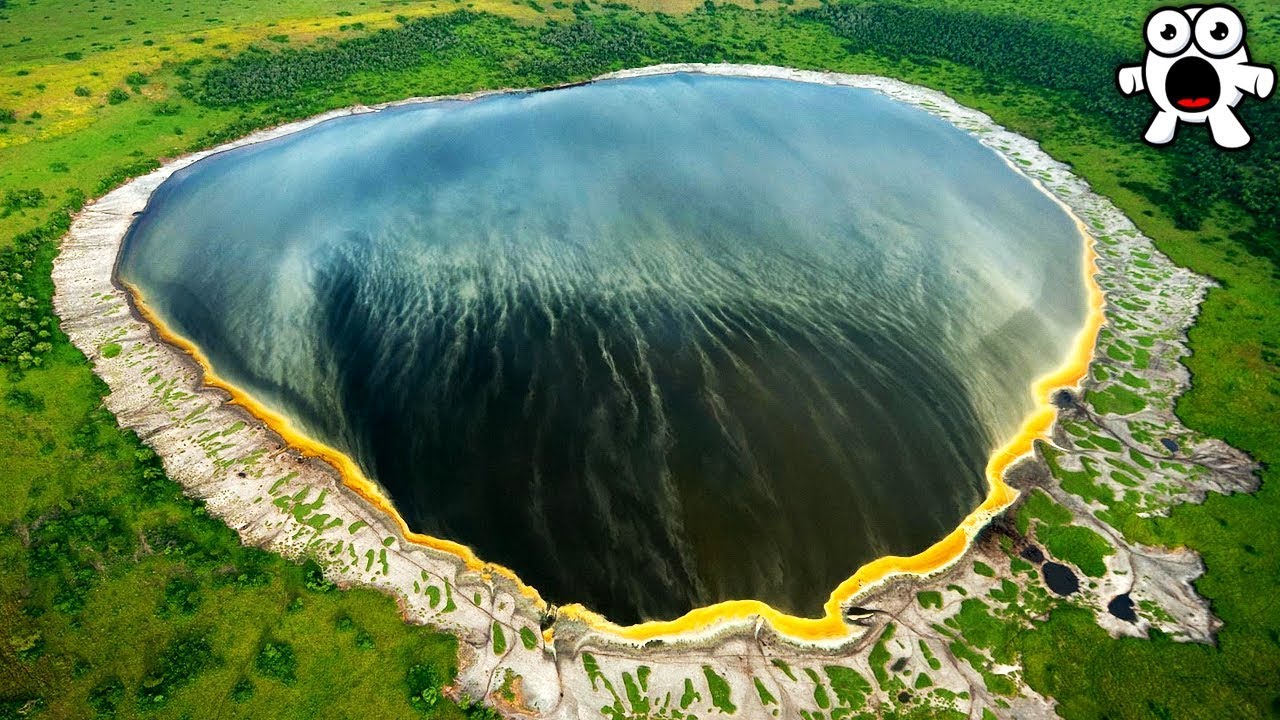
- Lake Natron in northern Tanzania hits temperatures near 140°F and alkalinity as high as pH 12 — on par with household bleach — yet still hosts more than a million breeding lesser flamingos every year.
- Cameroon’s Lake Nyos released a massive cloud of dissolved carbon dioxide in 1986, killing close to 1,800 people and thousands of animals within a 16-mile radius overnight.
- Canada’s Lake Anjikuni is linked to the reported 1930 disappearance of an entire Inuit village — food, clothing, and burning campfires left behind, but no people — while the Lake Michigan Triangle carries its own list of unexplained ship and aircraft losses.
Lake Natron’s Chemistry Problem
Lake Natron sits near the base of Ol Doinyo Lengai, an active volcano whose mineral runoff feeds the lake’s extraordinary sodium carbonate and sodium bicarbonate content — the compound known as natron that gives the lake its name. That chemistry pushes the water’s pH into the 10.5-to-12 range, corrosive enough to calcify the bodies of birds and bats that die in or near it, effectively mummifying them in place. Anyone who has camped near an active crater, like the crew in this jungle treehouse overlooking an active volcano, knows how much a nearby eruption can reshape the ground and water around it — Lake Natron is that influence taken to an extreme.
The color is the other half of the story. Haloarchaea and cyanobacteria — salt-loving microorganisms that thrive in hyper-saline, superheated water — bloom across the shallows and stain them deep red and pink. Despite the heat and the alkalinity, lesser flamingos treat the lake as their primary East African breeding ground, feeding on spirulina algae and relying on tough, leathery skin to withstand water that would blister most other animals.
A lake hot enough to reach 140°F, corrosive enough to match household bleach, and still the nesting ground for over a million flamingos every year.
Lake Nyos and the 1986 Gas Release
Lake Nyos looks unremarkable from the shore, which is part of what made 1986 so devastating. Volcanic activity beneath the crater lake had allowed carbon dioxide to dissolve and build up at depth for years, until a disturbance triggered what scientists call a limnic eruption — a sudden overturning that released the trapped gas all at once. The resulting cloud of carbon dioxide rolled down the surrounding valleys and asphyxiated people and livestock as far as 16 miles away, killing an estimated 1,800 people in a single night.
Villages, Triangles, and Unanswered Questions
Lake Anjikuni in northern Manitoba earned its reputation after a fur trapper’s 1931 report of a deserted Inuit settlement on its shore — roughly 2,000 people gone, with food, clothing, and personal belongings left untouched and campfires reportedly still burning. No struggle, no wreckage, no explanation ever confirmed. The Lake Michigan Triangle carries a similar pattern on a larger scale, with a long list of boats and aircraft that disappeared or crashed without a clear cause, drawing comparisons to the Bermuda Triangle. Neither case has the hard science behind it that explains Lake Natron’s chemistry or Lake Nyos’s gas buildup — which is exactly why they’ve stayed open questions for decades.
Lake Natron remains the most photographed and most scientifically documented of the four, precisely because its danger is measurable — a pH reading, a temperature gauge, a microbial bloom under a microscope. The flamingos keep coming back every breeding season regardless, which is the detail that sticks: the same water that calcifies a dead bird on contact is the water a million-plus birds choose to raise their chicks in.



15 Most Unique Beaches In The World
Building An Underground Tunnel Swimming Pool Around An Underground Mansion
Experiment: Cola, Mirinda, Pepsi and Mentos Underground
Maui’s HALO Wingsuit
Hydroplaning Dolphins