

 InfoSearched
Somewhere in the Canadian bush, a camera crew is hunting for the animal internet slang was practically invented for.
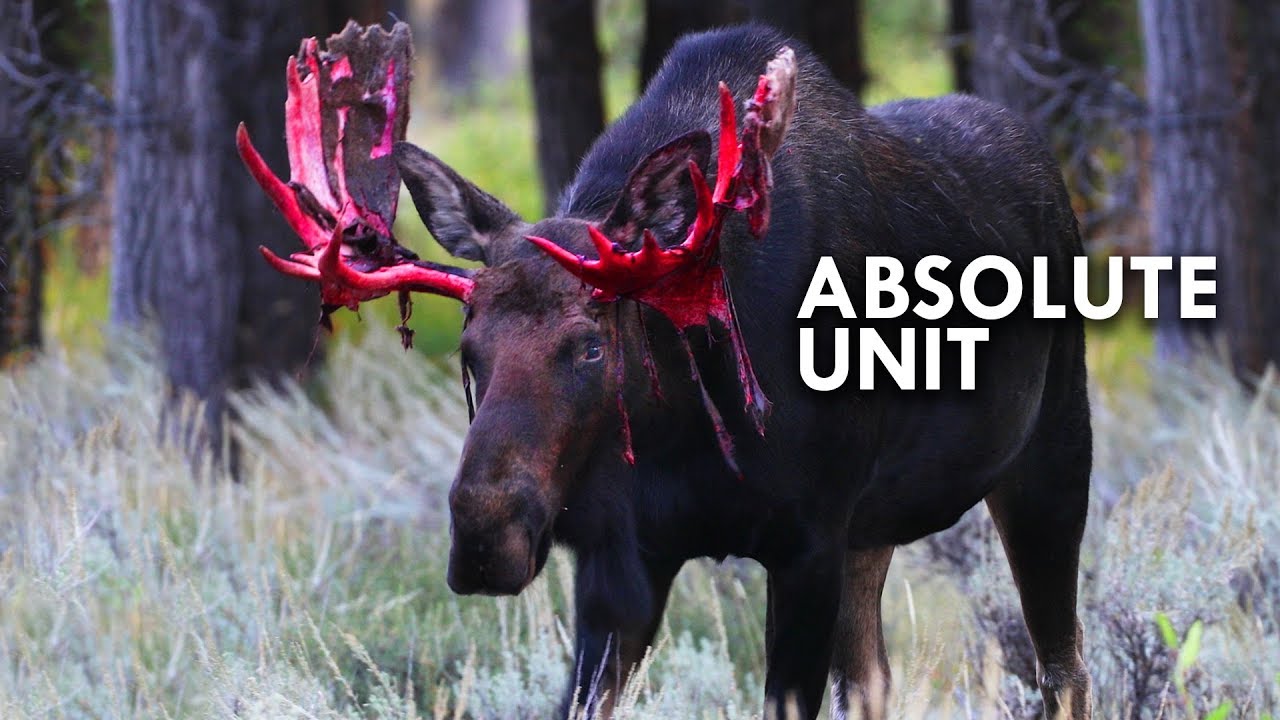
Danielle Dufault, the scientific illustrator and host of the YouTube series Animalogic, spends “Moose are Absolute Units” doing exactly what the title promises: tracking down a wild moose while explaining why the species earned its meme-friendly nickname in the first place. The episode mixes field footage with a breakdown of moose biology, antler growth, and the pressures now squeezing the species across Canada.
- Adult bull moose (Alces alces) can weigh up to 700 kilograms — more than 1,500 pounds — making them the largest living member of the deer family, Cervidae.
- A bull’s palmate antlers can span up to 1.8 meters, roughly six feet across, and regrow from scratch every single year.
- The episode was directed, shot, and produced by Dylan Dubeau, co-created with Andrew Strapp, and written by Andres Salazar, with the crew’s search for a wild moose ending in a successful sighting.
Defining the Absolute Unit Phenomenon
The internet’s “absolute unit” tag usually gets slapped on oversized farm animals, but Dufault makes the case that no creature earns it more honestly than the moose. As the biggest member of Cervidae — a family that also includes elk, white-tailed deer, and caribou — a mature bull can top 700 kilograms and stand well over six feet at the shoulder. Dufault frames that scale not as a curiosity but as the product of a very specific evolutionary strategy: bulk as defense, bulk as dominance, bulk that lets a moose shrug off wolves and wade through chest-deep snow that would stop a smaller ungulate cold.
The Antler Cycle
A big chunk of the episode is dedicated to the palmate antlers that can stretch 1.8 meters tip to tip — flat, hand-shaped racks unlike the branching antlers of deer or elk. Dufault walks through the annual cycle: testosterone drives antler size each season, bulls drop the full rack every winter, and by spring they’re growing a new set from scratch, sheathed in a soft, blood-vessel-rich layer called velvet. That velvet supplies the fast-growing bone underneath before the bull scrapes it off once the antlers harden. The payoff serves three jobs at once — winning fights for mates, fending off predators, and stripping bark off trees for a meal, the kind of multipurpose weaponry that shows up across the animal kingdom whenever size becomes the deciding factor in a confrontation.
Bulls shed the entire rack every winter and rebuild it from nothing by spring — antlers that can stretch six feet across, grown back on an annual clock driven almost entirely by testosterone.
Pressure on the Population
Dufault doesn’t let the episode stay purely celebratory. She digs into the real strain on Canadian moose populations: shifting weather patterns altering the habitat they depend on, white-tailed deer pushing into moose range and bringing parasites with them, and the ongoing work of wildlife managers trying to keep populations balanced against those threats. It’s a reminder that even an animal built like a tank has vulnerabilities — the same tension that runs through coverage of how large predators and prey alike get squeezed as their ranges shrink or shift.
The Payoff in the Field
The episode builds around the crew’s actual search — not a guaranteed encounter, but a real attempt to find and film a moose in the wild. That structure gives the science a stake: every fact about antler velvet or bull weight lands while the audience is still waiting to see whether Dufault’s team actually spots one. They do, closing the episode with a wild moose captured on camera in its own habitat, the payoff for a hunt that could just as easily have come up empty.
Animalogic has built its whole run on this formula — a specific, oddly charismatic animal, a host who clearly does her homework, and a field shoot that doesn’t cheat the ending. “Moose are Absolute Units” doesn’t need a bigger hook than the one already built into the species: an animal that can weigh as much as a small car, rebuild six-foot antlers every spring, and still move quietly enough through the bush that finding one on camera counts as a win.









Why Rolls-Royce Cars Are So Expensive
Two Weeks Under the Sea
I Attempted the Air Force Special Warfare PAST Test (without practice)
THE UNSTOPPABLE SILENT 80 SOLAR POWERED CATAMARAN!
Turning My ENTIRE Ceiling Into a Light Fixture