

 InfoSearched
Health, Sadhguru argues, isn’t something you chase — it’s what’s left over when nothing’s blocking it.
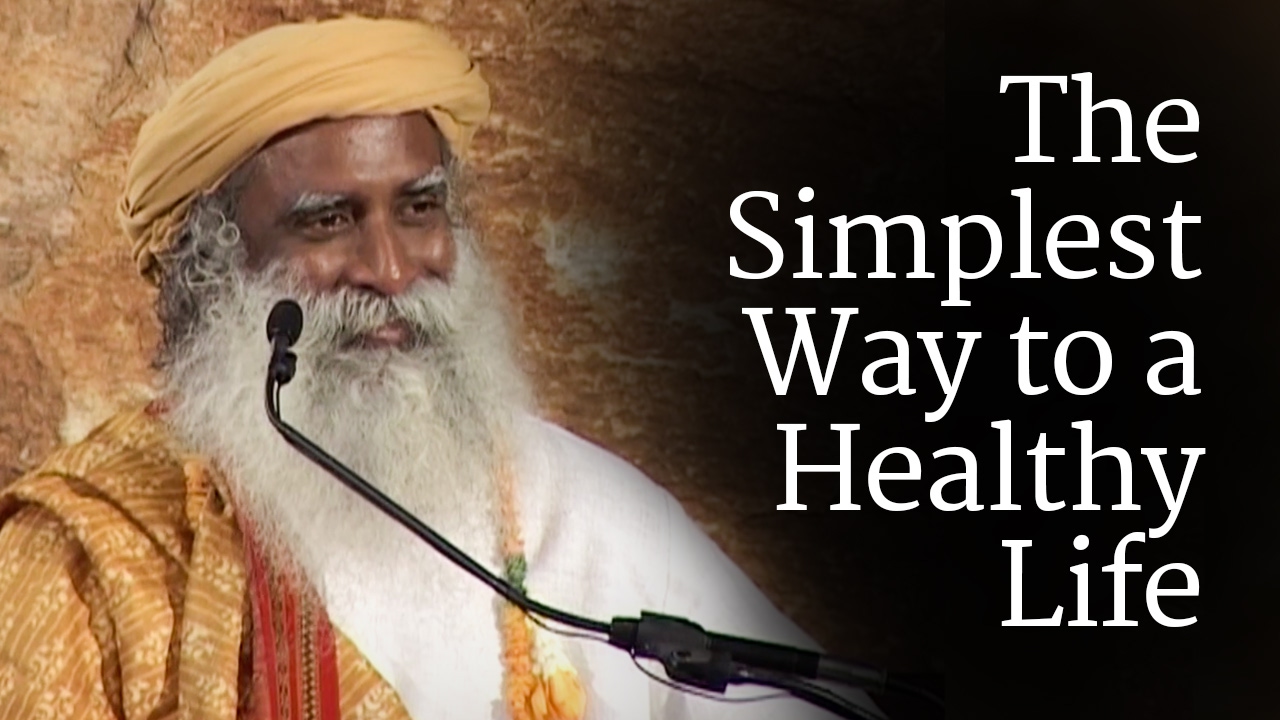
In “The Simplest Way to a Healthy Life,” Isha Foundation founder and yogi Sadhguru Jaggi Vasudev strips the wellness conversation down to a single working principle: use the body and it will function; neglect it and it won’t. Rather than framing health as a product to be purchased or a disease to be warded off, he presents it as the default state of a system that’s properly engaged — physically, mentally, and energetically.
- Sadhguru’s core rule: “the more you use the body, the better it functions” — health is not an invention or an external fix but the natural byproduct of well-exercised body, mind, and energy.
- He maps the yogic framework of three sheaths — Annamaya Kosha (physical body), Manomaya Kosha (mental body), and Pranamaya Kosha (energy body) — arguing that chemical imbalances and chronic illness trace back to lethargic or misaligned life energy, not just physical or mental symptoms.
- His practical checklist for spinal and neurological health: daily movement that includes bending forward, bending backward, twisting to both sides, and squatting — paired with spacing meals properly, never sleeping on a full stomach, and prioritizing restfulness over excess sleep.
The Case Against Treating Health as a Fix
Sadhguru’s starting point is a rejection of how most people frame the problem. Modern medicine, he says, tends to treat illness as something to counteract — chemistry deployed against chemistry, antidotes against imbalance. That approach can manage a crisis, but it doesn’t address why the imbalance showed up in the first place. His argument is that the yogic system works one layer deeper, targeting the energy body that he says governs both the physical and mental layers above it.
That’s the crux of his three-Kosha framework. The Annamaya Kosha is the physical body most people think of as “health.” The Manomaya Kosha is the mental layer — thought, mood, mental clarity. Sitting beneath both, in his framework, is the Pranamaya Kosha, the energy body. When that energy is sluggish or out of alignment, Sadhguru says, it shows up as chemical imbalance and chronic conditions in the layers above it — which is why he frames yogic practice as addressing the root rather than the symptom.
The more you use the body, the better it functions — health is not an invention or an idea.
The Physical Rule: Use It or Lose It
Sadhguru’s practical guidance is deliberately unglamorous. He points to four movements the spine needs on a regular basis: bending forward, bending backward, twisting to both sides, and squatting. These aren’t presented as an exercise trend but as maintenance for the spinal column and the neurological system that runs through it — the argument being that a spine that never moves through its full range starts breaking down in ways that eventually surface as pain, stiffness, or worse.
It’s a philosophy that lines up with the same “use it or lose it” logic found in a lot of movement-based practices, from mobility training to functional fitness circuits — the idea that a joint or muscle group left idle for long stretches degrades faster than one kept in regular motion, regardless of age.
Digestion, Sleep, and Keeping Energy in Flow
Beyond movement, Sadhguru zeroes in on two habits most people treat as afterthoughts: eating rhythm and sleep quality. He advises leaving adequate gaps between meals rather than grazing constantly, and specifically warns against sleeping on a full stomach — a habit he ties directly to disrupted digestive balance. On sleep, his point isn’t “more is better.” He frames restfulness, not raw hours logged, as the real target, arguing that a body and mind that are properly at ease don’t need to compensate with excessive sleep to recover.
The throughline across all of it is friction. Sadhguru’s contention is that when life energy is flowing and aligned — through movement, digestion, and rest working in sync rather than against each other — the body operates without resistance. Health, in that model, isn’t a separate goal to pursue on top of daily life; it’s what happens automatically once the friction is removed.
A Framework, Not a Regimen
What separates Sadhguru’s pitch from a typical wellness protocol is the absence of prescriptions — no meal plans, no workout splits, no supplement stacks. His four movements and his meal-timing guidance are less a program than a minimum floor: keep the spine moving through its natural range, don’t overload the gut before sleep, and don’t mistake more sleep for better rest. Everything else, in his framing, is the body doing what it already knows how to do once those basics are in place.









CANNONBALL FRUIT Review : Incredibly bizarre and beautiful tree
Good Samaritans Get….? Chat with Rasta Mokko! How Ugly are Matthew’s Shoes??
INSIDE BARBARA CORCORAN’S $13M PENTHOUSE
Millions of Mice Are Terrorizing Australia
Rusty to running: Chevy Stovebolt 6 engine rebuild time lapse