

 InfoSearched
A handful of bottlenose dolphins have learned to hunt by throwing themselves onto land.
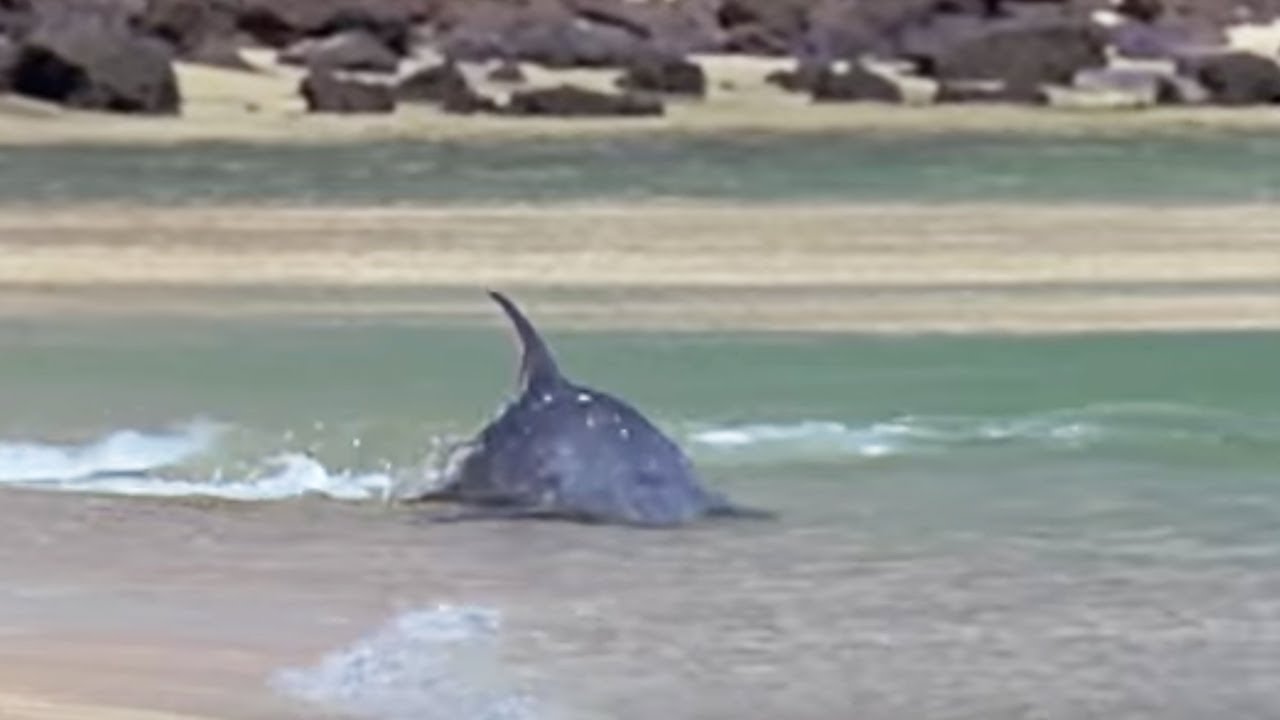
The clip comes from “Shallow Seas,” an episode of the BBC’s landmark series Planet Earth, narrated by Sir David Attenborough. It shows something far more calculated than dolphins frolicking in the surf: a small number of specialized bottlenose dolphins deliberately beaching themselves at speed to run down fish that think they’ve found safety in water only inches deep.
- The behavior is a learned hunting technique, not play — fish retreat into ultra-shallow water near sandbanks and mangrove mudflats specifically to escape dolphins, which normally can’t follow them there.
- To reach the fish, the dolphins build up speed and drive themselves onto the shallows, hydroplaning with more than half their bodies exposed above the surface before using their tails to thrust back into deeper water.
- According to the BBC Natural History Unit, only a tiny number of individual dolphins have ever been documented mastering this strategy — it isn’t a trait of bottlenose dolphins as a species.
A Hunting Trick Fish Aren’t Prepared For
Fish schools that flee into water too shallow for a predator to swim in have, for most of evolutionary history, been playing a winning hand. Dolphins are fast, powerful swimmers, but they’re built for open water, not inches-deep mud flats where a misjudged run could leave them stranded. The dolphins filmed for “Shallow Seas” turned that safety margin into a trap: they chase the fish all the way to the water’s edge and keep going.
The production team’s footage shows the dolphins accelerating hard before hitting the shallows, then riding their own momentum across the surface — tails still driving, bodies skimming rather than swimming — before peeling back into deeper water just before they’d be at risk of getting stuck. It’s a maneuver with almost no margin for error, executed in a habitat that offers no room to correct a mistake.
Dolphin Behavioral Rarity Explained
What makes the sequence remarkable isn’t just the physics of it — it’s the rarity. Per the BBC Natural History Unit, this isn’t standard bottlenose dolphin behavior passed down across an entire population; it’s a specialized skill documented in only a small number of individuals. That mirrors a pattern seen elsewhere in the animal kingdom, where a narrow slice of a species figures out a shortcut the rest never adopt, similar to the improbable predatory adaptations covered in The Blind Assassin of the Desert.
Only a handful of dolphins have ever been filmed doing this, and each attempt lasts just a few seconds at the water’s edge.
The stakes for the dolphin are real. Beaching itself even briefly on a sandbank or mudflat carries the risk of fatal stranding if the tide, the mud, or the timing goes wrong. That the behavior persists at all suggests the payoff — access to fish that would otherwise be completely unreachable — is worth the gamble for the dolphins that have learned it.
The Grind of Filming It
Getting the sequence on camera was its own ordeal for the Planet Earth crew. Because the hydroplaning bursts are unpredictable, rare, and over in seconds, camera operators had to hold position for long stretches with no guarantee the behavior would happen in frame, in the right light, or at all. It’s the same kind of patience-testing shoot that turns up again and again in wildlife television, echoed in the extended stakeouts behind clips like Filming The World’s Deadliest Bird and the tense predator-prey standoffs in DAY 85: Sharks Really Wanted This Fish!.
The result is a few seconds of usable footage stitched from what was almost certainly hours, if not days, of waiting at the water’s edge — the kind of ratio that defines most of the signature sequences across the Planet Earth series.
What sticks with anyone who’s seen “Shallow Seas” is how briefly the whole thing plays out — a dolphin explodes onto the mud, skims across on its tail, and is back in open water almost before you register what happened. That three-second burst is the entire hunt.





Cattail Down Jacket Solo Overnight
World-class sinkholes attract divers to South Australian farms
What Happened to YVONNE DE CARLO ( LILY MUNSTER )
The Lost Ancient Humans of Antarctica
Tears For Fears – Everybody Wants To Rule The World – Solo Acoustic Guitar