

 InfoSearched
Millions of Mexicans have vanished from their own country without ever crossing a border.
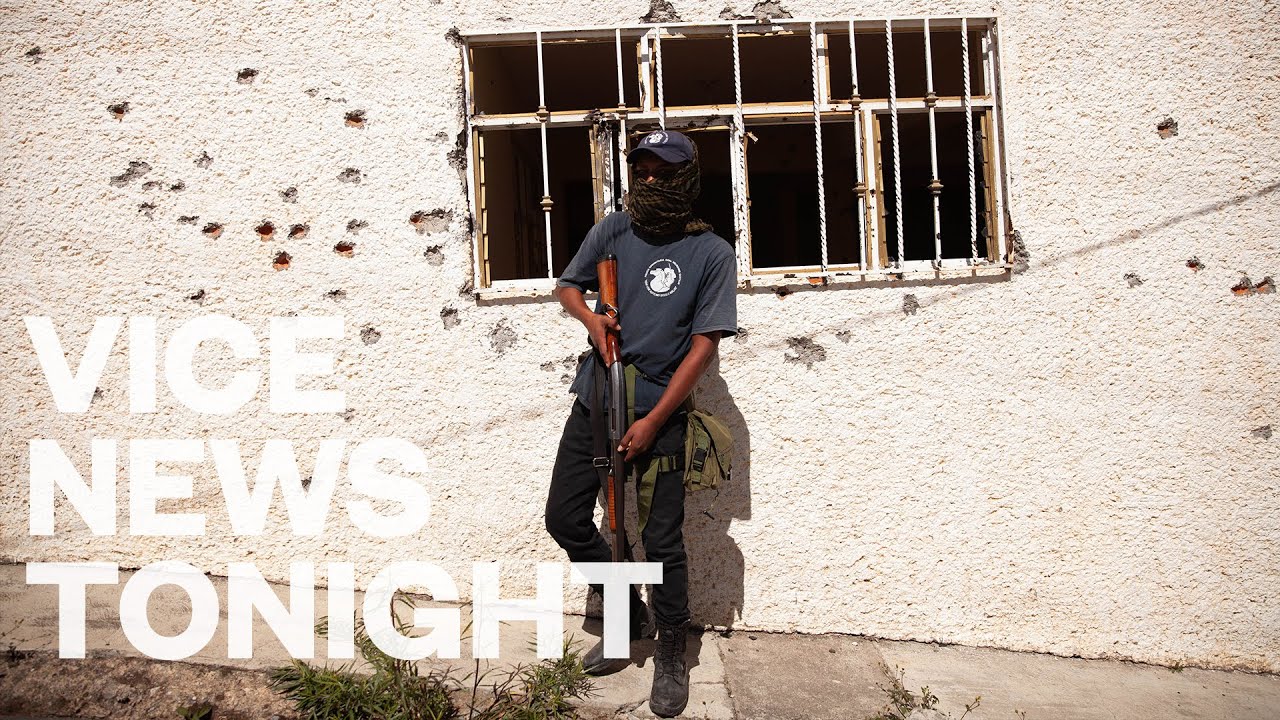
They don’t travel in caravans and they don’t make headlines the way migrants marching toward the U.S. border do. They slip out of besieged towns one family at a time, leaving behind houses, farmland and, in many cases, entire communities that armed groups then simply take over. VICE News correspondent Roberto Ferdman spent a year chasing that story for the documentary Inside Mexico’s Warring Cartels and the Millions of People They’ve Displaced, tracking hundreds of families forced out of conflict zones in states like Guerrero and Michoacán.
- Research cited in the report found that as many as 8 million people were internally displaced in Mexico between 2011 and 2017 because of cartel-related violence.
- Displaced Mexicans flee individually or in isolated family units rather than in organized caravans, which has kept the crisis largely invisible to the public.
- Mexico has no federal legislation, resettlement policy or institutional support framework for the internally displaced, leaving families without legal recognition or state protection.
A Crisis Without a Caravan
The Central American migrant caravans that dominated U.S. headlines in recent years moved in the open, thousands of people walking together toward a border. Mexico’s internal displacement crisis looks nothing like that. Ferdman’s reporting shows families leaving quietly, sometimes in the middle of the night, abandoning homes in towns that armed groups then occupy and repurpose as their own territory. Because there’s no single dramatic image — no long line of migrants on a highway — the scale of the problem has escaped the kind of scrutiny that caravans generate.
That invisibility is part of what makes the numbers so jarring. A displacement figure in the millions, spread across a decade of cartel warfare, doesn’t register the same way a single viral photo does. Ferdman’s year embedded with displaced families was an attempt to put faces and towns to a statistic that Mexican authorities have largely left unaddressed.
Ghost Towns and Territorial Warfare
The pattern documented in Guerrero and Michoacán is consistent: rival cartels move into a community, violence escalates, residents flee, and the town empties out. What’s left behind doesn’t stay empty for long. Armed groups move in and claim the abandoned houses and land as their own, converting what were once functioning neighborhoods into extensions of cartel territory. It’s the same dynamic explored in VICE’s related reporting on how Mexican drug cartels make billions off the trafficking routes and turf they control — territory isn’t just about drugs moving through it, it’s about who controls the people and land on top of it.
The Mexican Commission in Defense and Promotion of Human Rights, known as the CMDPDH, has documented how indigenous and rural populations bear the brunt of this. According to the Pulitzer Center’s reporting on the same crisis, residents in cartel-contested areas are frequently given a stark ultimatum: join the criminal group, flee, or be killed.
Join, leave, or die — the options indigenous Mexicans face when cartels invade their lands.
No Laws, No Aid, No Recognition
What separates Mexico’s displacement crisis from many others around the world is the total absence of an institutional response. There’s no federal law recognizing internally displaced persons, no resettlement program, no dedicated aid infrastructure. Families who lose everything to cartel violence are, in the eyes of the state, simply people who moved. That vacuum leaves them without legal standing to claim compensation, without guaranteed access to services in the places they land, and without protection if the violence that drove them out follows them to their new location.
Ferdman’s reporting sits alongside other VICE investigations into how deeply cartel violence has reshaped daily life in Mexico, including coverage showing that Mexico’s cartels have remained deadlier than ever even as other crises have dominated the news cycle. The displacement numbers are a symptom of the same territorial wars — just one that doesn’t produce a body count headline.
Individual Flight, Collective Silence
Because displaced Mexicans scatter rather than march together, there’s no single narrative thread for the public to follow — no caravan crossing a bridge, no encampment at a border fence. Instead there are hundreds of thousands of separate, quiet departures, each one a family deciding a town they’ve lived in for generations isn’t safe anymore. Ferdman’s year of tracking these families was built around making that pattern visible: not one crisis, but millions of small ones happening at once across Guerrero, Michoacán and beyond.
The families Ferdman followed for the documentary don’t get resettlement papers or a government caseworker — they get whatever relatives, churches or informal networks can offer once they land somewhere new. Until Mexico City passes something resembling the federal displacement law that human rights groups like the CMDPDH have been pushing for years, that’s the entire safety net for a population now estimated in the millions.








Driver Ants Eat Slug Alive
What’s Buried Beneath Hawaii’s Busiest Cliff?
FASHION TRENDS FALL-WINTER 2019-2020 & how to wear them ǀ Justine Leconte
Why Escobar’s Hippo Legacy Still Haunts Colombia
Amazing Indoor-Outdoor Architecture Near Venice Beach