

 InfoSearched
A homesteader puts the internet’s strangest axe design through a real firewood test.
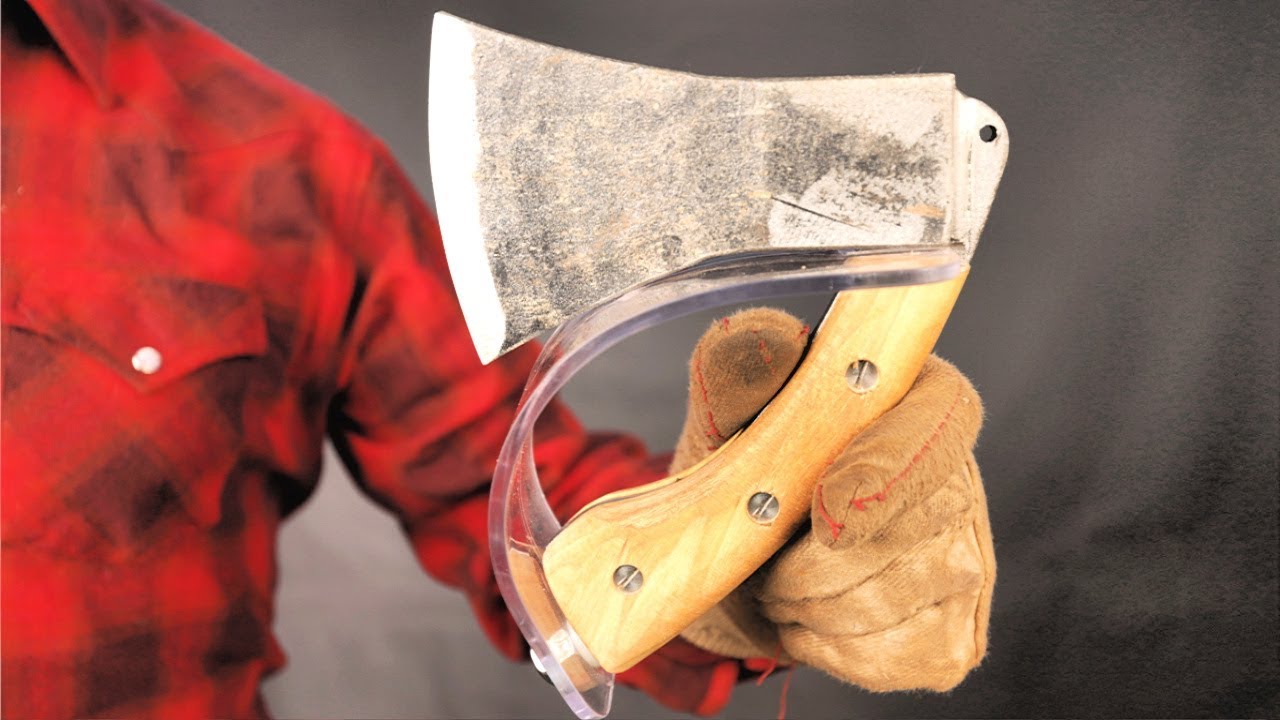
Cody Crone, who runs the homesteading channel Wranglerstar, has built a following on straightforward reviews of tools that actually get used on his property — chainsaws, mauls, hand planes, and the occasional oddity that shows up in his mailbox. In “TESTING The Weirdest Axe Ever Made,” he unboxes a tool that looks less like a forestry axe and more like something an engineer sketched on a napkin: an axe head fitted with spring-loaded levers, or splitting wings, bolted onto either side of the blade.
- The axe head carries mechanical splitting wings mounted on both sides, designed to force wood apart laterally the instant the blade strikes.
- The mechanism is built to convert downward swing momentum into outward splitting force, in theory keeping the blade from sticking in stubborn rounds.
- Crone tests it against straight-grained firewood rounds versus knotted, twisted logs to see if it actually beats a traditional splitting maul or wedge.
The Mechanism Behind the Design
The core idea isn’t new — splitting wedges and X-pattern maul heads have used lateral force for decades — but this axe tries to automate that geometry with moving parts. Spring-loaded levers sit flush against the head until impact, then pop outward, theoretically shoving the two halves of a split round apart rather than leaving them pinched around the blade. It’s the kind of tool that photographs well and gets shared around forums long before anyone swings it on a real woodpile.
Crone approaches it the way he approaches most gear that lands on his channel: unbox it, look at the fit and finish, then take it straight to the chopping block instead of trusting the marketing copy. Anyone who’s followed his builds — including projects like building an off-grid woodworking workshop log cabin in the forest — knows he judges tools purely on whether they save time and effort on the actual job.
Field Trials on the Firewood Rounds
On clean, straight-grained rounds, the wings do what they’re supposed to do. The lateral kick separates the split pieces and, on a good hit, tosses them clear of the chopping block instead of leaving Crone to pry them apart by hand. That’s the scenario the design was engineered for, and in isolation it works.
The mechanism kicks split pieces aside on clean, straight-grained wood — but knotted or twisted rounds expose every added moving part as a liability instead of an advantage.
The trouble starts once the wood stops cooperating. Knotted grain and twisted logs — the rounds that actually give homesteaders trouble — don’t split cleanly no matter what’s bolted to the axe head, and the added hardware doesn’t change that physics. A traditional wedge or a heavy splitting maul still muscles through gnarled wood by sheer mass and a well-placed strike; the spring-and-lever setup has no such advantage once the grain fights back.
Weighing the Trade-offs
Crone’s larger point is about what you give up to gain that lateral kick. The extra hardware adds weight to the head, which changes the swing balance compared to a standard American or European pattern axe. It also adds failure points — springs fatigue, pivots loosen, and a tool that’s supposed to survive years of splitting duty now has moving parts that a plain forged axe head never needed in the first place.
That’s the recurring theme with novelty splitting tools: the added mechanism solves a problem that a well-swung maul and a couple of hand wedges already solve for free, without the extra weight or the parts that can break in the cold. It’s a familiar tension for anyone stocking a woodshed the old-fashioned way, the same kind of practical trade-off that shows up across the homesteading projects Crone documents, from hand-built projects using raw materials off the land to the gear reviews that make up a chunk of his channel.
Crone doesn’t dismiss the axe outright — on the right wood, it does exactly what the spring-loaded wings promise. But his verdict lands where it usually does with gimmick tools: fun to unbox, fine on a clean round, and outclassed the moment a gnarled, knotted log shows up on the chopping block, which on most homesteads is most of the time.









Roofing a Steep 45° Pitch! Barn Board Sheathing
5 DAYS eating ONLY WILD FOODS! | Survival Challenge | The Wilderness Living Challenge 2017 SEASON 2
4 Day Solo Wild Camping Adventure in the Mountains
This Guy Makes Some Cool Things Out Of Epoxy Resin????????
Dan Bilzerian’s NEW HOUSE