

 InfoSearched
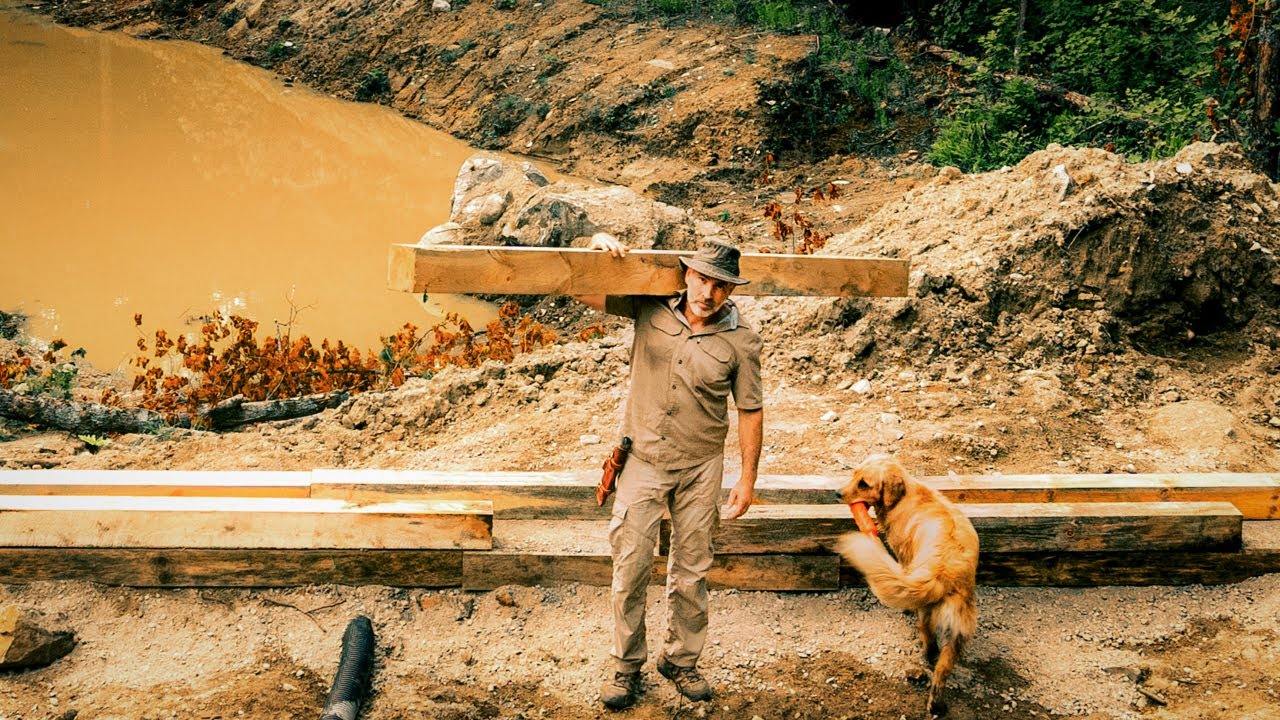
Deep in the Ontario bush, one man and his golden retriever are hand-raising a log workshop with nothing but axes, saws and rope.
Shawn James, the Canadian outdoorsman behind the YouTube channel My Self Reliance, has started a new build: a dedicated woodworking workshop cabin on his off-grid homestead. Episode 1 of the series follows James and his dog, Cali, as they scout a site among the trees, fell the first timbers and begin shaping logs entirely by hand — no chainsaws, no generators, no power tools.
- James is expanding an existing off-grid homestead that already includes a main log cabin, an outdoor forest kitchen and an off-grid sauna.
- The workshop build relies exclusively on traditional bushcraft and timber-framing methods: crosscut saws, axes, drawknives and hand augers, with rope-and-pulley rigging used to move and raise heavy logs solo.
- James is joined throughout by his golden retriever, Cali, and the video leans on natural forest sound over voiceover narration.
A Workshop Built With the Same Hands as the Homestead
This isn’t James’s first structure in the woods. He’s already put up a residential cabin, a forest kitchen and a sauna on the same property, all documented in earlier videos that established his approach: minimal machinery, maximum craftsmanship. The workshop is the next logical piece — a permanent space for the woodworking and toolmaking that off-grid life demands, rather than something cobbled together as an afterthought.
Where a lot of self-reliance content leans on hypothetical builds or shortcuts like straw-bale or cob walls, James’s project stays strictly in the realm of log construction and timber framing — the real techniques used to raise a structure that has to survive Ontario winters. That commitment to authenticity, rather than lifestyle theorizing, is what separates his channel from generic off-grid advice content.
Site Selection and the First Cuts
Episode 1 opens with the unglamorous but essential work: picking the site among standing timber, clearing brush and marking which trees come down to become the cabin’s own walls. James harvests the logs locally rather than trucking in milled lumber, then works through peeling bark and cutting notches — the joinery that lets logs lock together at the corners without nails or brackets.
Raising foundation and wall logs solo is the hard part, and it’s where the rope-and-pulley rigging comes in. Without a tractor or a second set of hands, James uses leverage and mechanical advantage to lift timbers into place, a technique straight out of pre-industrial log building.
No chainsaws, no generators — just crosscut saws, axes, drawknives and a rope-and-pulley system doing the work of machinery.
Hand Tools Over Horsepower
The tool kit on display is deliberately old-fashioned: crosscut saws for felling and bucking, axes for hewing, drawknives for shaving bark and smoothing surfaces, and hand augers for boring the holes that pin logs together. It’s slower than running a chainsaw, but it’s also quieter, and the videos are built around that quiet — birdsong, wind, the rasp of a drawknife on wood, with James saying little.
Viewers who’ve followed similar bushcraft-build content, like the roof-raising sequences in the Iron Age Bushcraft Build series, will recognize the appeal: watching a structure go up using only techniques a person could have used centuries ago, with the risk of a bad notch or a slipped rope always in the frame.
The Importance of Dedicated Workshops
For someone living off-grid, a workshop isn’t a luxury — it’s infrastructure. James needs a covered, organized space to maintain and build the tools, furniture and fixtures that keep the rest of the homestead running, separate from the cabin he lives in. That mirrors the logic behind other solo off-grid shelter projects, including the improvised builds seen in Solo Overnight Building a Sandbag Shelter In the Woods, where the structure has to earn its place through function, not just appearance.
Episode 1 ends with the frame barely started — logs cut, notched and partially stacked, with the bulk of the wall-raising still ahead. James has built this way before and finished; the only question this series answers episode by episode is how many more solo lifts it takes before the workshop has a roof over it.




OUR LUXURY TREEHOUSE TOUR | LIVING IN A TREE
Cuba’s Scariest Food!!
Quarantine at the Edge of the World
4 Day Solo Wild Camping Adventure in the Mountains
Quarantine at the Edge of the World