

 InfoSearched
A Moscow warehouse full of liquid nitrogen tanks is where some people are betting their afterlife on science instead of religion.
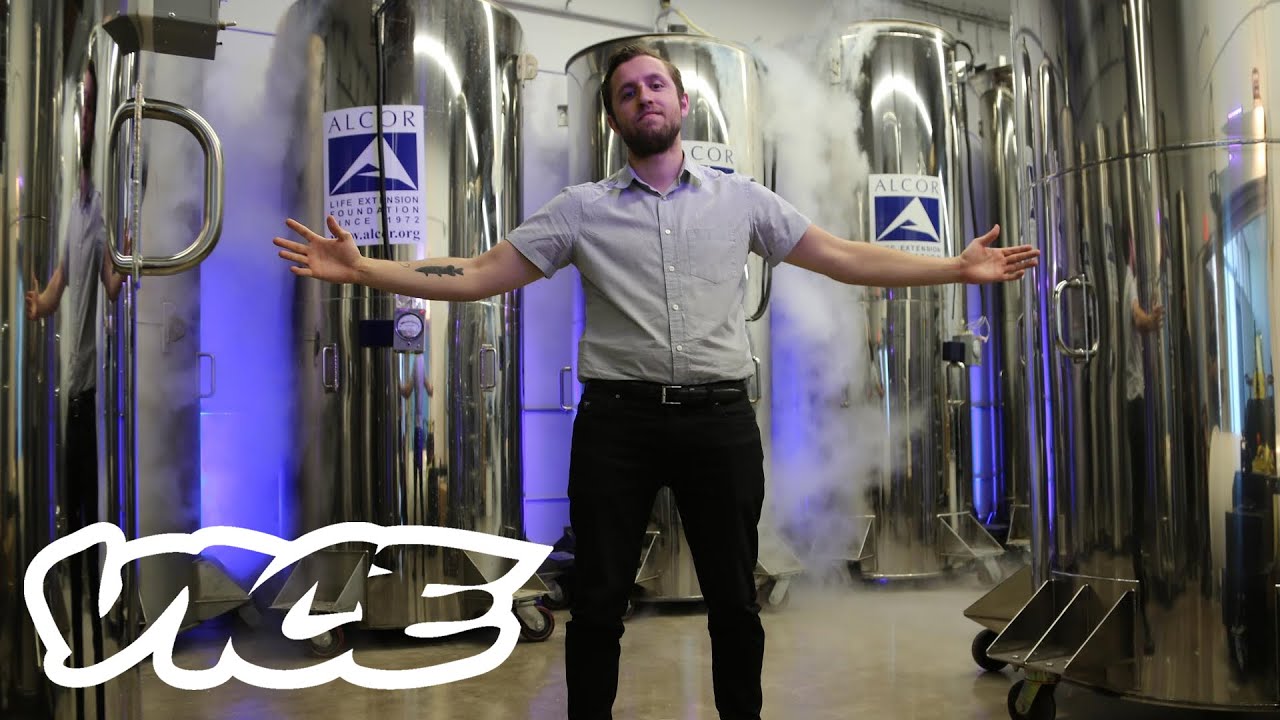
VICE Asia’s Motherboard series went inside KrioRus, the cryonics outfit operating just outside Moscow, for its 2019 documentary “World of Cryonics – Technology That Could Cheat Death.” The film, published under the banner “Frozen Faith,” lays out exactly how a body gets prepared for indefinite cold storage, what it costs, and why the scientific establishment still calls the whole enterprise unproven. It’s less a sci-fi pitch than a walkthrough of an actual, functioning business that’s been doing this since 2005.
- KrioRus, founded in 2005 by Danila Medvedev and the Russian Transhumanist Movement, is the first and largest cryonics provider in Eurasia.
- Whole-body preservation runs around $36,000, while neuropreservation — freezing only the head — costs roughly $12,000.
- Bodies are stored upside down in liquid nitrogen Dewars at roughly -120°C to -196°C, and no cryopreserved human has ever been revived.
The KrioRus Body Preparation Process
The documentary follows the technical protocol KrioRus staff perform immediately after a client is declared legally dead. Medical teams flush the blood out of the body and replace it with cryoprotectant chemicals designed to stop ice crystals from forming inside cells during the freeze — the same basic problem that ruptures a strawberry in a home freezer, just applied to human tissue at a much higher stake. Once that infusion is complete, the remains are cooled in stages down to sub-zero temperatures before going into long-term storage.
Storage happens inside large Dewars filled with liquid nitrogen, holding temperatures between roughly -120°C and -196°C. KrioRus keeps bodies positioned upside down inside these tanks, a deliberate choice: if coolant levels ever dropped unexpectedly, the brain — sitting at the bottom — would be the last part to warm, buying more time before any potential damage.
The Price Tag on a Second Chance
KrioRus’s pricing splits clients into two tiers. Whole-body preservation costs around $36,000, covering the full-body flush, cryoprotectant infusion, cooling, and indefinite Dewar storage. Neuropreservation — preserving only the head, on the theory that a future revival would involve regenerating or transplanting a new body — runs about $12,000, making it the more accessible entry point into the industry.
Betting on Nanotechnology and AI
The film spends real time with the transhumanist philosophy behind KrioRus’s client base and staff. The wager is straightforward: death, as currently defined, is a technical failure rather than a permanent state, and future breakthroughs in nanotechnology, regenerative medicine, and artificial intelligence will eventually be able to repair the cellular damage caused by dying and by the freezing process itself. For clients, signing up isn’t framed as faith in resurrection — it’s framed as a hedge against irreversibility, made now while the option still exists.
The Scientific Pushback
That optimism runs straight into open skepticism from mainstream science. The documentary highlights groups like the Society for Cryobiology, which draws a hard line between legitimate cryobiology — freezing sperm, embryos, or small tissue samples — and the speculative claim that a fully preserved human brain or body could someday be revived. The Society has historically distanced itself from cryonics organizations, treating current revival hopes as unproven experimentation rather than medicine.
No cryopreserved human has ever been successfully revived.
That single fact is the crux of every argument against the industry, and it’s one KrioRus doesn’t dispute — the company’s entire business model is a wager on technology that doesn’t exist yet. For a deeper dive into how other outlets have covered unconventional science and fringe medical claims, the documentaries covering these subjects tend to follow the same pattern: skepticism first, human motivation second. And if the idea of what happens to a body under extreme conditions interests you, the breakdown in 5 Craziest Things I’ve Found In Dead Bodies covers a very different but equally blunt side of that same subject.
What the film makes clear is that KrioRus isn’t selling certainty — it’s selling storage, and time. Every Dewar in that Moscow facility is a bet that the science catches up before the nitrogen runs out, and right now nobody, not Medvedev, not the Society for Cryobiology, and not a single client, has any proof either way.







Simple Log Cabin- Built for $500- No Permit Required
EXTREME Off-Grid Living in a 4 Season Tent & Tiny Truck Camper
How This Guy Makes Record-Breaking Balloon Sculptures
Incredible Discoveries Found Underground That Changed History
6 Minutes Of Mountain Surfing in Norway