

 InfoSearched
Mercedes-Benz used CES 2015 to show what it thinks a car stops being once nobody has to drive it.
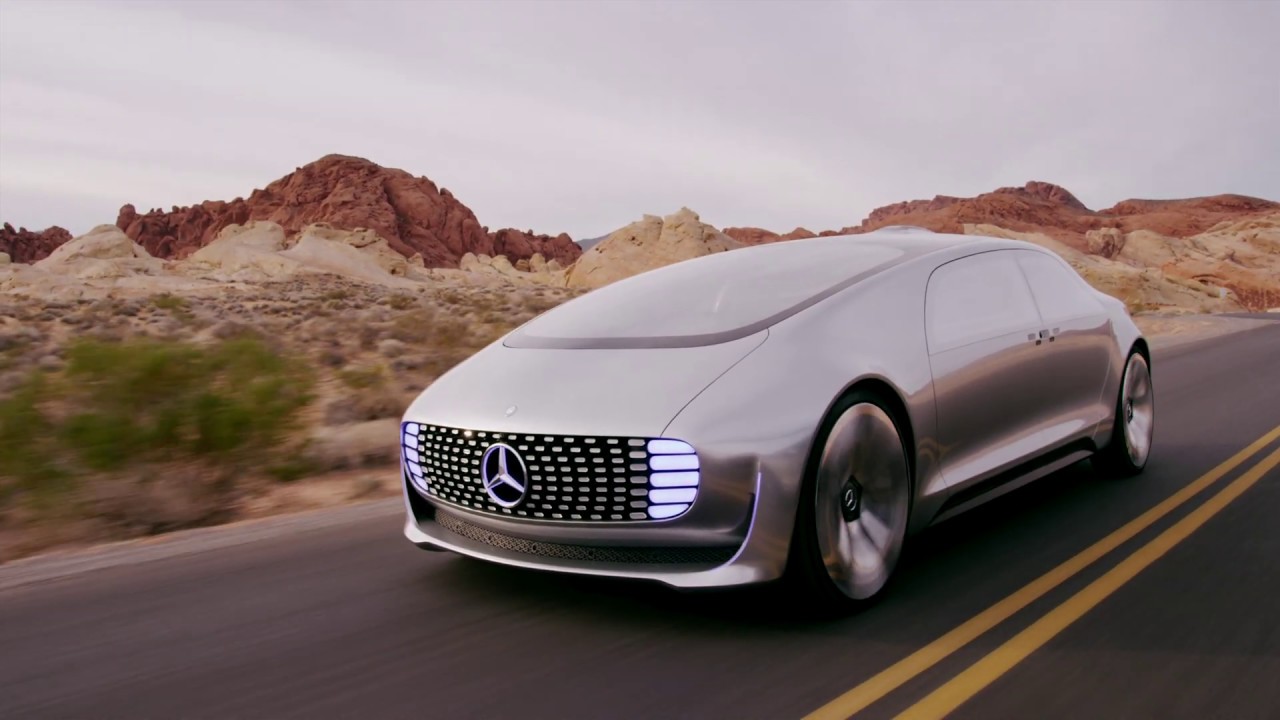
Dr. Dieter Zetsche didn’t call it a car when he unveiled it in Las Vegas — he called it a “mobile living space.” The Mercedes-Benz F 015 Luxury in Motion is a research vehicle built under the automaker’s ‘City of the Future 2030+’ initiative, and it treats personal time and space, not horsepower, as the new definition of luxury. It’s not headed to a dealership; it’s a rolling thesis statement about where Mercedes thinks autonomy takes the industry.
- Unveiled at CES in Las Vegas in January 2015, the F 015 runs on an F-CELL plug-in hybrid setup adapted from the 2011 F 125! concept, combining hydrogen fuel cells, high-voltage batteries, and twin rear electric motors for a combined 268 hp.
- The body mixes carbon-fiber-reinforced plastic, aluminum, and high-strength steel to build a shell roughly 40% lighter than a comparable production car.
- Total range hits about 1,100 kilometers — roughly 200 km on battery power alone and 900 km more once the fuel cell takes over.
A Body Built to Talk to the Street
At 5,220 mm long, 2,018 mm wide, and 1,524 mm tall on a stretched 3,610 mm wheelbase, the F 015 is closer in footprint to a limousine than a sedan. The most striking piece isn’t the proportions, though — it’s the front and rear LED communication grids that function as a language for pedestrians. The lights shift color depending on what the car is doing: blue when it’s driving itself, white the moment a human takes the wheel.
That color-coded signaling was Mercedes’ answer to a problem nobody in the industry had really solved yet — how does a self-driving car tell a person crossing the street what it’s about to do? The grids replace the guesswork of eye contact with a pedestrian with an explicit visual cue, which is a very different engineering problem than horsepower or range.
The Cabin as a Digital Lounge
Step through the pillarless, coach-style doors — they swing open to 90 degrees — and there’s no conventional cockpit waiting. Four lounge chairs rotate to let all four occupants face each other, open-pore wood and leather everywhere, six embedded high-resolution screens responding to gesture, eye-tracking, and touch. It’s built around the idea that once the driving is automated, the interior’s job changes entirely.
Switch to manual mode and the cabin reconfigures itself: the front seats swivel forward and a retractable steering wheel deploys out of the dashboard. That single mechanical detail is the whole pitch in miniature — the car defaults to conversation and screens, and driving is the exception you opt into, not the other way around.
Dieter Zetsche didn’t pitch a faster Mercedes in Vegas — he pitched a living room that happens to move at 100 km/h.
The F-CELL Powertrain
Underneath the lounge-chair theatrics is a genuinely serious drivetrain. The F-CELL architecture, carried over from the 2011 F 125! concept, pairs hydrogen fuel cells with high-voltage batteries and twin rear electric motors putting out a combined 272 PS. Mercedes clocked the F 015 at 0–100 km/h in 6.7 seconds — quick enough that the concept isn’t just a design exercise sitting on a show-floor turntable.
The split range figures matter here too: roughly 200 km of pure battery-electric driving before the fuel cell stack extends that out to 1,100 km total. That’s the same combustion-anxiety problem every EV and hydrogen concept from this era was chasing — Mercedes just built its answer into a car shaped like a lounge on wheels, the same instinct that shows up in the automaker’s later production interiors, like the rear seat experience Mercedes eventually built into the new S-Class.
Positioning Inside the 2030+ Vision
Zetsche framed the F 015 as one data point inside a much bigger question Daimler was asking itself: what does a city look like in 2030 once autonomous vehicles are common on the road? The 40%-lighter CFRP-aluminum-steel structure, the pedestrian-facing LED grids, the gesture-controlled cabin — none of it is meant to ship as-is. It’s meant to be the vocabulary other Mercedes concepts and eventually production cars borrow from, the same way other manufacturers were racing to stake a claim in autonomous and electric mobility around the same CES cycle, alongside concepts like the Jetson One years later chasing a similar promise of personal, self-piloted transport.
Mercedes never gave the F 015 a production date, and it was never supposed to have one — it’s a research platform, not a roadmap. What it left behind is the DNA: the blue-for-autonomous, white-for-manual signaling logic and the swivel-seat cabin have kept turning up in Mercedes’ show cars ever since CES 2015, which is about as long a shelf life as a concept car ever gets.




Spectacular FLOATING HOME is Self-Built & Off-Grid
HOW MUCH $$$ DOES WRAP COST? | The REAL STORY Shops Might Not Tell You!
I Found a FULL Sealed Box Underwater in the River! (Contents Returned to Owners
Venezuela / Most Dangerous City on Planet / How People Live
Doomsday Bannock – how to make campfire bread