

 InfoSearched
A soda bottle and a sharp knife are all it takes to turn a bare balcony into a working tomato patch.
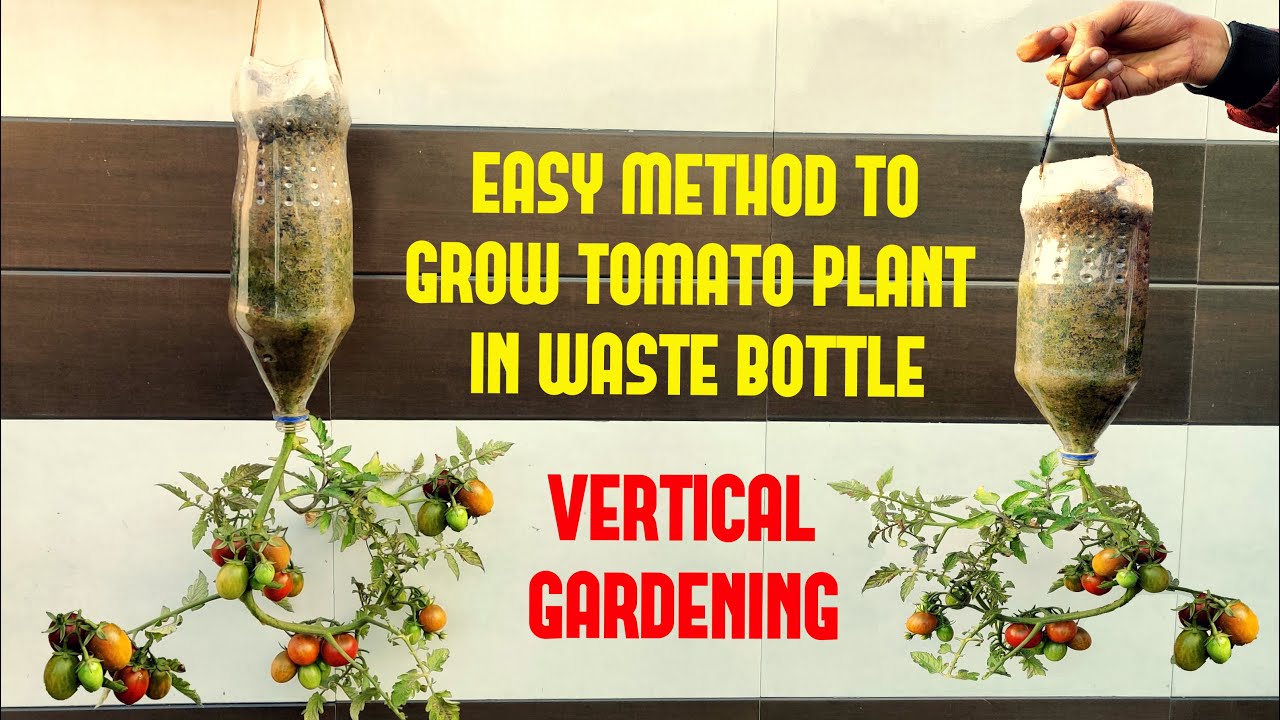
The tutorial walks through an upside-down vertical planting method that lets apartment dwellers and anyone short on yard space grow tomatoes off a railing or hook instead of a raised bed. Repurposed plastic beverage bottles become self-contained planters, with the vine cascading downward from the base while the root ball stays locked inside the container above it. It’s a build that takes one bottle, one seedling, and about twenty minutes of prep.
- The bottom of an inverted plastic bottle is sliced off to create an open top, while the tapered spout becomes the lower exit hole the seedling hangs through.
- A tomato seedling typically sprouted two weeks earlier gets threaded stem-first through the neck, with coconut coir, a fabric scrap, or a coffee filter collar packed around the opening to keep the potting mix from washing out.
- Plants set up this way generally reach flowering and fruiting within two months of transplanting, provided they get 6 to 8 hours of direct sun a day.
Building the Upside-Down Planter
The build starts with the bottle upside down. Cutting off the bottom leaves an open top for filling and watering, while the narrow spout at what used to be the top of the bottle becomes the exit point at the bottom of the finished planter. That tapered neck is exactly wide enough to let a young tomato stem pass through without crushing it, which is the whole trick behind the design.
Before any soil goes in, growers punch a few holes near the newly cut rim so twine or picture wire can be looped through for hanging. Get this step done early — trying to drill hanging holes once the bottle is packed with wet soil is a lot harder than doing it on an empty bottle.
Threading the Seedling Through the Neck
This is the part that makes the method work. A seedling — usually about two weeks past germination — gets guided stem-first through the bottle’s neck from the inside, so the root ball stays up inside the container while the foliage hangs free below. A collar of coconut coir, a scrap of fabric, or even a coffee filter gets wedged around the stem at the opening to hold the potting mix in place without choking off drainage.
Two weeks after germination, the seedling threads root-first through the bottle’s neck — head down, roots up, ready to hang.
Once the seedling is seated, the bottle gets filled from the open top with a lightweight mix — potting soil blended with compost and perlite for aeration — chosen specifically to keep the hanging weight manageable once it’s watered in.
Hanging, Sunlight, and Feeding
The finished planter goes wherever it can pull 6 to 8 hours of direct sun daily — a south-facing balcony rail, a patio hook, or a fence post all work. Because the vine hangs in open air rather than sitting against a stake, air moves freely around the foliage, which cuts down on the fungal and foliar disease pressure that dense, staked tomato beds often deal with. The inverted setup also removes the classic problem of a heavy tomato vine snapping under its own weight, since gravity is pulling the fruit-bearing stem straight down rather than sideways off a support.
Growers looking for a companion project with the same container logic can check out the container approach used for growing raspberries, blueberries, and blackberries in containers, or go bigger with a full bed conversion covered in turning a lawn into a vegetable garden.
Anticipating Results After Installation
With steady watering and consistent sun, the seedlings threaded through these bottles typically hit flowering and then fruiting inside two months of being transplanted into the hanging rig. From there it’s the same routine as any tomato plant — checking soil moisture so the lightweight mix doesn’t dry out too fast in a hanging container, and watching for the first blossoms as the sign the setup is working.








True cost of US healthcare shocks the British public
Living on a Self-Sufficient Sailboat for 10 Years
Monaco – The secrets of a true luxury stay – LUXE.TV
I was sex trafficked for years. Brothels are hidden in plain sight
INSIDE BARBARA CORCORAN’S $13M PENTHOUSE