

 InfoSearched
Simon Reeve doesn’t just film homelessness in Los Angeles — he crawls inside it.
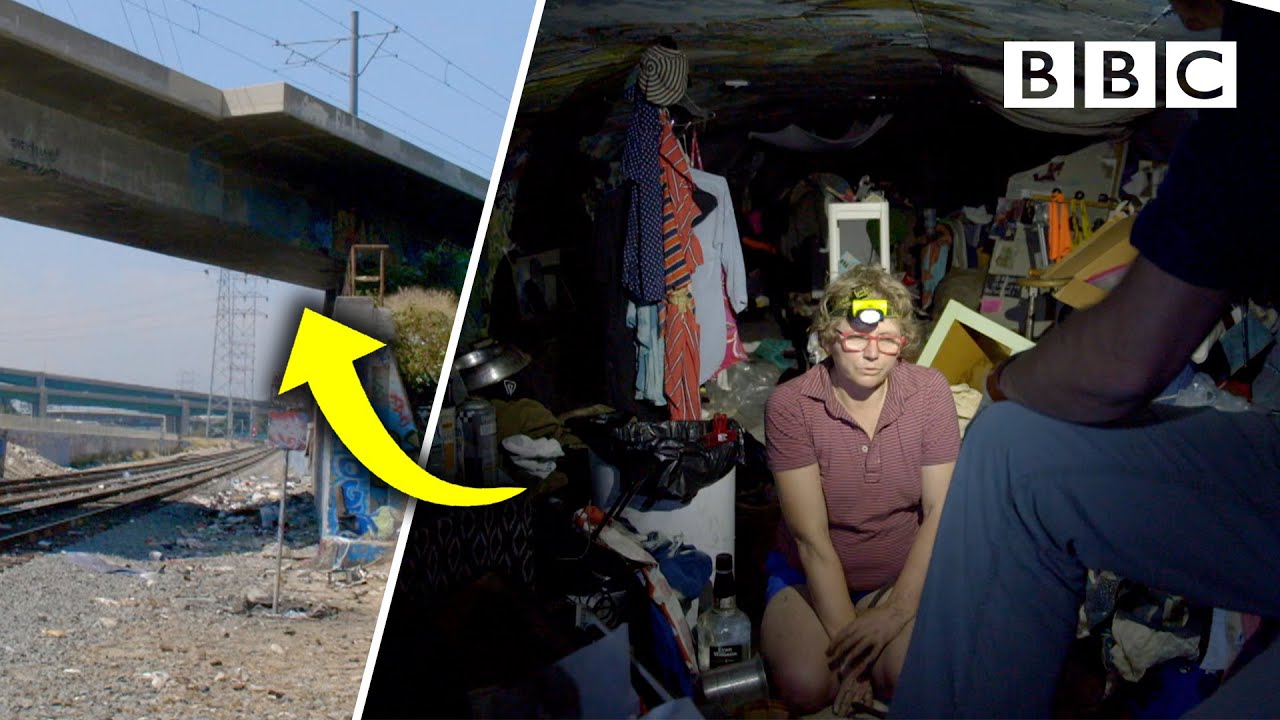
In the second episode of BBC Two’s “The Americas with Simon Reeve,” broadcast in October 2019, the presenter travels through California to document the state’s widening gap between extreme wealth and extreme poverty. The segment’s most striking scene isn’t a tent city or a sidewalk encampment — it’s Reeve squeezing into the hollow concrete superstructure of a railway bridge spanning the Los Angeles River, where a woman named Amy has built a hidden place to sleep.
- Reeve crawls into the cavity of a concrete railway bridge over the L.A. River to meet Amy, who has improvised a sleeping space inside the structure itself, not underneath it.
- The episode ties Amy’s situation to a broader housing shortage and structural forces pushing tens of thousands of Californians into homelessness.
- Reeve also joins local street medicine teams delivering frontline healthcare directly to unhoused residents across Los Angeles.
Inside the Bridge Cavity
Most footage of California’s homelessness crisis shows people camped under an overpass, tarps strung against the concrete. Reeve’s segment goes a step further, following him as he climbs up and into the actual hollow interior of a railway bridge structure over the L.A. River. It’s a tight, awkward space — not designed for habitation in any sense — but for Amy, it offers something the street level can’t: distance from the danger of sleeping exposed at ground level.
That detail matters because it reframes what “homeless encampment” can even mean in a city like Los Angeles. Reeve isn’t touring a tent row; he’s documenting how desperate the search for a safe, enclosed space has become, to the point that a bridge’s own skeleton gets colonized as shelter.
The Scale of the Crisis
Reeve uses California’s contrasts — some of the wealthiest zip codes in the country sitting a few miles from sprawling encampments — to frame why the numbers have gotten so bad. The episode links the crisis directly to a housing shortage that has pushed rents and home prices far beyond what many low-income residents can sustain, driving tens of thousands of people across the state into homelessness.
Inside the hollow of a concrete railway bridge over the L.A. River, Amy has built the closest thing she has to a home.
The documentary treats this not as a series of individual misfortunes but as the predictable output of a housing market and social safety net that have failed to keep pace with the people falling out of stable housing. That framing runs through Reeve’s broader look at California in the episode, where the same state producing extraordinary wealth is also producing extraordinary numbers of people sleeping rough.
Street Medicine on the Front Line
Beyond Amy’s bridge, Reeve joins street medicine teams who work directly on the sidewalks and encampments of Los Angeles, treating unhoused residents who have little or no other access to healthcare. These teams operate outside the traditional clinic model entirely, meeting people where they are rather than waiting for them to come in — a reflection of how far outside the normal system many homeless residents have fallen.
The episode uses these ride-alongs to show the human cost sitting underneath the statistics: untreated illness, injury, and exposure compounding the basic problem of not having anywhere safe to sleep. It’s a companion piece to the bridge scene — one shows where people end up living, the other shows what happens to their health once they’re there.
For readers following how documentary crews have covered street-level poverty and survival in other cities, the same instinct to go past the surface story shows up in pieces like Venezuela / Most Dangerous City on Planet / How People Live, and in the origin story behind The Homeless Boy Who Invented Louis Vuitton.
Amy’s setup inside that bridge isn’t a permanent fix and everyone in the segment knows it — it’s a workaround for a system that hasn’t given her anywhere better to go. Reeve doesn’t wrap the episode with a solution; he leaves the camera on the cavity she’s turned into a bedroom and moves on to the next part of California’s story, which is exactly the point.





How Waste Is Dealt With On The World’s Largest Cruise Ship
DMT Always Shows Shane Mauss the Same Purple Woman on His Trips – Tales from the Trip
10 Summer Style Essentials All Men Need
How to Get Away with Stealing
How Paranoid Schizophrenia Impacts My Life – A Day in the Life