

 InfoSearched
Small yards and bad soil are no longer an excuse to skip fresh berries this summer.
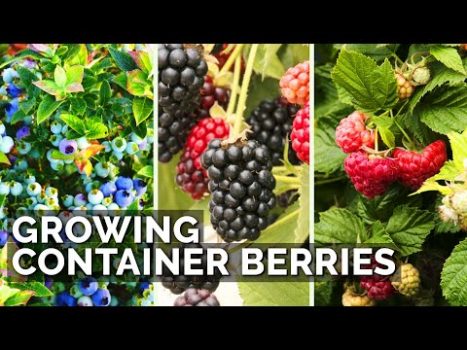
Kevin Espiritu, founder of Epic Gardening, filmed a new tutorial at the Epic Homestead walking through exactly how to grow raspberries, blueberries, and blackberries in pots rather than open ground. The video, “How to Grow Raspberries, Blueberries, and Blackberries in Containers,” is built for gardeners stuck with cramped patios, poor native soil, or a climate that doesn’t naturally suit berries. Espiritu leans on compact cultivars from the Bushel and Berry collection, bred by Star Roses and Plants specifically to fruit heavily without sprawling canes or trellis systems.
- Espiritu spotlights three dwarf Bushel and Berry cultivars — ‘Baby Cakes’ (thornless blackberry, 3-4 feet tall), ‘Raspberry Shortcake’ (thornless mounded raspberry, 2-3 feet, no staking needed), and blueberry varieties ‘Peach Sorbet’ and ‘BerryBux.’
- Container guidance calls for wide pots, half-barrels, or fabric grow bags starting at 15 gallons for raspberries, scaling up for larger root systems, with drainage holes as a non-negotiable.
- Soil needs split sharply by plant: raspberries and blackberries want rich, well-draining organic potting mix, while blueberries require a strictly acidic soil profile to thrive.
Dwarf Cultivars Alter Agricultural Economics
Standard raspberry and blackberry canes can stretch 6 feet or more and typically need wire trellising to stay upright — a nonstarter on a balcony or small deck. That’s the problem the Bushel and Berry line was bred to solve. ‘Baby Cakes’ tops out around 3 to 4 feet and stays thornless, making it manageable in a half-barrel without wounding anyone reaching in to pick fruit. ‘Raspberry Shortcake’ goes even smaller, forming a mounded bush of just 2 to 3 feet that Espiritu notes needs no staking at all, which removes one of the most annoying maintenance chores in traditional raspberry growing.
On the blueberry side, ‘Peach Sorbet’ and ‘BerryBux’ were selected as much for their compact, ornamental foliage as their fruit output, meaning they can double as a decorative planter feature on a patio while still producing a real crop. Anyone who has already tackled dense planting in tight quarters — the same logic behind turning a lawn into a vegetable garden — will recognize the appeal of squeezing productive plants into a footprint that used to sit empty.
Picking the Right Pot and Soil
Espiritu’s container advice centers on capacity and drainage. Raspberries can start in something as modest as a 15-gallon fabric grow bag, but blackberries and blueberries with more sprawling root systems need larger vessels — wide containers or half-barrels rather than deep, narrow pots. Drainage holes aren’t optional in his demonstration; without them, potted berries sit in soggy soil and the roots suffer.
The soil split is the detail growers most often get wrong. Raspberries and blackberries do well in a rich, well-draining organic potting mix, but blueberries are a different animal entirely — they demand an acidic soil profile to take up nutrients properly, and a standard all-purpose mix simply won’t cut it. Getting that pH wrong is one of the most common reasons container blueberries stall out or drop leaves.
Blueberries strictly require an acidic soil profile — skip that step and the rest of the setup doesn’t matter.
Planting and Placement
Once the container and soil are sorted, Espiritu centers the bare-root or potted cane in the pot, making sure the crown sits just above the surrounding soil line rather than getting buried or left crowded against the container wall. He then fills in with the nutrient-rich potting soil around the root mass, tamping gently to eliminate air pockets without compacting the mix too hard.
Placement afterward is just as important as the planting itself. Espiritu stresses full sun exposure — a minimum of 6 to 8 hours a day — to get a heavy fruit set out of any of these varieties. Container plants also dry out considerably faster than anything in the ground, so he recommends checking soil moisture frequently rather than sticking to a fixed watering schedule, since heat and pot size can change how fast a container dries out day to day.
Gardeners already dialing in acidity and drainage for containers elsewhere in the yard — the same troubleshooting mindset covered in Epic Gardening’s guide to cultivating gourmet and medicinal mushrooms — will find the berry setup follows a similar rule: match the growing medium to the specific plant, not the other way around.
With ‘Baby Cakes’ and ‘Raspberry Shortcake’ fruiting through summer and into fall, the real test for anyone following this setup comes at first harvest — whether that half-barrel blackberry actually pulls the sweet, full-sized fruit Bushel and Berry promises, or needs another season of dialed-in watering to get there.






Enormous Ocean Sunfish Caught on Camera Cleaning Itself
Man Who Admits He’s Addicted To Heroin Shows What A Day In His Life Is Like
INSIDE a $10,995,000 HOLLYWOOD HILLS Modern Home with the Views of the Entire City!
13.2M Super Yacht Tour : Sunseeker 116 Yacht
Portland’s rotating skinny house follows the sun like a sunflower