

 InfoSearched
A homecoming king who once had scholarship offers now spends his mornings chasing his next fix of heroin.
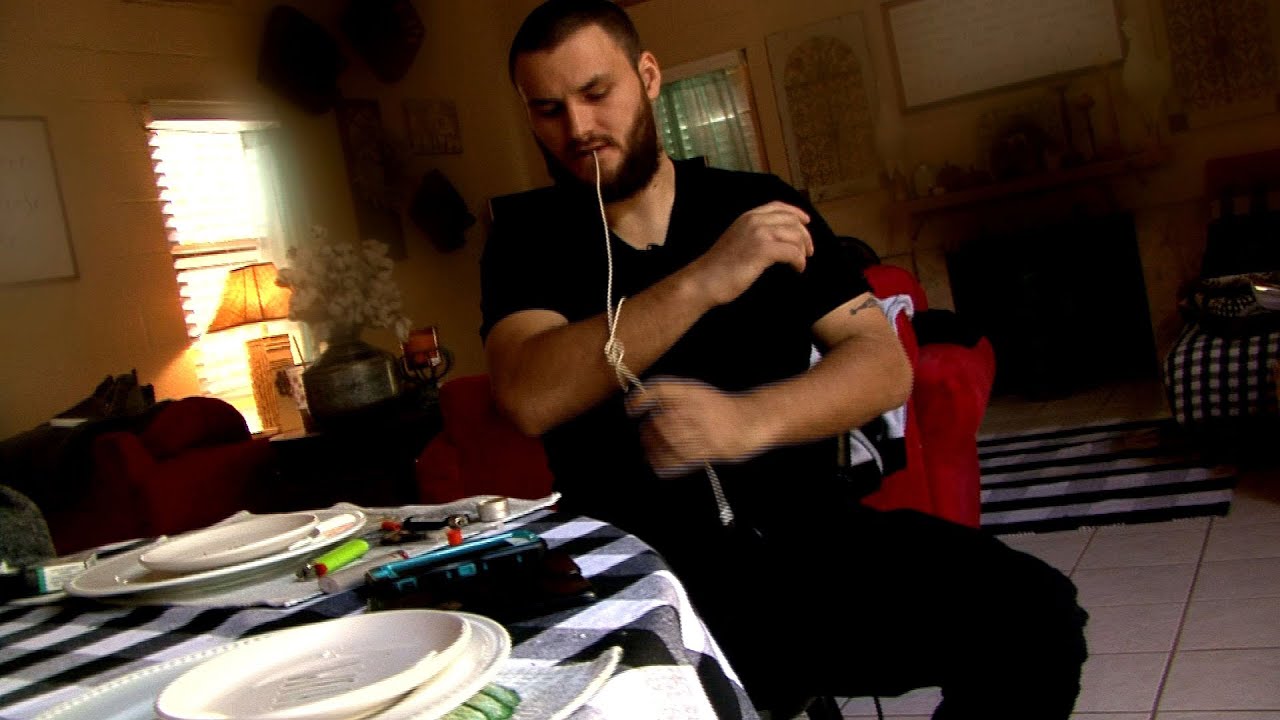
Dr. Phil’s cameras followed a young man identified only by his story — not his real name — through a single day, tracking the gap between who he used to be and who addiction has made him. The segment, titled “Man Who Admits He’s Addicted To Heroin Shows What A Day In His Life Is Like,” skips the studio interview format the show is known for and instead lets the footage do the talking: withdrawal sweats, the scramble for money, the search for a dealer, repeat.
- The subject was a standout athlete and homecoming king before heroin took over his life, according to the segment’s framing.
- Cameras document his actual daily routine — waking up already in withdrawal, then cycling through securing funds and finding the drug.
- The piece was produced as part of Dr. Phil’s broader focus on addiction interventions, using his case to illustrate the opioid epidemic’s toll.
From Homecoming Court to Withdrawal
The show’s setup is deliberately blunt: a kid who had it all — athletic standing, academic potential, the kind of social capital that gets you crowned homecoming king — now structuring his entire day around a substance that owns him. There’s no gradual slide shown on camera, just the after: a body that wakes up sick, not hungover, sick, and a mind that has one job before anything else can happen.
The footage doesn’t dramatize withdrawal so much as sit with it — the shaking, the sweating, the physical urgency that has nothing to do with getting high and everything to do with not feeling like he’s dying. That’s the piece of the opioid epidemic that rarely gets airtime: the mechanics of dependence once the euphoria stops being the point.
The Cycle: Money, Drug, Repeat
Once he’s up, the day becomes a loop. Find money. Find the dealer. Use. Start over. The segment shows him narrating this process in real time, treating the search for cash and the search for heroin as inseparable errands, both non-negotiable, both consuming hours that used to go toward practice, homework, a future that had scholarship-level upside.
He was a star athlete and homecoming king — now his whole day runs on finding heroin.
That contrast is the entire engine of the piece. Dr. Phil isn’t building a case study out of statistics; he’s building it out of a kid whose trajectory should have gone somewhere completely different, and did, until it didn’t. The show has leaned on this same technique before, most notably in its multi-part look at the Robertson family’s own struggles with drugs and deception, using a recognizable life story to make addiction land harder than a lecture ever could.
Unfiltered Realities Beyond the Lens
What separates this segment from a typical anti-drug PSA is the refusal to clean it up. He’s shown functioning — barely — under the influence, describing his own psychological state as the day wears on. There’s no redemptive arc built into the runtime; it’s a snapshot, not a recovery story, which is part of why it hit as hard as it did with viewers used to Dr. Phil episodes that end with an intervention and a treatment placement.
The show’s producers have used similar ground-level approaches to expose the human cost behind drug supply chains before, in the same vein as documentary work like the breakdown of how cartels turn addiction into billions — except here the lens is pointed at the user’s side of that pipeline, not the supply side.
He never says the word “recovery” on camera, and the segment doesn’t pretend he’s close to it. It ends the way his day does — mid-cycle, still chasing the next fix, with no studio resolution attached.







Piers Morgan – The Luxury Life Of Dubai HD Documentary 2019
Mexico’s Cartels Are Deadlier Than Ever Despite the Pandemic
What happens if you don’t eat for 10 days? | WATER FAST RESULTS
I’m A Chinese Cowboy With A Southern Accent
How I Stole $8 Million A Week As A Mafia Boss