

 InfoSearched
Forging a working axe head out of raw titanium is the kind of stubborn, months-long fight most blacksmiths would rather avoid.
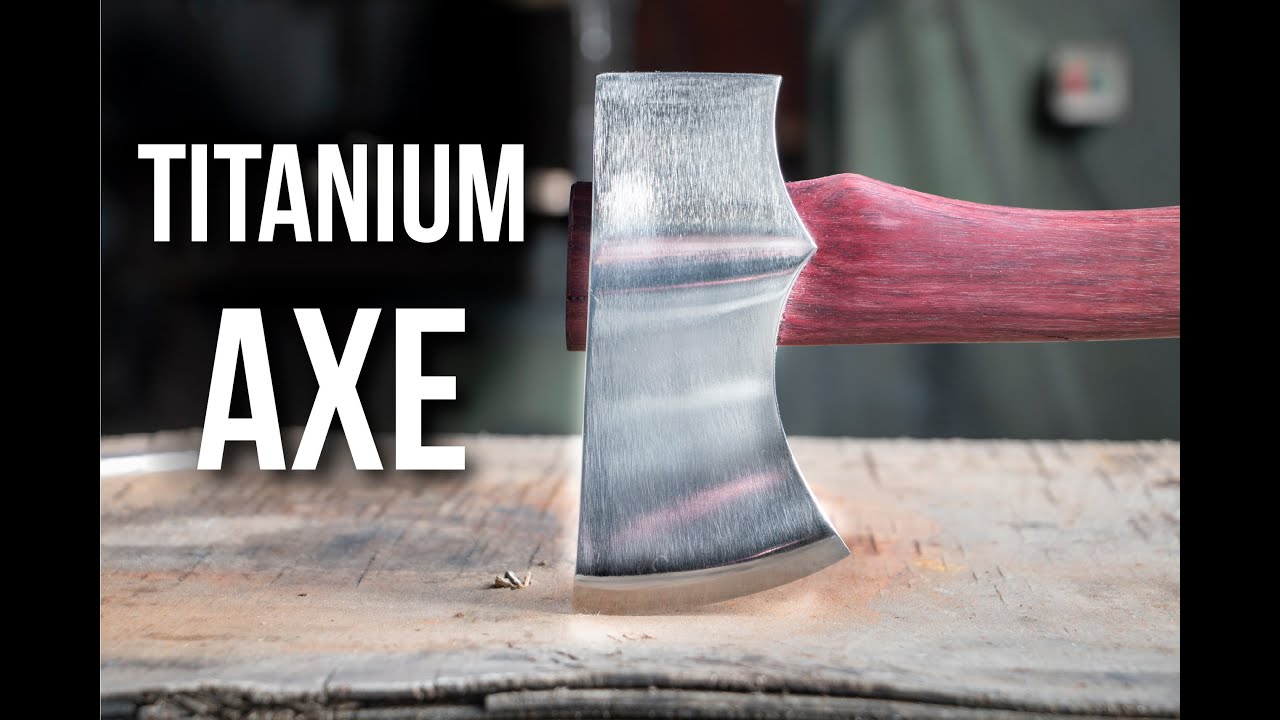
Canadian blacksmith Timothy Dyck took on exactly that fight in his shop in British Columbia, documenting the entire build in his video “Making a TITANIUM Axe.” Titanium’s reputation for toughness and its narrow forging window make it a punishing material to shape by hand, and Dyck’s process shows why so few smiths bother. The result, after a grueling stretch at the grinder, is a fully functional axe with a titanium head, a purpleheart haft, and a black walnut wedge holding it all together.
- Dyck heated raw titanium stock to precise forging temperatures, then alternated between his power hammer and anvil to draw out the axe profile and form the eye.
- Grinding the titanium head to establish proper bevel geometry took Dyck several months of continuous work at the belt grinder — far longer than a comparable steel axe head would demand.
- The finished tool pairs the titanium head with a hand-shaped purpleheart hardwood haft, secured with a contrasting black walnut wedge.
Titanium Exhibits Exceptional Corrosion Resistance
Steel gives a blacksmith a forgiving margin — heat it, hammer it, and it moves. Titanium doesn’t play by those rules. It resists deformation, holds heat differently than steel, and has a much tighter thermal window in which it can actually be worked before it becomes brittle or unmanageable. Dyck had to heat the stock to precise forging temperatures and commit to decisive, well-placed blows on both the power hammer and the anvil to draw the mass into an axe profile and punch the eye, since titanium doesn’t tolerate the kind of repeated correction that mild steel allows.
The Grind That Took Months
Shaping a rough forged profile into a usable cutting tool is normally a bevel-and-belt job measured in hours. On this project it became a months-long campaign. Dyck has said flatly that grinding the titanium axe head was harder than the forging itself, with the metal’s hardness chewing through abrasive belts and demanding constant, patient passes just to establish clean geometry on the bit.
Grinding the axe as it turns out was harder than hard, but after spending a couple months at the grinder I was able to get it done.
Building the Haft
With the head finally shaped, Dyck turned to the handle, selecting a vivid piece of purpleheart hardwood for its color and density. He carved and hand-fit the haft for ergonomic balance in the grip, then locked the titanium head onto the wood using a black walnut wedge — a classic hafting method that visually contrasts the dark walnut against the purple-toned handle while cinching the head permanently in place.
From Farmers Markets to a Full-Time Forge
Dyck’s path to this project started young. He got hooked on blacksmithing at 13, funding the habit by selling hand-forged items at local farmers markets and craft shows, which eventually led to custom commissions. Straight out of high school, he apprenticed under a working blacksmith for four years, contributing to projects for prestigious homes around the Rocky Mountains and several large public sculptures before opening his own full-time shop in British Columbia in 2013, where he now builds custom railings, gates, lights, stairs, fences, and the tools of the trade itself. Readers who enjoy this kind of hands-on craftsmanship might also appreciate the patience involved in making a basket from pine needles, another start-to-finish build that rewards slow, deliberate work, or the improvised problem-solving seen in this Iron Age bushcraft roof build completed in soaking rain.
Dyck’s titanium axe isn’t a one-off stunt piece sitting on a shelf — it’s built to actually chop, which is the whole point of putting himself through months at the belt grinder. For a smith who cut his teeth selling hand-forged goods at farmers markets, turning a material most blacksmiths won’t touch into a working tool is exactly the kind of project that keeps his channel worth checking back on.









Inside Mexico’s Warring Cartels and the Millions of People They’ve Displaced
There’s A Poop Crisis At The Border
Louis Vuitton Spring-Summer 2020 Show: All-Access with Loïc Prigent
Building an Off Grid Woodworking Workshop Log Cabin in the Forest
Building A Temple Swimming Pool Underground