

 InfoSearched
An Australian woodworker turned a dead huntsman spider into a gear shift knob you can actually drive with.
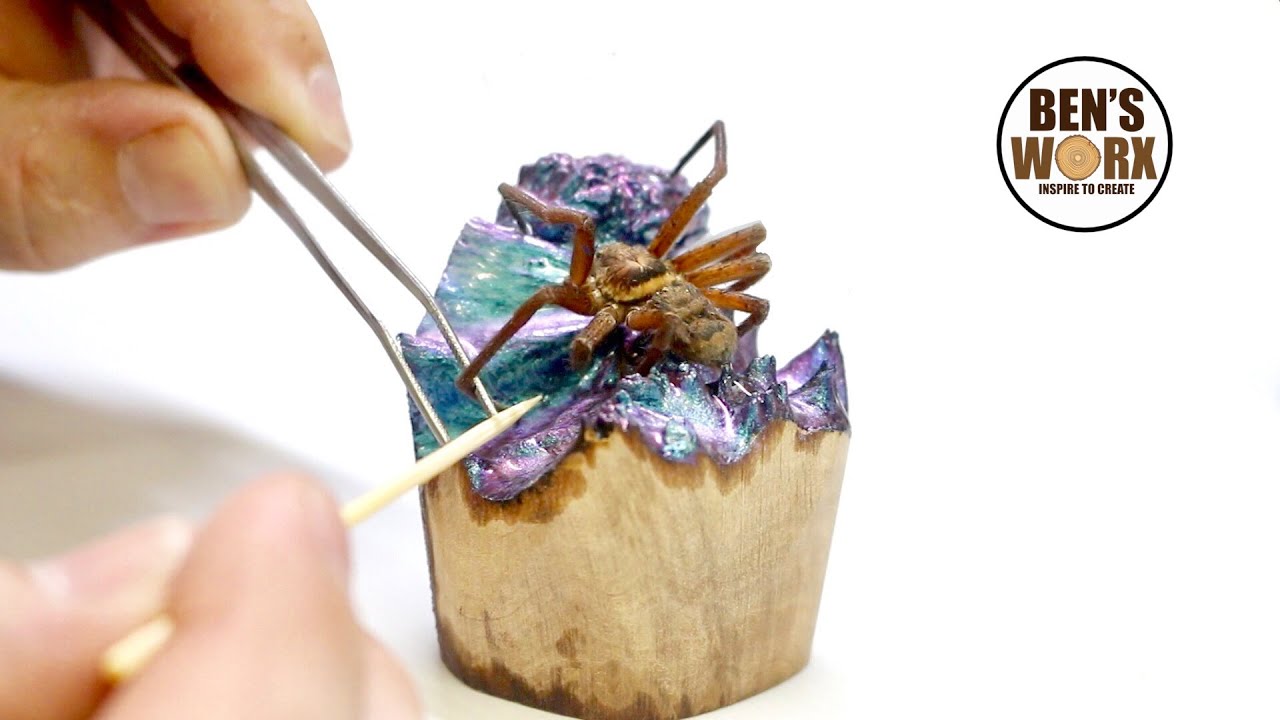
On January 24, 2020, Ben, the maker behind the YouTube channel Ben’s Worx, posted “Making a Spider Resin Shift Knob – Epoxy Resin Art,” a build video documenting how he turned a deceased Australian Huntsman spider into a functional automotive shift knob. Rather than reaching for a plastic figurine or a novelty mold insert, Ben used the real arachnid he’d found dead in his own workshop, encasing it in clear casting resin above a base of native Australian hardwood. The result is a piece that looks like a museum specimen but bolts straight onto a gearstick.
- Ben found the dead Australian Huntsman spider inside his own workshop and chose to preserve the real specimen rather than use an artificial figurine.
- He paired the spider with a piece of Australian Mallee burl wood, prized for its dense, highly figured grain, to form the base of the composite blank.
- The casting was done with ArtCast epoxy resin, a low-viscosity, high-clarity system from Australian manufacturer Just Resin, before Ben turned the cured blank on a wood lathe into the finished knob.
From Workshop Find to Workbench Project
The project started with a discovery, not a shopping list. Ben came across a Huntsman spider that had died somewhere in his workshop — a common enough sight for anyone working out of a shed in Australia, where the large, flat-bodied Huntsman is a familiar, if startling, visitor. Instead of sweeping it into the bin, he saw an opportunity: a real specimen, fully intact, that could be locked in resin forever instead of decaying or getting thrown out.
That decision is what separates this build from the countless spider-in-resin novelty pieces sold online. Ben wasn’t casting a rubber prop insect; he was preserving an actual dead Huntsman, legs and all, as the visual anchor of a piece he’d eventually mount into a car’s interior. It’s the kind of project that sits at the intersection of taxidermy, woodworking, and casting — three skill sets Ben brings together on his channel, which leans heavily on resin art and lathe work, similar in spirit to other epoxy-driven builds like the step-by-step process behind installing epoxy floors in a full-size home, just scaled down to fit in the palm of a hand.
Mallee Burl and ArtCast Resin
To give the spider a proper stage, Ben paired it with a piece of Australian Mallee burl — a wood harvested from the swollen root growths of mallee eucalyptus trees, known among turners for its tight, swirling grain and rich color variation. The burl became the base layer of the blank, with the spider positioned directly above it before the pour.
For the casting medium, Ben used ArtCast epoxy resin, supplied by the Australian company Just Resin. ArtCast is built specifically for deep, high-clarity castings, which matters here: any cloudiness, yellowing, or trapped air would have ruined the illusion of a spider suspended in solid glass. Securing the dried spider and the burl base inside a mold, Ben poured the resin to fully encapsulate the fragile arachnid without disturbing its legs or posture, aiming for a bubble-free cure that shows off the specimen rather than obscuring it — a challenge similar in principle to any craftsman working with Australia’s native timber and materials, the same instinct that runs through builds like Australia’s underground homes.
The finished piece produced an amber-and-clear display preserving the large Huntsman suspended directly above the textured burl wood base.
Turning the Blank Into a Working Knob
Once the epoxy-and-wood cylinder fully cured, Ben moved the blank to his wood lathe. That’s where the resin-and-burl block stopped being a display piece and became a usable part. He turned the raw cylinder down to a smooth, ergonomic profile shaped to fit a driver’s palm, then worked through progressively finer sanding grits before polishing it to a high-gloss finish that lets light pass clean through the amber resin and hit the spider dead center.
The lathe stage is where the build’s two halves — the taxidermy-adjacent preservation work and the woodturning — actually merge. It’s a process familiar to anyone who’s followed resin-and-wood functional builds on YouTube, not unlike the instinct behind small hands-on projects such as making a basket from pine needles, where raw natural material gets shaped, piece by piece, into something you’d actually use every day.
Ben’s channel has built a following around exactly this kind of build — turning found or foraged material into functional car parts and household objects — and the Huntsman knob is one of his more talked-about entries because of the spider itself. For anyone who’s ever swatted a Huntsman off a garage wall, watching one get immortalized mid-pose in a gear knob is the whole appeal.









Fabulous Cave House w/ Luxury Interior & Stone Hot Tub
9 Survival Gardening Crops to Grow in a Post Apocalyptic World
8 Family Travel Tips | Family Living the Buslife
Disney’s Stunt Robots Could Change How Hollywood Makes Action Movies
Miami’s Most Legendary Playboy