

 InfoSearched
A plague of mice has turned rural Australia into a horror show, and the poison isn’t working fast enough.
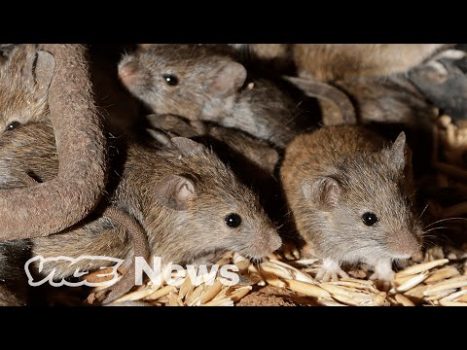
Across eastern Australia, from the wheat belts of New South Wales down into southern Queensland, farmers spent the back half of 2020 and the first half of 2021 fighting an infestation unlike anything seen in decades. VICE News’ Millions of Mice Are Terrorizing Australia documents the toll on towns like Gulargambone, Trundle, and Canowindra, where mice have stripped grocery shelves, chewed through wiring and ceiling drywall, and swarmed into beds and water tanks. The only government-sanctioned weapon, zinc phosphide bait, hasn’t been enough to keep the tide back.
- The infestation has hit an estimated 180,000 square kilometers of NSW and southern Queensland, with mouse densities crossing plague thresholds of 800 to 1,000 mice per hectare.
- Some farmers report trapping 500 to 600 mice per night inside their own homes, while total agricultural and grain-storage losses have topped $100 million.
- A regional farming-body survey found 97 percent of respondents dealing with severe psychological stress, insomnia, and exhaustion from the ongoing containment effort.
Drought-Breaking Harvest Causes Economic Backlash
The plague traces back to heavy rainfall that finally broke a multi-year drought across eastern Australia in 2020. That rain produced a bumper grain crop — good news for farmers on paper, but it also handed mice an enormous, uninterrupted food supply right as breeding season kicked in. Females can produce litters of up to 10 pups every 20 days, and with grain sitting in paddocks and silos, the population had nothing slowing it down.
Within months, densities that would normally sit in the low hundreds per hectare blew past 800 to 1,000, the official threshold researchers use to declare a mouse plague. The CSIRO has tracked this boom-bust cycle in Australian mouse populations for years, but the scale of the 2020-2021 outbreak, covering roughly 180,000 square kilometers of NSW and southern Queensland, stood out even by historical standards.
Inside the Towns Under Siege
VICE’s cameras follow residents in Gulargambone, Trundle, and Canowindra dealing with mice inside their own walls — literally. The rodents have chewed through electrical wiring, torn holes in ceiling drywall, and climbed into water supply tanks meant for drinking and household use. Grocery store shelves have been stripped bare in some towns, not by panic buying but by mice getting into the stock overnight.
Farmers describe nightly routines built entirely around the infestation: setting traps before bed, clearing hundreds of dead mice by morning, and starting again the next night. Some residents told VICE they’re catching 500 to 600 mice a night inside their homes alone, a number that sounds almost impossible until you see the trap counts.
As stored feed ran short, the mice began eating their own — turning on dead and injured members of the swarm just to survive.
The Economic and Psychological Toll
Grain storage losses and crop damage across the affected regions have pushed well past $100 million, hitting farmers who were only just recovering from years of drought. Silos meant to protect harvested grain have been breached repeatedly, and the damage compounds every week the plague continues.
The human cost has been just as stark. A survey of regional farming communities found 97 percent of respondents reporting severe psychological stress tied directly to the infestation, along with chronic insomnia and exhaustion from months of nightly trapping, cleaning, and repair work. It’s the kind of grinding, unresolved crisis that doesn’t show up in a single dramatic headline but wears people down over an entire season.
A Contentious Fight Over Chemical Control
Broadacre growers have leaned on emergency permits to apply zinc phosphide bait, the only chemical currently authorized for widespread use, but supply shortages left many farmers unable to keep pace with the breeding rate. That gap fueled intense pressure on the NSW government to fund bait rebates and authorize a stronger option, bromadiolone, an anticoagulant rodenticide already used elsewhere.
Conservationists pushed back hard against that idea, warning that bromadiolone poses serious risks to non-target wildlife and domestic pets that might eat poisoned mice. It’s the same tension that shows up whenever rural Australia has to weigh short-term pest control against ecological fallout — a debate that plays out in other corners of the country too, from underground-dwelling communities managing extreme conditions to the sinkhole-riddled farmland further south that draws divers instead of pest controllers.
The plague eventually eased as cooler, drier conditions through mid-2021 cut into breeding rates, but for the towns VICE visited, the damage to grain stores, wiring, and nerves had already been done. Farmers who’d finally caught a break from the drought spent the next season catching mice by the hundreds instead.








How My Luxury Lifestyle Started! – Candid Conversations With Anna Bey #1 School of Affluence
I’m Coming Out | Diana Ross | funk cover ft. Kenton Chen
Germany’s Oldest Street-Legal Car | 1894 Benz Victoria
What Army Recruits Go Through At Boot Camp
Experiment: Cola, Mirinda, Pepsi and Mentos Underground