

 InfoSearched
In the shadow-thick forests of southern India, a black panther is rewriting the rules of survival.
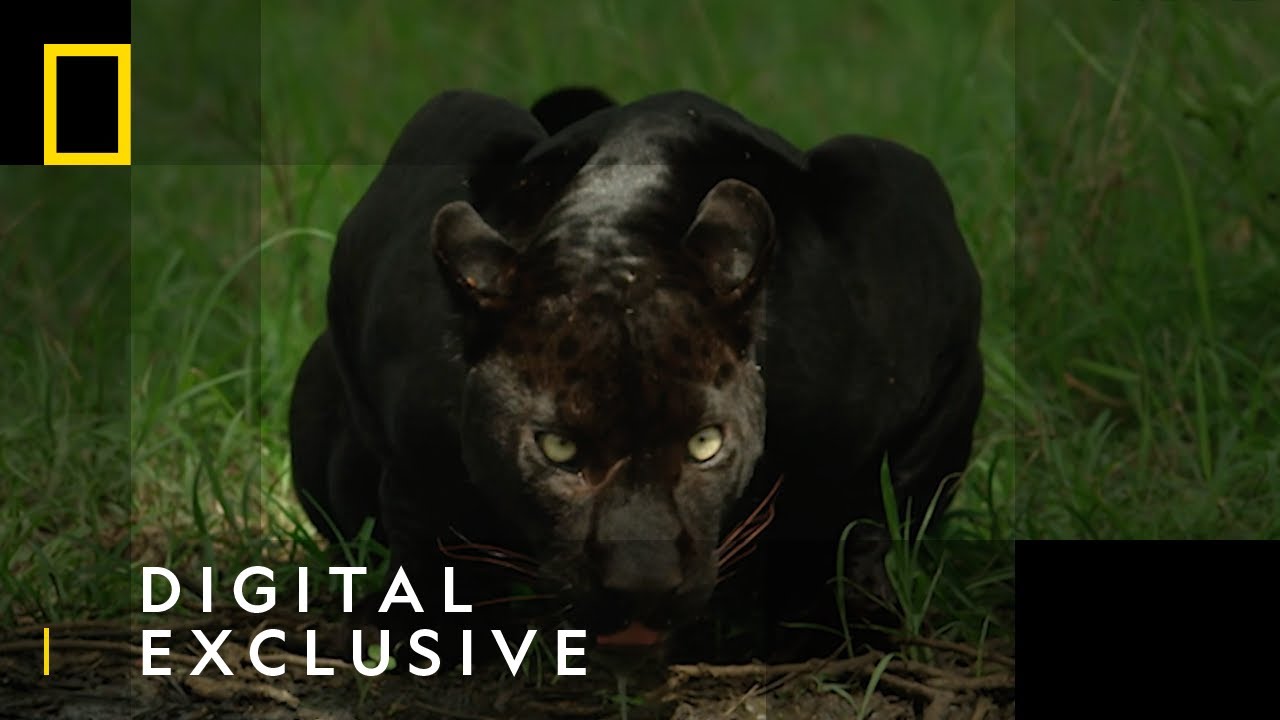
Kabini, inside Karnataka’s Nagarhole Tiger Reserve, has long been a proving ground for leopards, tigers and elephants competing over the same stretch of dry deciduous forest. The latest challenger to rise through that hierarchy is Saya, a melanistic leopard whose all-black coat should be a liability in daylight but has instead become the foundation of his takeover. National Geographic Wild’s clip “Hiding in the Shadows” — pulled from the documentary The Real Black Panther — tracks how he turned a genetic fluke into a survival strategy.
- Saya, first documented around 2015, is the only known melanistic leopard living in Nagarhole’s dry deciduous forest, his dark coat produced by a recessive mutation that suppresses the agouti gene and strips him of the rosette camouflage other leopards rely on in daylight.
- Indian wildlife cinematographer Shaaz Jung, who had already spent a decade tracking Kabini’s leopards, pitched the project to National Geographic in 2017 and spent three years filming Saya’s rise alongside the Karnataka Forest Department.
- The documentary centers on Saya’s rivalry with Scarface, Kabini’s entrenched dominant male leopard, and his courtship of Cleopatra (“Cleo”), the forest’s most dominant female — it premiered on National Geographic Wild on February 14, 2020, after the “Hiding in the Shadows” clip went online on January 22, 2020.
A Coat That Should Have Doomed Him
Melanism in leopards isn’t rare worldwide, but it is exceptionally rare in a landscape like Kabini, where the forest floor is dappled with sunlight rather than dense enough to hide a solid-black animal. Saya’s mutation removes the rosette pattern that lets ordinary leopards vanish into speckled shade, meaning he can’t rely on the same daytime cover his rivals use to stalk prey or avoid tigers.
Instead, Saya adapted his hunting grounds to his coat rather than the other way around. He works from evergreen patches and the dark-barked banyan trees scattered through the reserve, where his black fur disappears into deep shadow rather than dappled light, and he moves along pathways carved by wild elephants to cover ground without exposing himself in open clearings.
First documented around 2015, Saya remains the only confirmed melanistic leopard in Nagarhole’s dry deciduous forest — a genetic long shot hunting in terrain built for spotted camouflage, not solid black.
The Man Who Waited a Decade
Shaaz Jung didn’t stumble onto this story. He’d already spent ten years tracking leopards through Kabini before he approached National Geographic in 2017 with an unscripted pitch: follow one animal’s rise in real time, with no guaranteed ending. The network greenlit it, and Jung spent the next three years filming Saya in partnership with the Karnataka Forest Department, documenting behavior — courtship, territorial disputes, hunts — as it happened rather than reconstructing it after the fact.
That approach put Jung’s footage in the same lineage as other predator-tracking documentaries that trade scripted narration for years of patient, on-the-ground observation — the kind of long-haul filmmaking chronicled in pieces like Filming The World’s Deadliest Bird.
Scarface and the Fight for Kabini
Saya’s path to dominance runs directly through Scarface, the leopard who has controlled Kabini’s core territory before Saya’s rise. Their rivalry isn’t a single showdown but a running contest over scent marks, prime hunting ground and access to females — the standard currency of leopard territorial disputes, except complicated by the fact that Saya also has to share space with tigers who outrank both of them in the food chain.
That layered hierarchy — leopards jockeying for territory while staying out of a tiger’s way — is part of what makes Kabini’s ecosystem distinct, and it echoes the kind of pecking-order drama covered in Here’s What a Lion Does After Being Banished From the Pride and in broader predator-conflict footage like The Most Extreme Wild Animals Battles!.
Cleo and the Path to Dominance
Territory alone doesn’t make a king in Kabini — Saya also has to win over Cleopatra, known as Cleo, the reserve’s most dominant female leopard. His courtship of Cleo runs parallel to the Scarface rivalry throughout the three years of footage, and the documentary treats it as the other half of his claim to the forest: out-hunting and out-maneuvering the competition isn’t enough without securing a mate who commands equal standing in Kabini’s leopard population.
Broadcast Schedule and Airing History
The Real Black Panther premiered on National Geographic Wild on February 14, 2020, capping off Jung’s three-year shoot with the network’s full-length cut of Saya’s story. The “Hiding in the Shadows” clip had already circulated online since January 22, 2020, giving audiences a preview of the camouflage-and-rivalry storyline before the full documentary aired.
Jung’s footage of Saya moving along elephant trails and vanishing into banyan shadow is the rare wildlife sequence where the animal’s disadvantage — a coat that offers zero camouflage in daylight — is also the reason the story got made in the first place. Kabini didn’t need another leopard chasing spotted prey through dappled light; it needed one black cat willing to hunt where the shadows actually are.







Exploring the Alien World of Brine Pools
World of Cryonics – Technology That Could Cheat Death
Piers Morgan – The Luxury Life Of Dubai HD Documentary 2019
Our TINY HOME IN THE SWISS ALPS (full tour)
Russian Sleep Experiment – EXPLAINED