

Snowmobile Camper with Off Grid Heater- Surviving the Night in -18C / 0F Temperature!
 InfoSearched
A homemade copper coil heater faces its toughest test yet: a night in -18°C wilderness with no propane, no electricity, and no backup plan.
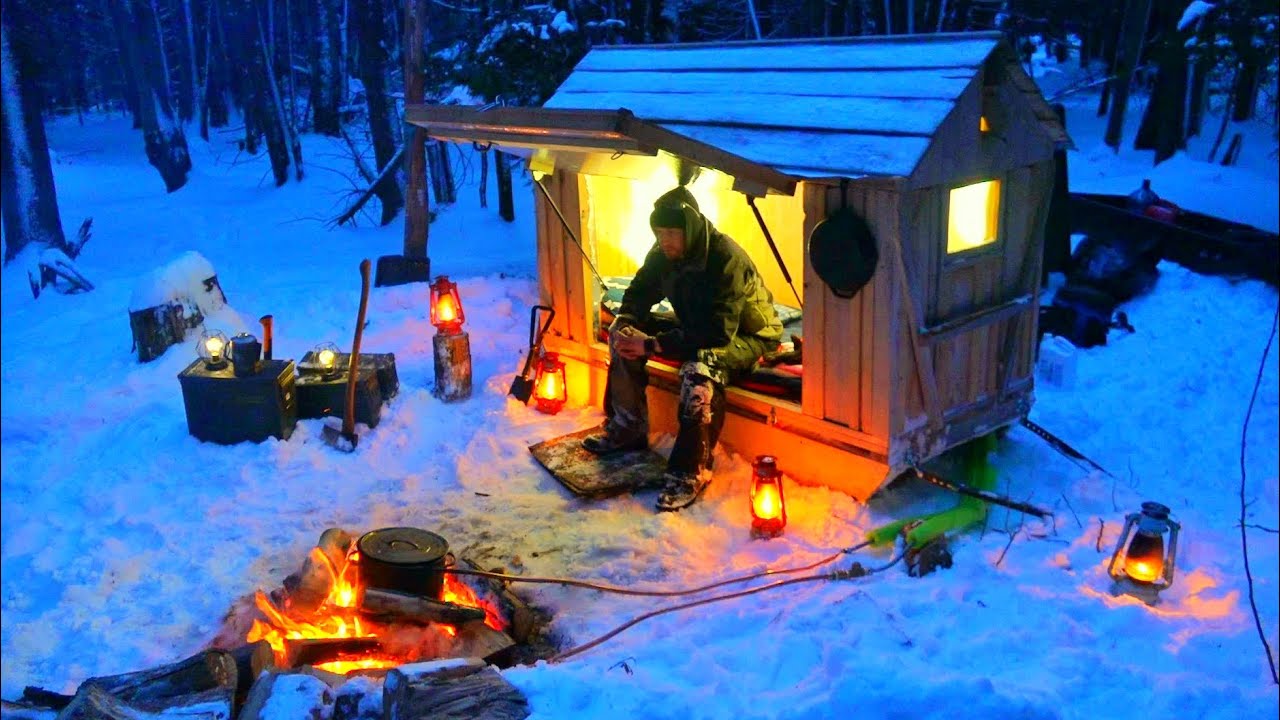
Wilderness-living YouTuber The Outsider has spent seasons building off-grid shelters and testing homemade survival gear on camera, but this trip raised the stakes. Towing a custom-built “tiny cabin sled” — a rigid, enclosed micro-camper hauled behind a snowmobile rather than a typical canvas tent — into backcountry terrain, the goal was simple on paper and brutal in practice: find out whether a DIY copper coil water heater could keep the sleeping enclosure survivable as temperatures dropped to -18°C, or 0°F.
The heater itself was low-tech by design. Copper tubing ran water over an external heat source, and the warmed water was meant to circulate passively through the loop and radiate heat into the cabin — no batteries, no propane bottle, no commercial unit. It’s the kind of stripped-down engineering test that separates this project from the usual snowmobile-and-tent camping setup.
- The test rig was a rigid, enclosed “tiny cabin sled” towed by snowmobile — not a standard snowmobile-towed tent.
- Overnight ambient temperature dropped to -18°C (0°F), the benchmark condition for the entire experiment.
- The heating system was a homemade copper coil hydronic loop, heating water externally and circulating it into the sleeping enclosure with no electrical hookup or commercial propane heater involved.
Building a Cabin You Can Tow
Most winter snowmobile campers on the market are soft-sided — an insulated tent cinched onto a sled deck. The Outsider’s build skips the fabric walls entirely in favor of a rigid enclosure, essentially a miniature cabin small enough to be dragged behind a snowmobile through deep snow and rough trail. That construction choice matters for a heating test: rigid walls hold heat differently than nylon, and any thermal loss shows up fast when the outside air is sitting at 0°F.
It’s the same instinct that runs through other cold-weather shelter experiments in the bushcraft space — testing whether unconventional materials or builds can outperform gear pulled off a store shelf, the way past projects have pushed the limits of tents built from unlikely materials or shelters dug straight into the ground.
The Copper Coil Heater, Explained
The core experiment was the DIY water heater: copper tubing positioned to absorb heat from an external source, with the warmed water then circulating through the loop to radiate warmth into the cabin’s interior. It’s a hydronic system in miniature — the same principle used in radiant home heating, scaled down to fit inside a sled you can hitch to a snowmobile.
The appeal is obvious for anyone thinking about backcountry survival without hauling in propane tanks or relying on a generator. A passive loop draws no electricity and needs no combustible canister riding along in an enclosed space overnight — a real consideration when you’re sealed into a small cabin at sub-zero temperatures.
The whole test came down to one question: could a loop of copper tubing and heated water out-perform 0°F air with nothing else backing it up?
Sub-Zero Stakes
-18°C isn’t a marginal cold-weather number — it’s the range where exposed skin, condensation, and equipment failure all become real risks within hours, not days. Testing a homemade heater under those conditions, overnight, with no secondary heat source staged as backup, put the copper coil design under exactly the kind of pressure that separates a clever workshop idea from something that actually functions in the field.
That’s the throughline connecting this build to other solo cold-weather tests in the same corner of YouTube — projects like an overnight sandbag shelter built from scratch in the woods, or a cattail-stuffed down jacket tested solo through a freezing night, all chasing the same basic question: what’s the minimum gear needed to stay warm when nothing manufactured is coming to help.
Overnight Run Results Revealed
The trip was framed as a genuine test rather than a guaranteed success story — the video’s stated purpose was to find out whether the heater kept the cabin “warm and cozy” or whether the night turned into a fight against the cold. That uncertainty is the whole point of a build-and-test format: nothing about a homemade copper loop heating a sled cabin at 0°F is a foregone conclusion until someone actually spends the night in it.
For a solo-build channel like The Outsider’s, this kind of trip functions as a proof-of-concept for future off-grid shelter projects — if a passive copper coil loop can hold its own at -18°C, it opens the door to scaling the same idea into a bigger structure. The next test worth watching is whether that heater gets reworked for an even colder run, or gets swapped into a bigger build entirely.






Hear the Otherworldly Sounds of Skating on Thin Ice
This Fairytale Treehouse will make you Relive your Childhood Dreams
TIMELAPSE 5min. Metal House | Costs, Pros-Cons, The Container House Killer?
I’m Coming Out | Diana Ross | funk cover ft. Kenton Chen
9 Survival Gardening Crops to Grow in a Post Apocalyptic World