

 InfoSearched
Dr. Seuss spent his nights painting things no publisher would ever put on a children’s shelf.
YouTube essayist Solar Sands dug into the other half of Theodor Seuss Geisel’s career in the video essay “The Secret Darker Art of Dr. Seuss,” and it isn’t the Cat in the Hat or Horton. It’s oil paintings, taxidermy sculptures, and wartime propaganda drawn by the same hand that gave the world Green Eggs and Ham. Solar Sands lays out how the man behind the most trusted name in children’s publishing kept a second, far stranger body of work running the entire time.
- Between 1941 and 1943, Geisel served as chief editorial cartoonist for the left-leaning New York daily PM, producing more than 400 political cartoons attacking Adolf Hitler, Benito Mussolini, and isolationists like Charles Lindbergh.
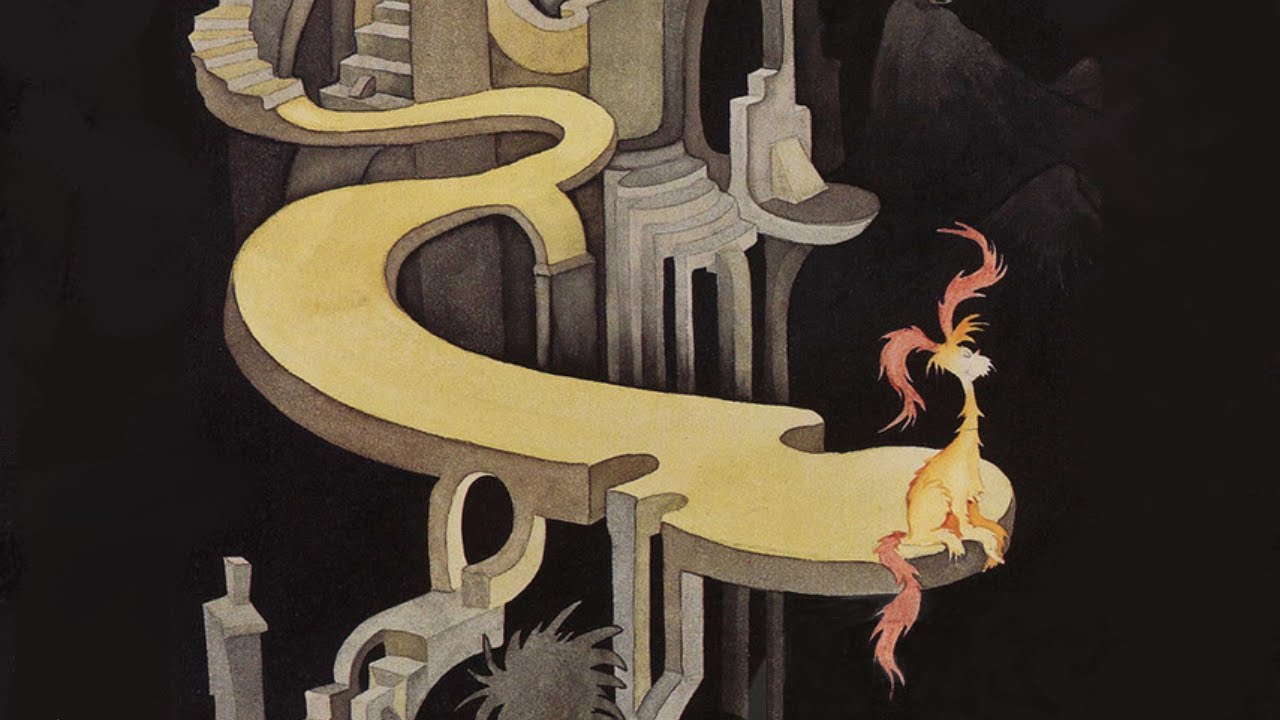
- A posthumously published collection known as the “Secret Art of Dr. Seuss” reveals surrealist oil paintings and midnight sculptures made from animal parts that Geisel painted purely for himself.
- His 1939 adult book “The Seven Lady Godivas” featured full-frontal nudity and flopped commercially, while his 1984 Cold War allegory “The Butter Battle Book” ended on an unresolved, mutually-assured-destruction cliffhanger.
The Cartoonist Behind the Picture Books
Before Geisel ever drew the Grinch, he was drawing Hitler as a snake-oil salesman for PM, a scrappy, ad-free daily that leaned hard left and gave its cartoonists room to swing. From 1941 to 1943, Geisel turned out well over 400 editorial cartoons, and he didn’t pull punches. Hitler and Mussolini got savaged panel after panel, but so did homegrown targets — Charles Lindbergh and the America First isolationists, along with domestic racism and anti-Semitism that Geisel argued were undermining the war effort from the inside.
Solar Sands frames this stretch as the hinge of Geisel’s career: the same instinct for exaggerated, rubbery caricature that later drew the Lorax was first sharpened drawing wartime villains for a newspaper that folded in 1948. It’s a run of work most readers of Oh, the Places You’ll Go! have never seen, largely because it was never meant to sit next to a picture book.
The Art He Never Sold
The stranger material is what Geisel made with no editor, no publisher, and no deadline attached — a body of private paintings and sculptures collected posthumously as the “Secret Art of Dr. Seuss.” According to the essay, this includes surrealist oil paintings full of the same loopy anatomy as his book illustrations, but pushed into unsettling, adult territory, plus sculptures assembled at night out of actual animal parts. None of it was created for an audience; Geisel reportedly kept much of it hidden in his studio, painting for his own amusement rather than commercial release.
It’s the kind of archive that would fit right into a forgotten-history documentary treatment, and Solar Sands treats it that way — as evidence of a creative appetite that the children’s-book format simply couldn’t contain.
Dr. Seuss Wrote for Adults
Geisel’s adult ambitions predate the war cartoons. In 1939, he published “The Seven Lady Godivas,” an illustrated retelling of the Lady Godiva legend featuring full-frontal nudity throughout. It was a commercial failure and largely disappeared, a rare miss for someone whose picture books would go on to sell in the hundreds of millions.
Decades later, in 1984, Geisel returned to adult-scale stakes with “The Butter Battle Book,” a Cold War allegory about the Yooks and Zooks escalating their arms race over a dispute about buttering bread. Unlike his other books, it doesn’t resolve. The final image leaves both sides standing on the brink, weapons raised.
“We’ll see. We will see.”
Those are the book’s closing words — no punishment, no reconciliation, no tidy rhyme to wrap it up. For an author whose entire catalog trained readers to expect a happy last page, it’s a deliberately withheld ending, and Solar Sands uses it as the clearest proof that Geisel’s darker instincts weren’t confined to unpublished sketchbooks.
Solar Sands never argues that Geisel was secretly miserable underneath the Cat in the Hat suit; the essay just lines the private paintings up against the bestsellers and lets the gap speak for itself. For anyone who grew up on the animated specials, it’s worth remembering the same guy who wrote “One Fish Two Fish Red Fish Blue Fish” also spent his career drawing Hitler as a con man and ending a children’s book with an unresolved standoff — the kind of range that rarely gets mentioned in the same breath as the animated adaptations everyone actually remembers him for.





The 12-year-old Pursuing Her Passion as a Tattoo Artist
How to Build Real Fully-Functional Jump Stilts From Scratch For Under $50!
ABANDONING OUR VAN IN AFRICA
Portable home delivered as furniture, tailored as smartphone
Tiny House is a Super Efficient Monolithic Dome