

 InfoSearched
In Karachi, tap water runs for two hours every other week — everything else comes from a truck, and you pay whatever the driver asks.
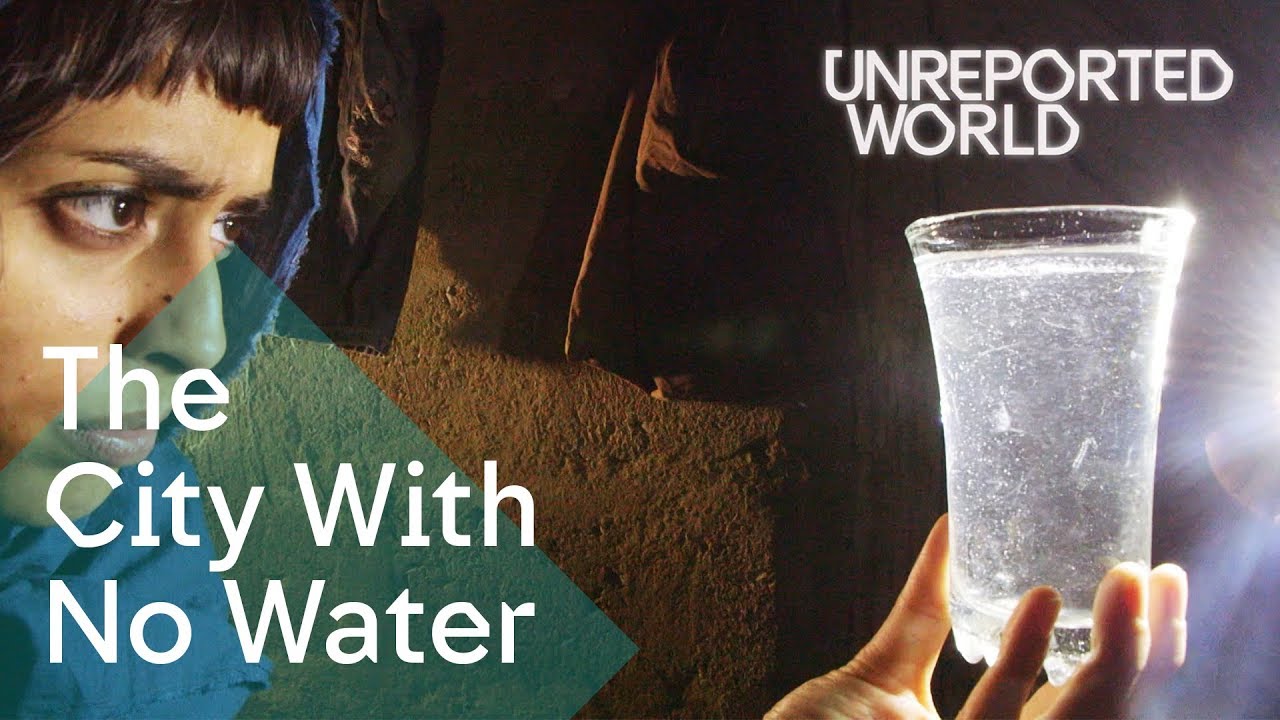
That was the reality Channel 4’s Unreported World documented in “Pakistan’s City with No Water,” filmed in Karachi in 2016. Pakistan’s largest city, home to more than 20 million people, was drowning in a drought of its own making — a mix of climate stress, crumbling pipes, and a black market that turned a basic utility into a racket. Families who couldn’t get water from the tap were left buying it from men who’d effectively stolen it from the city in the first place.
- Karachi needs roughly 1.1 billion gallons of water a day to meet demand, but the state-run Karachi Water and Sewerage Board (KWSB) delivers only about 550 million gallons — half of what the city requires — drawn mainly from Keenjhar Lake and Hub Dam.
- Roughly a third of that already-inadequate supply never reaches a household tap, lost to leaking pipes or siphoned off through illegal connections tapped straight into the mains.
- Distribution is wildly uneven: the affluent Defence Housing Authority receives well over 100% of its water quota, Orangi Town gets barely 30%, and Lyari sees its allotted supply diverted to wealthier districts entirely.
A Deficit Built Into the System
Karachi’s water math simply doesn’t add up. The KWSB’s official output of around 550 million gallons a day is already half of the city’s stated need, and that number assumes every drop makes it from Keenjhar Lake and Hub Dam to a tap without disappearing along the way. It doesn’t. Decades of underinvestment have left the pipe network so degraded that leakage and illegal tapping eat up roughly a third of the flow before it ever reaches a legitimate connection.
Rapid, unplanned urban migration has only compounded the shortfall — Karachi’s population has ballooned far faster than its Victorian-era colonial infrastructure was ever built to handle. The result is a city where the gap between supply and demand isn’t an occasional summer squeeze; it’s the daily baseline.
The Tanker Mafia Economy
Into that gap has stepped what residents and reporters call the “tanker mafia” — syndicates that illegally tap municipal mains or bypass metering at hydrants, then load the diverted water onto private tanker trucks for resale. It’s a parallel water utility with no regulation, no fixed pricing, and no accountability, run largely by operators with links to local power brokers.
Roughly a third of the water pumped from Keenjhar Lake and Hub Dam never reaches a legitimate tap — it’s lost to leaks or siphoned straight into the tanker trade.
For families already stretched thin, that means paying tanker operators extortionate rates for what should be a metered public utility, with the documentary’s crews finding households forced to sink a substantial slice of their monthly income into buying water by the truckload — money that, in a functioning system, would go toward rent, school fees, or food.
Disparities in Global Water Access
The scarcity isn’t shared equally. Karachi’s piped network favors the wealthy almost by design: the Defence Housing Authority, one of the city’s most affluent enclaves, receives more than its full quota, while Orangi Town — a dense, low-income settlement — gets by on roughly 30% of what it’s owed. Lyari fares even worse, with its allocated supply effectively rerouted toward richer neighborhoods before it ever arrives.
That imbalance is the throughline of the whole crisis — the shortage itself is severe, but the way it’s distributed turns a natural resource problem into a story about who has leverage in Karachi and who doesn’t. Readers who want more ground-level reporting on how cities warp under pressure from crime, corruption, and inequality will recognize the same dynamics covered in InfoSearched’s look at daily survival in one of the world’s most dangerous cities, where breakdowns in basic services reshape entire neighborhoods.
Corruption as the Root Cause
Every technical failure in Karachi’s system — the leaking pipes, the illegal taps, the uneven distribution — traces back to the same institutional rot inside the KWSB, where corruption and lack of enforcement have let the tanker trade flourish in plain sight rather than get shut down. It’s the kind of systemic failure that recurs across cities dealing with organized illicit economies, similar in structure if not scale to the syndicates covered in InfoSearched’s breakdown of how criminal networks build billion-dollar operations out of exploiting a gap the state won’t fill.
For millions of Karachi residents in 2016, that left one option: pay the tanker driver whatever he was asking, because the alternative was no water at all.








This Tiny Home Community Gives Homeless Veterans A Chance – Working To End Veteran Homelessness
DMT Sent Him Into the Multiverse
Van Life with Wee Man | Converted Mercedes Sprinter
HOW TO IMPLEMENT A HEALTHY LIFESTYLE | Setting Habits & Wellness Goals
Deep inside El Chapo’s secret tunnels