

 InfoSearched
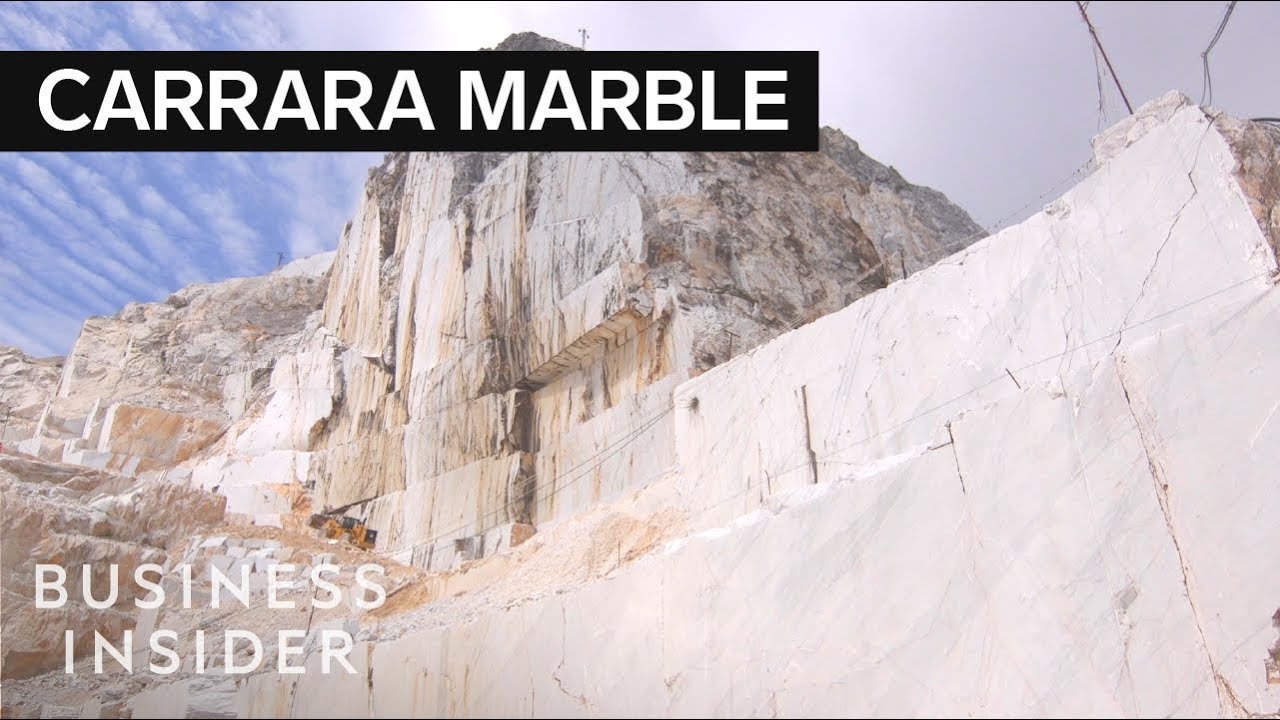
The mountains along Italy’s Tuscan coast look snowcapped year-round — but that white isn’t snow, it’s marble dust.
Business Insider’s June 2019 video report “Inside Italy’s $1 Billion Marble Mountains” heads into the Apuan Alps above Carrara, where quarrymen have been cutting stone out of the same range for more than 2,000 years. The report tracks how a $1.1 billion industry still depends on men working sheer rock faces and underground caverns, using methods that have only partly changed since the Roman Empire first hauled marble out of these hills.
- Carrara’s marble industry generates more than €1 billion (roughly $1.1 billion) a year and accounts for about 60% of the town’s GDP.
- The district pulls roughly 4 million metric tons of stone annually from more than 650 historic quarry sites, with 13,000 workers tied to the trade and only 80 to 160 sites still running large-scale modern operations.
- Top-grade Carrara marble slabs sell for up to $400 per square meter, the same stone once quarried for the Pantheon and for Michelangelo’s Pieta and David.
The Scale of Carrara’s Marble Economy
The Apuan Alps run 58 kilometers through northern Tuscany and climb as high as 2,000 meters, and Carrara marble has been cut from them since antiquity. Today the trade supports roughly 13,000 workers and moves about 4 million metric tons of stone a year out of a district that holds more than 650 historic quarry sites — though only a fraction, somewhere between 80 and 160, still run as large-scale modern operations. That output is worth over €1 billion annually and covers roughly 60% of the local GDP, making marble the thing Carrara’s economy is built on, literally and financially.
From the Pantheon to Michelangelo’s David
Carrara’s marble didn’t just decorate one era — it built the visual language of two of them. Ancient Rome pulled stone from these quarries for the Pantheon, and more than a thousand years later Renaissance sculptors were still coming back for it. Michelangelo carved both the Pieta and David from Carrara marble, and that same reputation for purity and workability is why premium slabs still fetch up to $400 per square meter on the modern market.
The Old Way: Lizzatura and Hand Chisels
Before machinery, quarrymen freed marble by hand — driving steel chisels and water-soaked wooden wedges into the rock until it cracked along a seam. Getting a multi-ton block off the mountain was its own operation: workers used a technique called lizzatura, sliding the slabs down steep scree slopes on greased logs, an entirely gravity-and-muscle system with almost no margin for error.
The mountains have looked permanently snowcapped for centuries — not from snow, but from marble dust and rock debris coating the roads and cliffs.
Diamond Wire and the Modern Quarry
The industry’s biggest technical leap came in the 1970s with diamond-wire cutting saws, which now work alongside water-cooled chainsaws and heavy excavators to slice mammoth blocks straight out of open-pit cliffs and underground caverns like Galleria Ravaccione. The machinery has replaced a lot of the hand-chiseling, but it hasn’t replaced the mountain itself — crews are still cutting into the same 2,000-year-old veins, just with steel wire instead of wedges.
The Danger Behind the White Gold
Mechanization hasn’t made the job safe. The video documents quarrymen working extreme heights on roads and walls that offer no real footing, exposed to constant risk from slab collapses and the sheer noise of cutting equipment running all day in an enclosed rock chamber. It’s isolating work, too — men stationed alone on ledges above open pits, watching multi-ton blocks get walked down by cable rather than lizzatura logs, but still carrying the same basic risk that’s defined this trade since the Romans first showed up looking for stone. For a closer look at how other corners of Italy get covered, the piece pairs naturally with The Truth Behind Italy’s $1 Homes, and it fits the same documentary-style shelf as InfoSearched’s other Documentaries coverage.






Why Real Truffles Are So Expensive
I Found a FULL Sealed Box Underwater in the River! (Contents Returned to Owners
SO MUCH PROGRESS! – building a workshop in the jungle
Trash Town. A whole community in Egypt that lives on rubbish
Money-Laundering FBI Expert Rates 8 Money-Laundering Scams In Movies and TV | How Real Is It?