

 InfoSearched
Underground Bunker Disguised as Garage
Kirsten Dirksen’s June 29, 2020 tour takes viewers inside Atlas Survival Shelters, the Sulphur Springs, Texas operation run by founder and CEO Ron Hubbard. Filmed as COVID-19 lockdowns and civil unrest gripped the country, the video shows why Hubbard says his phones haven’t stopped ringing — homeowners who never considered themselves “preppers” are now buying steel bunkers built to survive nuclear fallout, tornadoes, and worse.
- Atlas Survival Shelters, led by founder Ron Hubbard, operates what the company calls the world’s largest dedicated fallout and survival shelter manufacturing facility.
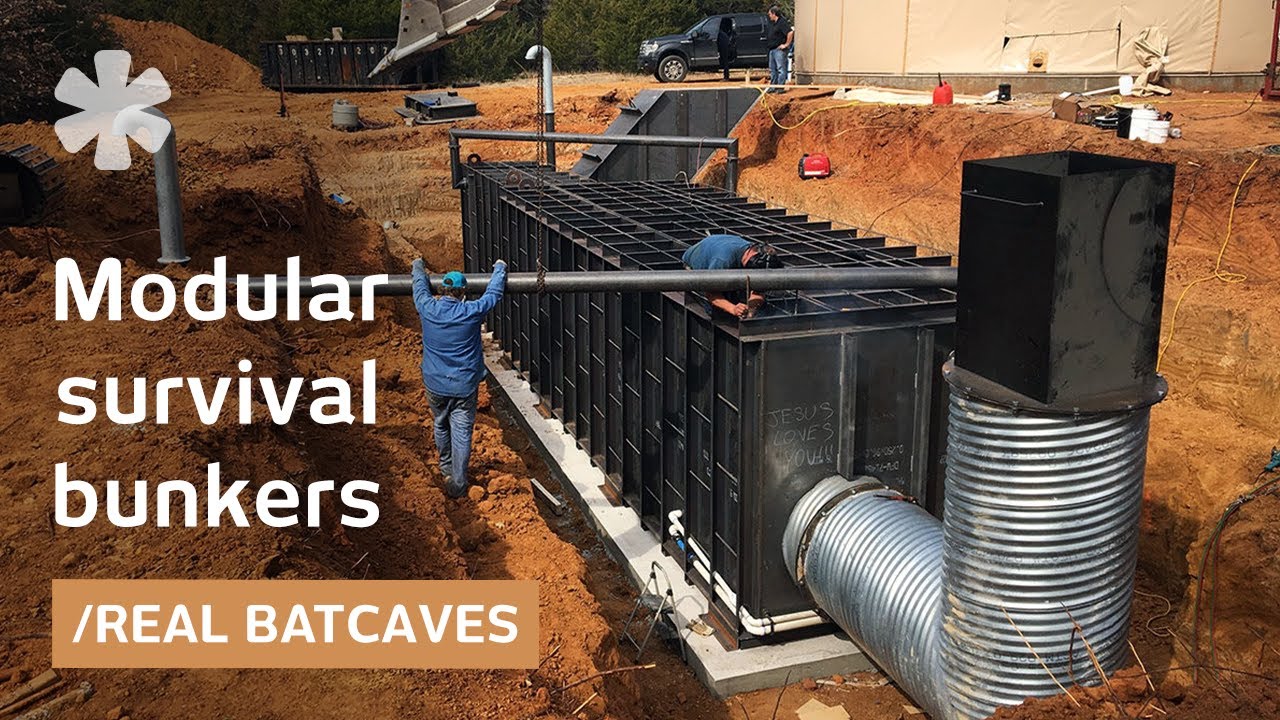
- The bunkers are built from structural steel plates, I-beams, and 10-foot-diameter corrugated pipes, buried 10 to 20 feet underground with hidden entrances tucked inside garages, kitchens, or sheds.
- Interiors include master bedrooms, bunk areas, full kitchens, bathrooms, and TVs, backed by military-grade Swiss NBC air filtration, off-grid battery power, generators, and underfloor storage for months of food and water.
Inside the Sulphur Springs Facility
Hubbard’s operation sits far from the coastal enclaves usually associated with doomsday prepping. In Sulphur Springs, workers weld together the corrugated steel pipe sections and structural I-beams that form the shell of each bunker before they’re trucked out and lowered into the ground. Dirksen’s camera follows Hubbard through a warehouse full of half-finished units, showing the raw industrial process behind what eventually becomes someone’s underground living room.
The pipes themselves run up to 10 feet in diameter — large enough to stand upright inside and build out separate rooms rather than a single crawl-through tube. That scale is what separates Atlas’s product from the cramped root-cellar bunkers of Cold War memory, and it’s central to Hubbard’s pitch that survival doesn’t have to mean misery.
Built to Not Feel Like a Bunker
Every model on the tour is finished like a conventional house rather than a military installation. Hubbard fits his units with full kitchens, bathrooms, bunk rooms, master bedrooms, and televisions specifically to cut down on the claustrophobia and psychological strain of long-term confinement underground. The idea, as the tour makes clear, is that a family sheltering for weeks or months needs a livable space, not just a hole with supplies in it.
That same design logic shows up in comparable underground builds featured in Step Inside Australia’s Underground Homes, where owners treat subterranean living as a lifestyle choice rather than an emergency measure — Atlas simply engineers that comfort around a nuclear-grade shell instead of a mild climate.
Hidden in Plain Sight
The entrances are the trick that makes these shelters function as everyday residential features. A garage floor panel, a kitchen pantry, or a backyard shed can conceal a blast door and stairwell down to the bunker below, so the property above ground looks like any other suburban home. Redundant blast hatches provide a second way out if the primary entrance is blocked or compromised.
Hidden entrances built into garages, kitchens, and sheds lead down to blast doors buried 10 to 20 feet underground.
Once sealed, the shelters run on their own power and air. Swiss-made NBC filtration systems scrub nuclear, biological, and chemical contaminants out of the incoming air, while off-grid battery banks and generators keep lights, appliances, and climate control running independently of the grid. Underfloor storage compartments hold enough food and water to last occupants for months without resupply.
A Surge Nobody at Atlas Predicted
Hubbard tells Dirksen that 2020 changed his customer base. Where his buyers once skewed toward committed survivalists, the pandemic and the unrest that followed pulled in mainstream homeowners who simply wanted a private, secure place to wait out a crisis. That shift mirrors a broader spike in interest across bunker builders and bug-out gear makers during the same stretch, the kind of demand curve also visible in searches for products like the Best Bug Out Tent on the market? earlier in the pandemic.
It’s a demand spike Hubbard didn’t see coming, but one he was already positioned for — his facility had spent two decades building toward exactly this kind of scenario, steel plate by steel plate, long before most of his new customers ever thought they’d need a bunker of their own.






How To: Removing a Load Bearing Wall! (EASY STEP-BY-STEP)
TIMELAPSE- House Built By Couple in 20 Minutes
Man Living Off-Grid in a Tent on an Island
The Lost Ancient Humans of Antarctica
Man rides giant crocodiles even after they bit off his hand