

 InfoSearched
A survivalist stranded with nothing but rocks can still walk away with a working knife in about ten minutes.
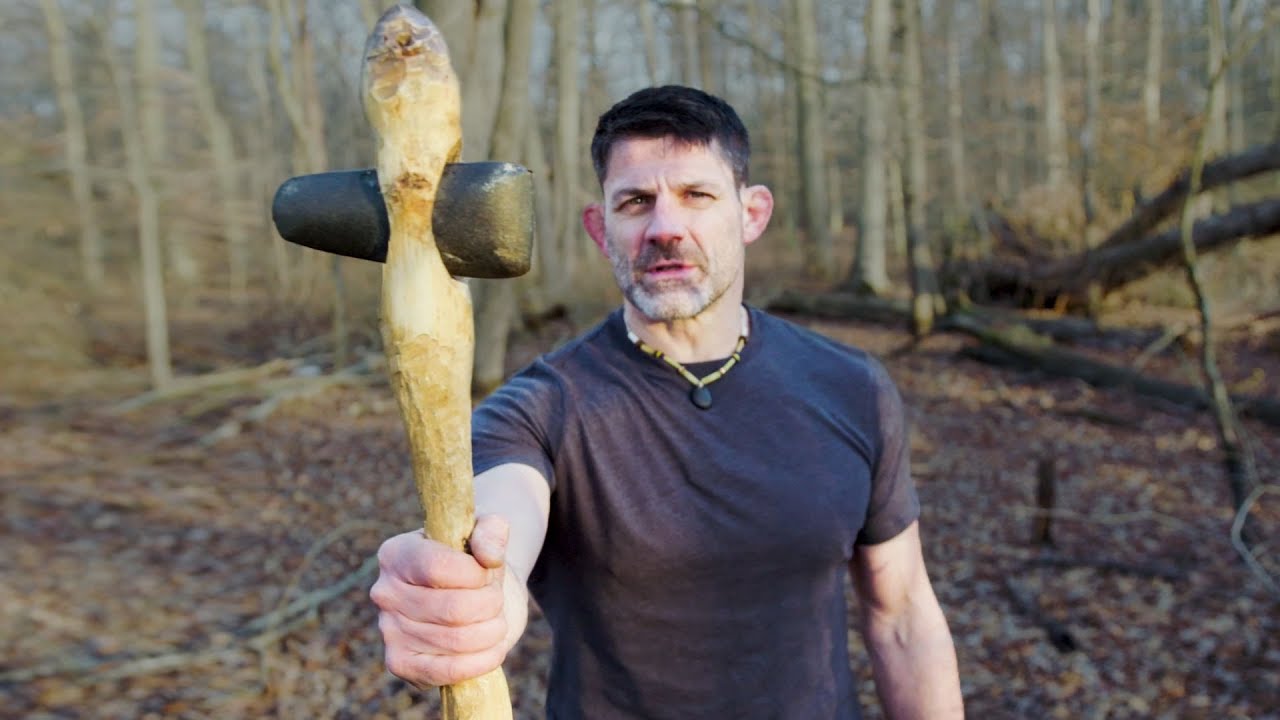
WIRED’s “Basic Instincts” series turned its cameras on Dr. Bill Schindler, an archaeologist, primitive technologist, and associate professor of archaeology and anthropology at Washington College, for an episode released March 4, 2020, titled “How to Make Stone Tools in a Survival Situation.” Schindler breaks down flintknapping — the ancient craft of striking one rock against another to produce a working blade — reducing it to the handful of decisions that actually matter when you have nothing else. The lesson starts with a blunt premise: humans didn’t survive because of claws or fangs. They survived because they figured out how to make their own.
- Schindler traces tool-making back roughly 3.5 million years, framing it as the technology that compensated for humans being poorly armed predators without natural claws or sharp teeth.
- He identifies flint and chert — hard, brittle, silica-rich stones — as the ideal raw material because they fracture predictably under a strike.
- The technique relies on percussion flaking at angles under 90 degrees, using a round, dense hammerstone against a larger core rock to shear off razor-sharp flakes usable immediately as knives, scrapers, and woodworking tools.
Innovation Drives Competitive Market Advantage
Schindler’s demonstration opens with priorities, not materials. In a genuine wilderness survival scenario, he argues, the single most urgent need isn’t shelter or fire — it’s a durable, sharp cutting edge. Without one, a person can’t process food, build anything, or defend against the environment efficiently. That’s the anatomical problem humans have been solving for millions of years, and it’s why he treats stone tool production as the starting skill rather than an advanced one.
Reading the Rock
Not every stone will cooperate. Schindler walks through what to look for in the field: hard, brittle, silica-rich minerals like flint and chert that break in clean, controllable fractures rather than crumbling or shattering randomly. That predictability is what separates a usable core rock from a useless one, and it’s the same material logic that guided toolmakers long before metal existed.
Humans have been compensating for a lack of claws and sharp teeth with tool technology for roughly 3.5 million years.
The Mechanics of Percussion Flaking
Once the right stone is in hand, Schindler demonstrates the actual strike: a round, dense hammerstone brought down on the core rock along an acute angle — under 90 degrees — to shear off a flake. Done correctly, that single flake can already function as a butchering knife, a scraper, or a woodworking edge with no further shaping required. Schindler repeats the process to produce multiple flakes and blades from the same core, each one immediately field-ready.
Skills Beyond the Blade
The same problem-solving instinct that drives flintknapping shows up across other primitive-skills content, whether it’s weaving a basket from pine needles from start to finish or building a sandbag shelter overnight in the woods. In each case, the raw material available on the ground dictates the method, and the finished tool or structure has to work the first time.
Schindler’s demonstration ends where survival always does — with a working edge, made from nothing but a rock and the right angle, ready to butcher, scrape, or carve before anyone even thinks about building a fire.









Is War Good for The Economy?
Breeding Maggots in a Tree (Auto Fish ‘Vending Machine’!) | Survival Fishing Challenge
The Extraordinary Case of Alex Lewis
30 Healthy Habit Hacks You Need To Know!
This Guy Makes Some Cool Things Out Of Epoxy Resin????????