

 InfoSearched
A hammock that lets you sleep flat on your back is finally getting a field test from someone who’s slept in hundreds of them.
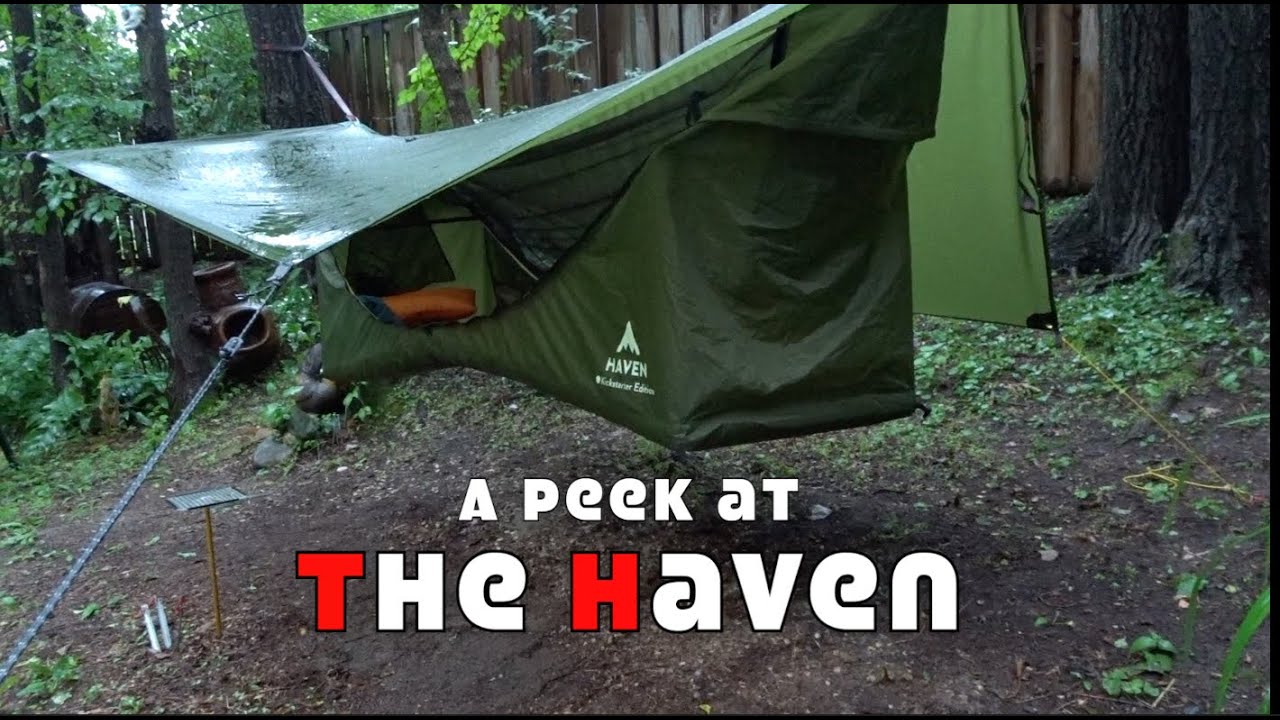
Shug Emery has built a following on YouTube by tearing apart every hammock camping setup that crosses his path, and in “A Peek at the Haven” he turns that scrutiny on a product still working out its early kinks. Derek Tillotson, the designer behind Haven Tents in Sandy, Utah, handed Emery an early production model directly, hoping for honest feedback rather than a polished review. What follows is a hands-on look at a suspension system that throws out the traditional gathered-end hammock entirely.
- The Haven Tent uses a patented, bridge-style suspension with spreader bars at both ends, a structural ridgeline, and suspension arcs designed to let a camper lie completely flat instead of banana-curled.
- The Kickstarter campaign launched in autumn 2019 with a $10,000 goal and closed at $98,452 from 325 backers, with early units shipping into production through early-to-mid 2020.
- Tillotson gave Emery the unit directly amid the startup’s early production adjustments, explicitly telling him he “did not really expect a review or a video.”
A Different Suspension Philosophy
Most hammock campers accept the trade-off of sleeping in a slight curve because that’s just how a gathered-end hammock hangs. The Haven Tent rejects that premise outright. By running spreader bars at the head and foot ends and tying them together with a structural ridgeline and suspension arcs, Tillotson’s design spreads the fabric flat across its width and length, so the sleeper isn’t fighting the hammock’s natural taco-fold. Emery walks through each component on camera, checking how the bars lock in, how the arcs distribute tension, and whether the rig actually delivers on the flat-sleep promise it was funded on.
The build also includes an integrated bug net and a separate rainfly, plus an internal insulated sleeping pad that isn’t just an add-on comfort layer — it functions as the rigid base of the sleeping platform itself. That’s a meaningfully different approach than stuffing an underquilt or pad into a standard hammock after the fact, and it’s part of what separates this from the usual hammock camping gear people compare it to, like the setups covered in Best Bug Out Tent on the market?
Ground Mode Versatility
One detail Emery highlights is that the Haven isn’t locked into tree-to-tree use. Staked down without trees available, the same spreader-bar-and-arc structure converts into a ground bivy or small standalone tent, which matters for campers who don’t always have a reliable pair of anchor points. That dual-mode flexibility puts it in a different category than fixed-frame shelters or bushcraft-style builds, closer in spirit to gear reviewed in Amazing Bushcraft Tent made from Plastic Wrap!, where adaptability to terrain is the whole point.
He did not really expect a review or a video.
Growing Pains of a Kickstarter Product
Emery doesn’t gloss over the fact that this is an early model from a company still in its production rollout. Going from $10,000 goal to $98,452 raised across 325 backers is the kind of overfunding that creates its own headaches — manufacturing at a scale the founder didn’t originally plan for, tightening tolerances on spreader bars and arcs, and fielding feedback from backers who expected shipping timelines to match a much smaller campaign. That context shapes how Emery frames his observations: less a verdict on a finished consumer product, more a checkpoint on a design mid-iteration.
He examines the practical ergonomics of pitching the Haven compared to a standard hammock suspension — tensioning spreader bars and a ridgeline is a different pitching routine than looping a strap and clipping a carabiner, and Emery treats that learning curve as a legitimate variable for anyone considering the jump from a conventional setup, the kind discussed alongside overnight builds like Solo Overnight Building a Sandbag Shelter In the Woods.
Lie-Flat Test Results Explained
The core claim of the Haven Tent is the flat sleeping surface, and that’s where Emery spends the most camera time. He gets in, moves around, and checks whether the insulated pad genuinely holds its shape as the rigid base it’s supposed to be, rather than sagging into the same curve a gathered-end hammock forces on a sleeper. For a design that leaned on a bridge-hammock concept rather than the decades-old gathered-end standard, that’s the detail that determines whether the patent is solving a real problem or just repackaging one.
Shug’s early verdict lands where you’d expect from a startup product handed to a veteran reviewer mid-production: promising mechanics, real growing pains, and a founder in Derek Tillotson who was willing to let an experienced set of eyes poke at his prototype before the wider Kickstarter shipment wave caught up with everyone else’s units.








How Mexican Drug Cartels Make Billions
The Mennonites – a trip back in time
Top 5 Ferocious Hornet Moments
Future Homes: Self sufficient living in off-the-grid Tasmanian home
We Made a $5,000 Hermes Wallet for $70!