

 InfoSearched
A holistic health practitioner in the Mojave Desert built her own home out of dirt, sandbags, and barbed wire — and county inspectors signed off on it.
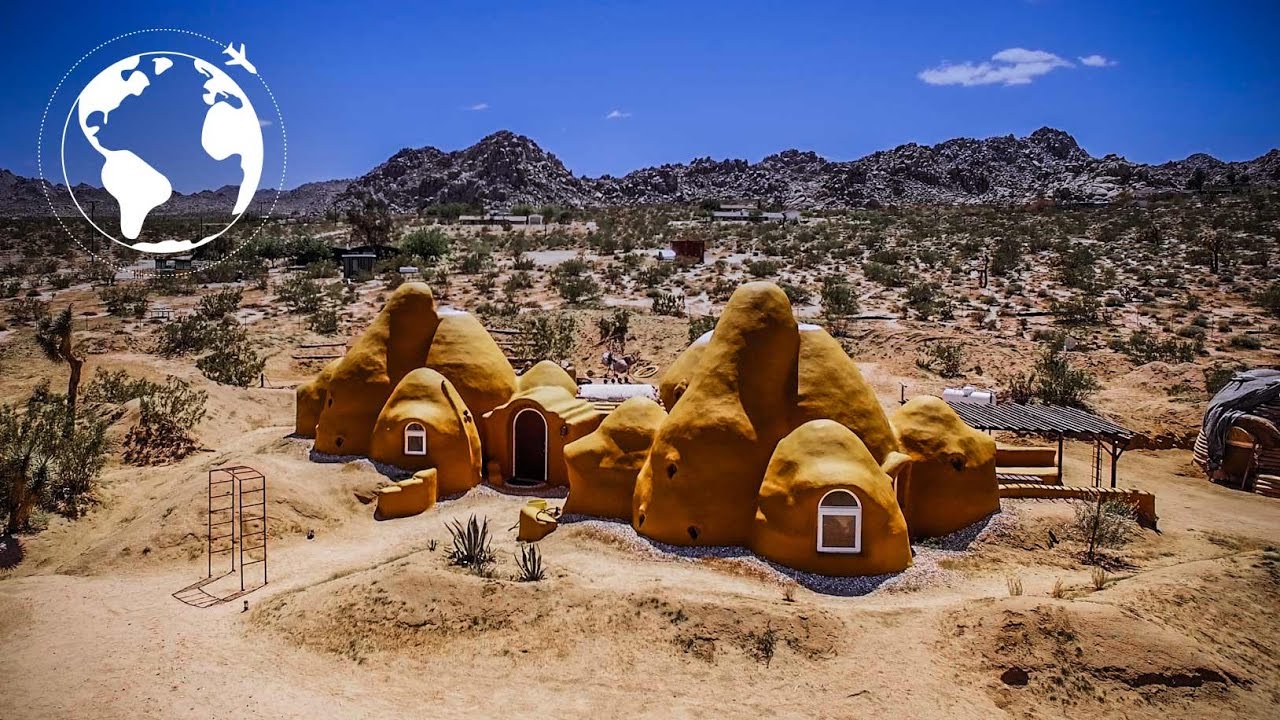
Lisa Starr didn’t hire an architecture firm or break ground with a bulldozer. She bought 2.5 acres in Joshua Tree, California, took a weeklong dome-building course, and then spent years hand-packing earthbags into a permitted, occupancy-approved retreat called Bonita Domes. The technique she used, SuperAdobe, was developed decades earlier by the late architect Nader Khalili at the California Institute of Earth Art and Architecture (CalEarth) — and Starr’s compound is now one of the clearest real-world proofs that the method can clear a county building department.
- Starr purchased the Joshua Tree property in December 2009, trained at CalEarth in spring 2010, and secured San Bernardino County permits under the 2007 building code cycle by spring 2011, finally receiving her occupancy permit in April 2014.
- The main residence measures 1,360 square feet with two bathrooms; the compound also includes a 12-foot-diameter studio and “The Village,” made up of a 12-foot shower dome and two 8-foot sleeping pods.
- Roughly 85% of the building material is desert soil excavated directly from the site, packed by hand into continuous polypropylene sandbags reinforced with barbed wire and finished in natural plaster.
The SuperAdobe Construction Process
SuperAdobe construction is less about pouring concrete than filling bags — one coffee can of soil at a time, according to the process Starr followed at CalEarth. Long, continuous polypropylene tubes are laid in coils, layer after layer, with strands of barbed wire sandwiched between courses to give the walls tensile strength they wouldn’t otherwise have. The result is a domed structure built almost entirely without lumber, using material dug up a few feet from where it’s placed.
That’s a meaningfully different build than the steel-frame, triangulated-panel systems sometimes lumped in under similar-sounding names. Starr’s domes carry no structural steel skeleton at all — the strength comes from the geometry of the dome itself and the compression of packed earth, the same load logic that’s kept adobe and rammed-earth structures standing for centuries. Readers who’ve followed other sandbag-shelter builds in the wild will recognize the bag-and-fill logic here, just scaled up into a permanent residence with plumbing and permits.
Getting Dirt Past a Building Inspector
The permitting timeline is the part most earthbag builders never get to brag about. Starr submitted plans to San Bernardino County under the 2007 code cycle and had permits in hand by spring 2011 — a full year after her CalEarth training — and didn’t get her final occupancy sign-off until April 2014. That three-year stretch from permit to occupancy reflects just how unusual it still is for a county department to bless a home built from bagged desert soil rather than milled lumber or poured concrete.
Roughly 85% of Bonita Domes was built from soil dug straight out of the ground it now stands on.
That statistic is the entire pitch of SuperAdobe: minimal trucked-in material, minimal waste, and a wall thick enough to double as thermal mass. It’s the same instinct driving other off-grid experiments profiled elsewhere, from underground homes in Australia to permaculture builds designed to live lightly on a small footprint.
Sacred Geometry and a Medicine Wheel
Starr didn’t just want a structurally sound shelter — she designed Bonita Domes as a spiritual retreat, and it shows in the layout. She incorporated principles of sacred geometry, including the vesica piscis, into the design of the domes, and placed a medicine wheel at the center of the property as the literal and symbolic heart of the compound. The Village’s paired 8-foot sleeping pods and 12-foot shower dome are arranged around that core rather than laid out like a conventional floor plan.
Built to Survive the Desert
The thick earthbag walls give Bonita Domes qualities that a stick-frame house in the same stretch of Mojave desert simply doesn’t have: high thermal mass that evens out the swing between scorching days and cold desert nights, passive cooling without mechanical air conditioning, and structural resistance to fire, earthquakes, and wind-driven erosion. That combination — desert soil, barbed wire, and dome geometry — is exactly why CalEarth has spent decades pushing SuperAdobe as disaster-resistant housing, and why Starr’s fully permitted compound stands out as more than a backyard experiment.
Bonita Domes still operates today as a retreat where guests can book stays in the pods and studio, which means Starr’s decade-long fight through San Bernardino County paperwork ended up buying more than a personal home — it bought a working case study for anyone else trying to get earthbag construction past a building inspector.





What Made the Viking Longship So Terrifyingly Effective
Very Brown Maybach, Pearly White G Wagon Brabus
Swimming with MONSTER Sharks Got Us BIT In Montauk – Barstool Outdoors Ep. 4
Living in a Minivan during Freezing Temperatures
Exploring The Most Beautiful Place on Earth