

 InfoSearched
An Austrian record holder swims into a flooded Budapest mine shaft — and doesn’t bring a single tank of air.
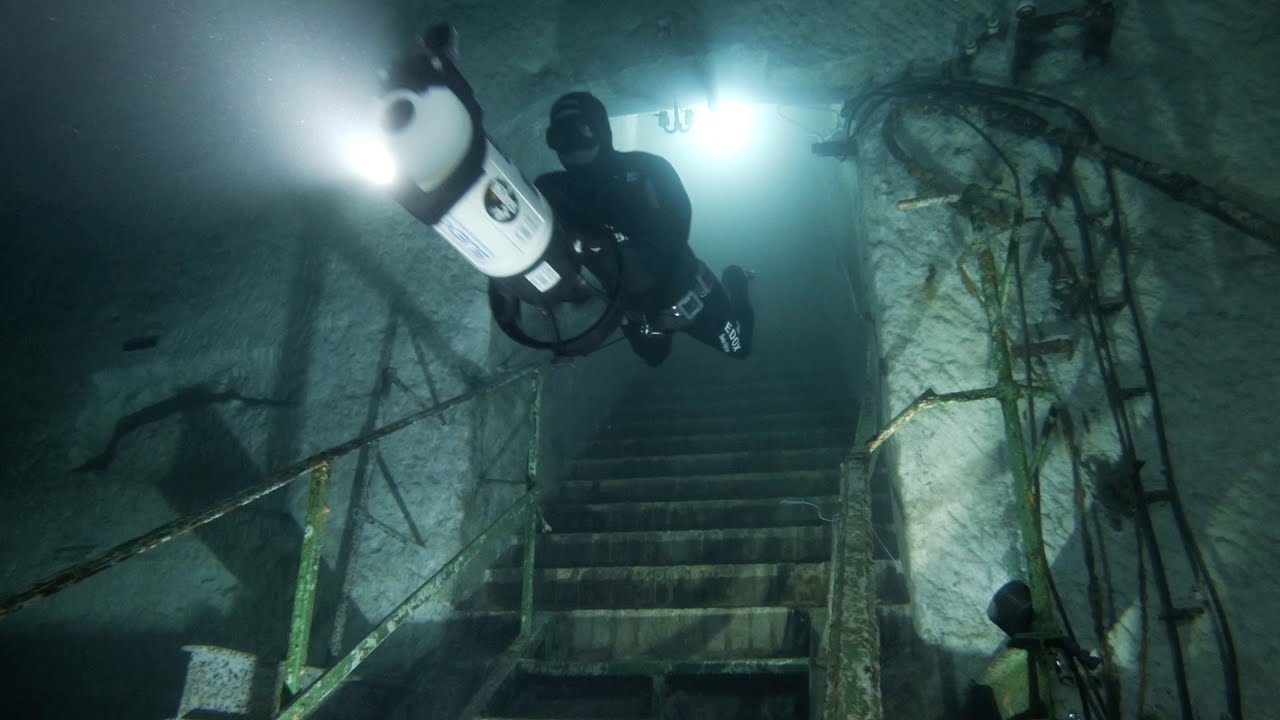
Christian Redl doesn’t dive like most people who carry cameras into dark water. The Austrian freediver, a multi-time world record holder known for ice dives and breath-hold traverses through overhead environments, drops into the submerged tunnels of an abandoned mine in Budapest, Hungary, on nothing but the air in his lungs. GoPro built an entire short film around the descent, shot start to finish on HERO4 cameras, and the result is less an action-sports highlight reel than a study in nerve.
- Christian Redl, an Austrian freediving champion and multi-time world record holder, dives the flooded tunnels of an abandoned mine in Budapest, Hungary, entirely on a single breath — no scuba tank.
- Redl is known in the extreme diving community for ice dives and breath-hold cave traverses, with holds that have stretched past seven minutes.
- The entire production was captured on GoPro HERO4 cameras, filming through dark, low-light overhead shafts, tight corridors, and industrial mine remnants.
The Man Behind the Mask
Redl’s reputation was built in places most swimmers avoid entirely: frozen lakes, sunken caves, and now a defunct mine shaft with no natural exit route if something goes wrong. He’s the kind of freediver other freedivers point to when the conversation turns to overhead environments — water with a solid ceiling above it, where surfacing on impulse simply isn’t an option. His breath-hold record, reported at upwards of seven minutes, is the foundation that makes a dive like this survivable rather than reckless.
That statistic isn’t a party trick here — it’s the entire premise of the mine dive. Every second Redl spends navigating a collapsed corridor or squeezing past industrial debris is a second he’s not breathing, and the margin for error in a flooded mine is thinner than in open water or even a natural cave system.
Redl’s breath-hold has been clocked past seven minutes — long enough to work his way through a flooded shaft and back out again without ever coming up for air.
Inside the Flooded Shaft
The Budapest mine itself supplies the atmosphere GoPro’s crew clearly wanted: rusted rail track, timber supports gone soft with age, and shafts that narrow into corridors barely wide enough for a diver’s shoulders. None of it was lit for filming beyond what the divers brought with them, so the HERO4 footage leans on practical lights cutting through silt-thick water rather than any studio setup. It’s the same overhead-environment discipline that draws technical cave divers to places like the sinkholes profiled in South Australia’s farmland sinkholes, except here Redl has stripped away the tanks and regulators that usually make that kind of diving manageable.
Without scuba gear, Redl has no bubbles trailing behind him and no mechanical noise — just the sound of his own restrained exhalations and the water moving around old machinery. That silence is part of what makes the footage work as a piece of GoPro’s catalog of extreme, first-person documentation, in the same vein as the sea-focused profiles GoPro and outlets like Fishpeople: Lives Transformed by the Sea have built a following on.
Shooting It on a HERO4
GoPro’s choice to shoot the entire piece on HERO4 cameras wasn’t incidental — it’s the whole pitch. The cameras had to survive low light, murky visibility, and confined mine geometry while staying rigged to a diver who couldn’t afford extra bulk or drag while managing a single breath. The footage that resulted shows mine timber, collapsed rock, and old rail equipment lit only by handheld beams, giving the film the claustrophobic, first-person feel that separates GoPro’s action documentation from a standard underwater nature clip.
There’s no narration explaining technique or safety protocol in the film — the tension comes from watching Redl’s controlled movement through space that offers no quick way out. That restraint is deliberate, and it’s what turns a short mine-diving clip into one of the more talked-about entries in GoPro’s extreme-sports library.




DMT Sent Him Into the Multiverse
Luxury Eco Bush Retreat w Loft Bed & Lap Pool! – Australian Home Tour
Why Dubai’s Man-Made Islands Are Still Empty
Good Samaritans Get….? Chat with Rasta Mokko! How Ugly are Matthew’s Shoes??
This Is Where Your Wine Corks Come From