

 InfoSearched
Steve Wallis pitches a tarp in an Alberta city, drops below -15°C, and dares anyone to notice.
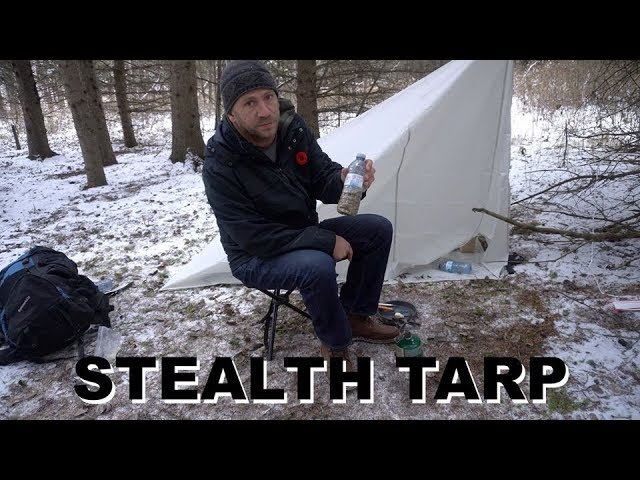
Steve Wallis has built his channel on stripped-down camping — no frills, no dedicated tent, just enough gear to survive and a beer waiting at the end. In “City Stealth Camping In The Snow With A Tarp,” he takes that formula into an Alberta city after dark, pitching a utility tarp with rope in the snow while temperatures fall below -15°C (5°F). The goal isn’t comfort — it’s proving a tarp, a new sleeping bag, and a surplus ration can get him through a genuinely cold night without anyone knowing he’s there.
- Wallis sets up an improvised tarp-and-rope shelter in an Alberta urban setting as temperatures drop below -15°C (5°F), with no dedicated tent.
- He tests a new winter sleeping bag, which holds up against the sub-zero cold but leaves him planning to add a sleeping bag liner on future winter trips for extra thermal efficiency.
- Dinner is a surplus Canadian Forces Individual Meal Pack (IMP) — the Canadian military’s version of an MRE — eaten inside the tarp enclosure, followed by his usual “Step Two” beer, a High Country Beer from Nisku’s Rig Hand Distillery.
Advantages of Tarps Over Tents
A tent is the obvious tool for winter camping, but it’s also the thing most likely to give away a stealth setup in a populated area. Wallis works with a plain utility tarp and rope instead, pitching low and tight to the snow so the shelter reads as nothing more than debris or shadow to anyone passing by. It’s the same low-profile logic that runs through his other minimalist builds, including his bushcraft tent made from plastic wrap, where the point is always doing more with less rather than less with more.
Testing the Sleeping System at -15°C
The core of the video is a real-world gear test. Wallis brings a new winter sleeping bag into a night that drops below -15°C and reports that it does its job — he stays warm enough to get through until morning without a backup shelter around him. His one takeaway for next time is practical rather than dramatic: a sleeping bag liner would push the thermal efficiency further on colder nights, closing the gap between “sufficient” and genuinely comfortable.
The bag performed sufficiently against the sub-zero chill — next time, a liner comes with him.
Rations and the “Step Two” Ritual
Once the shelter is up, Wallis settles in with a surplus Canadian Forces Individual Meal Pack — the IMP, Canada’s answer to the American MRE — eaten cold-weather style inside the tarp enclosure. It’s a fitting choice for a stealth-camping test: shelf-stable, no cooking smoke to give away his position, and enough calories to fuel a night in sub-zero air. True to his channel’s running gag, he closes the meal with his “Step Two” beer, a High Country Beer brewed in Nisku, Alberta and sourced from the Rig Hand Distillery — the same small ritual that shows up at the end of most of his overnight builds.
Packing Down Without a Trace
The measure of success in stealth camping isn’t just surviving the night — it’s leaving no sign anyone was there. Wallis breaks camp in the morning, pulling down the tarp and ropes and clearing the site before the city wakes up properly, the same discipline he’s applied on other minimalist overnights like his solo sandbag shelter build in the woods. No fire pit, no trampled snow left behind, no evidence — just a video and a lesson about what a tarp can actually handle in a real Alberta winter.
Wallis has already flagged the fix for next time — pack the liner — which means whichever winter city he stealth-camps in next, the sleeping bag test gets a second round with better numbers on the line.



Deep inside El Chapo’s secret tunnels
MEGAVALANCHE | Fighting for 1st place! | FULL RACE
Inside a $195 Million Bel Air Estate With Secret Tunnels
The Badger that can escape from anywhere! | Honey Badgers: Masters of Mayhem
how to put together an outfit 101