

 InfoSearched
The hyena’s cackle isn’t a laugh at all—it’s a survival code written in pitch and stress.
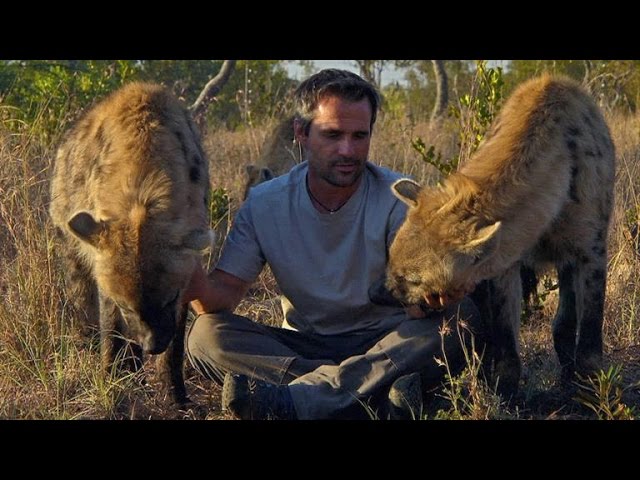
Smithsonian Channel’s “Why Do Hyenas Laugh?” takes on one of the animal kingdom’s most misread sounds: the spotted hyena’s high-pitched giggle. Pop culture has spent decades turning that cackle into shorthand for cruelty or comic relief, but the science tells a very different story. The sound is involuntary, tied to stress and social friction, and it carries real information about who’s making it.
- The giggle is triggered by intense stress, frustration or conflict — most often heard during feeding frenzies over a kill or when a hyena is cornered.
- Only the spotted hyena, the largest and most vocal of the four hyena species, produces this call; the striped hyena, brown hyena and aardwolf don’t.
- Bioacoustic research, including studies of captive colonies at the University of California, Berkeley, shows pitch and steadiness of the giggle correlate directly with a hyena’s age and social rank.
Not a Laugh, a Distress Signal
The giggle sounds playful to human ears, which is exactly why it’s been misunderstood for so long. In reality, it fires when a hyena is under pressure — squeezed out of a carcass by a bigger pack mate, threatened by a rival, or forced to back down in a scrap over food. It’s the vocal equivalent of a wince, not a chuckle.
The cackle isn’t amusement — it’s an involuntary acoustic signal fired off under stress, most often when hyenas are fighting over a fresh kill.
Pitch Reveals Key Strategic Insights
Researchers who’ve analyzed the call in captive colonies found it’s not one uniform sound — each hyena has its own acoustic signature. Younger, lower-ranking hyenas produce giggles that are higher-pitched and more erratic when they’re forced to submit, while older, dominant matriarchs give off lower, steadier, more controlled vocalizations. That difference means clan mates can identify who’s giggling, and roughly where that hyena sits in the pecking order, just from the sound alone.
That’s a useful trick in clans that can run up to 80 individuals. A subordinate giggling in the dark or in thick brush is broadcasting its identity, its rank and its anxiety without ever needing to be seen — and without having to fully retreat from a contested carcass.
Part of a Bigger Vocabulary
The giggle is just one entry in a wider hyena vocal repertoire that includes groans, lowing and the long-distance “whoop,” a call clans use to summon reinforcements when facing off against lions or rival clans. Anyone who’s watched footage of a hyena-versus-lion standoff, like the clips covered in The Most Extreme Wild Animals Battles!, has likely heard that whoop doing exactly that job — rallying numbers before things turn physical.
Spotted hyenas live in matrilineal clans where females hold the power, and that social structure is precisely why a submission signal like the giggle matters so much. In a hierarchy this rigid, knowing your place — and being able to communicate it instantly, without a fight — keeps the clan functioning instead of tearing itself apart every time food shows up. It’s a different kind of hierarchy problem than the one facing a solitary male pushed out of a group, the situation explored in Here’s What a Lion Does After Being Banished From the Pride, but both come down to the same basic currency: rank, and who gets to eat first.
Next time that cackle shows up in a wildlife documentary or a nature-show sound bite, it’s worth listening for the pitch. A high, jittery giggle means a young or low-ranking hyena just got shoved off a carcass. A low, steady one means the matriarch is running the show and everybody already knows it.









Simple Log Cabin- Built for $500- No Permit Required
NYC Apartment Tour: $14 MILLION LUXURY APARTMENT
$12,000 HOUSE – One Man Renovation
Deep inside El Chapo’s secret tunnels
I Will Survive | Gloria Gaynor | funk cover ft. Mario Jose