

 InfoSearched
A photographer told to shoot through people’s windows ends up documenting a pandemic.
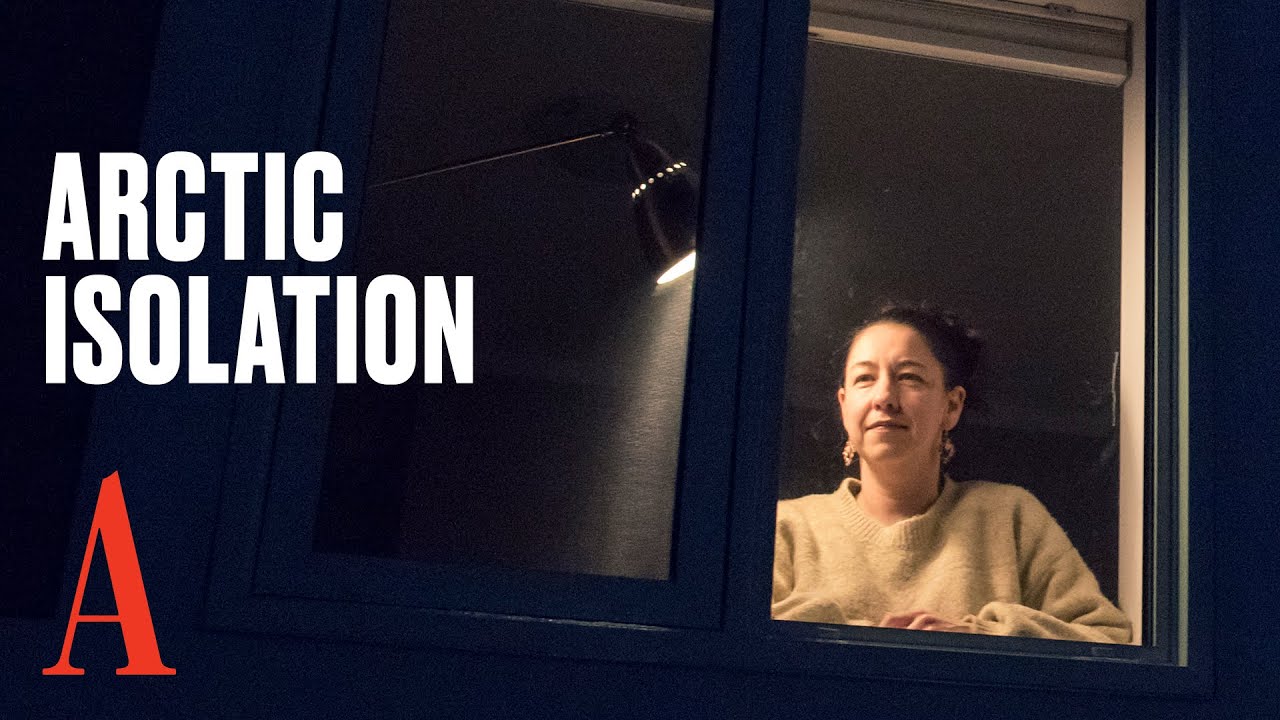
In the early weeks of the COVID-19 outbreak, the Northwest Territories sealed itself off from the rest of Canada, betting that speed and isolation could keep the virus out of its remote Indigenous communities. In Yellowknife, a locked-out commercial photographer named Pat Kane picked up his camera anyway, knocking on windows instead of doors. The Atlantic’s short documentary Quarantine at the Edge of the World: Portraits from the Arctic, produced with text by Nicolas Pollock, follows what happened next.
- The Northwest Territories covers an area roughly twice the size of Texas but counts only about 44,000 residents, most of them spread across small, remote communities.
- After recording its first confirmed coronavirus case in March 2020, the territory closed its borders to non-essential travel and imposed strict self-isolation rules to protect Indigenous communities, limited health care infrastructure, and elders.
- Pat Kane, an Indigenous documentary photographer in Yellowknife, lost his commercial and editorial assignments to the lockdown and began photographing quarantined neighbors through their windows after his wife’s sarcastic suggestion turned into a real project once he posted it on social media in mid-March.
Rapid Territory Expansion Drivers
The Northwest Territories didn’t have the luxury of waiting to see how COVID-19 would behave. With a population scattered across a landmass twice the size of Texas, hospital beds and ventilators are scarce outside Yellowknife, and many communities are fly-in only, days from the nearest ICU. Officials also knew the region’s history with introduced infectious disease among Indigenous populations made the stakes different from a outbreak in Toronto or Vancouver.
So when the territory logged its first confirmed case in March 2020, the response was immediate: borders closed to non-essential travel, mandatory self-isolation for anyone entering, and a deliberate effort to keep the virus away from elders who carry language, culture, and community memory that can’t be replaced.
A Photographer Runs Out of Work
Pat Kane’s business is built on being in rooms with people — weddings, editorial shoots, commercial work. The lockdown erased his calendar within days. According to the documentary, it was his wife who, half-joking, suggested he start photographing people through their windows since he couldn’t get near them any other way. Kane ran with it, posting the concept to Facebook in mid-March, and the response caught him off guard: neighbors and friends, suddenly housebound, wanted to be seen.
What started as a way to salvage lost income turned into something closer to a documentary project. Kane worked outside, keeping his distance, camera pointed at glass, photographing families, couples, and individuals framed by their own front windows during the first weeks of Canada’s Arctic lockdown.
Kane approached the project not as family photography but as photojournalism — a record of a historic public health crisis as it looked from outside a Yellowknife window.
Evidence Revealed in Portraiture
The images aren’t posed the way a studio portrait would be. People look out from behind glass, some smiling, some just watching the street, all of them separated from the photographer by more than a pane of window. That distance is the point — Kane wasn’t trying to make the isolation look comfortable, he was trying to document what it actually looked like in a place where 44,000 people were suddenly told to stay inside a landmass most of the world can’t find on a map.
Readers who want more on how remote, sparsely populated places have handled isolation on their own terms might also look at this remote visa-free island at the top of the world, where distance from everything else shapes daily life in similarly extreme ways. The Atlantic’s film sits comfortably alongside other short-form nonfiction work in The Atlantic’s documentary catalog, which has leaned into pandemic-era stories told through a single subject’s routine.
Solidarity Through a Pane of Glass
What the project captures, more than anything, is a community deciding to keep seeing each other even when it couldn’t touch. Kane’s window portraits became a small, improvised record of a place that took the coronavirus threat seriously before most of the country did — and found a way to document its own resilience while doing it.






What If A Nuclear Bomb Was Detonated In The Marianas Trench? (Science not Fantasy)
Bass Love Spiders!
School Bus Converted To Incredible Off-Grid Home
Backyard UNDERGROUND Apocalyptic BUNKER
How to BEAT a LUXURY BUFFET!!! UNLIMITED SEAFOOD!!