

 InfoSearched
Two of whitewater kayaking’s biggest names just turned a drainage ditch into the wildest tandem run ever filmed.
In March 2017, GoPro dropped “Return to the Ditch – Tandem Kayak,” a follow-up stunt from professional whitewater paddlers Rush Sturges and Ben Marr. The pair had already made the concrete drainage chute in Lions Bay, British Columbia, an internet sensation back in 2014 when they ran it solo. This time, they climbed into a single tandem kayak and tried to do it together.
- The ditch is a man-made concrete drainage flume in Lions Bay, British Columbia, originally run solo by Rush Sturges and Ben Marr in a viral 2014 video.
- The 2017 sequel raised the stakes by putting both paddlers in one tandem kayak down the same narrow, steep chute.
- Footage was shot entirely with GoPro HERO cameras in first-person and mounted angles, capturing the run down to the ocean outfall.
A Sequel Built on a Viral Original
The original 2014 clip of Sturges and Marr bombing down the Lions Bay ditch in separate kayaks racked up massive attention for turning an urban stormwater channel into an extreme sports playground. Three years later, GoPro and the two athletes went back to the same spot with a harder version of the same idea: instead of two boats side by side, one tandem kayak, one shared line, zero margin for miscommunication.
The location itself hasn’t changed — it’s still the same shallow, high-velocity concrete drainage channel built to move stormwater runoff toward the ocean, not paddlers toward glory. What changed was the format, and with it, the difficulty.
Tandem Transforms Industry Standards
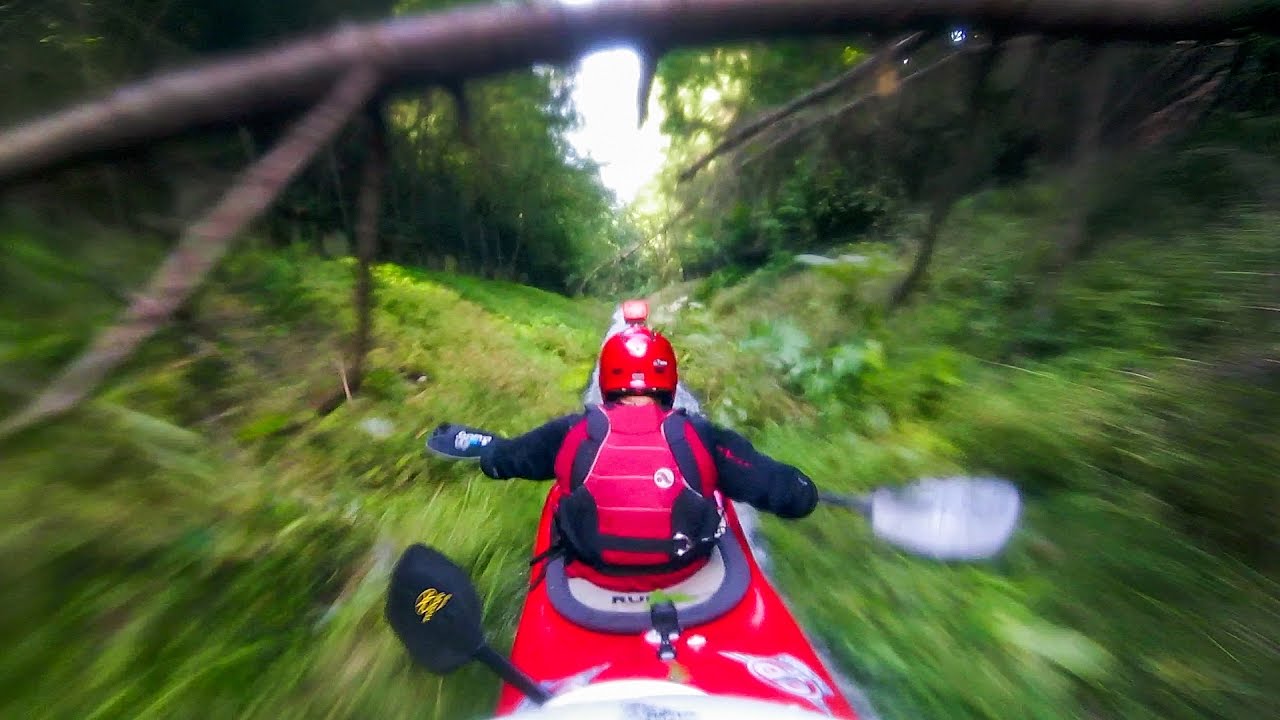
Running the ditch solo is already a test of reflexes in a boat with a foot of water and concrete walls closing in on both sides. Putting two people in one kayak multiplies the risk because every lean, brace, and stroke now has to be mirrored by a partner instead of controlled independently. Sturges paddled from the front seat while Marr held the back, meaning the rear paddler was steering blind through the chute’s tightest sections based almost entirely on trust in what his partner in front was doing.
One mistimed stroke or a lean in opposite directions at speed is enough to pin a tandem boat against a concrete retaining wall or flip it outright in water moving fast enough to outrun a jog. That’s the tradeoff GoPro’s footage highlights: the same maneuver that’s difficult solo becomes exponentially harder when it has to be executed in sync.
A high-speed ditch run that had never been completed in a two-person kayak — until Sturges and Marr did it.
Shot Entirely on GoPro HERO Cameras
Every second of the run was captured on GoPro HERO action cameras mounted on the kayak and the paddlers themselves, giving viewers a first-person view of the walls blurring past just inches from the hull. The mounted angles show the full picture: the narrow concrete banks, the shallow rooster-tail spray kicked up by the tandem boat, and the abrupt transition where the man-made chute empties out toward the ocean.
That combination of head-mounted and boat-mounted GoPro footage is what turned the original 2014 ditch run into a viral hit in the first place, and it’s the same formula GoPro leaned on again for the tandem sequel — letting the speed and proximity to the walls do the storytelling without narration.
Completing a Run Nobody Had Done in Tandem
Solo descents of engineered drainage chutes like this one have circulated in kayaking circles for years, largely thanks to Sturges and Marr’s original clip. But a tandem descent of the same feature, at the same speed, through the same tight walls, was untested territory. Their successful run down to the ocean outfall gave the sport a new benchmark: a two-person, high-speed completion of a run built for one boat at a time.
For paddlers who want a gentler introduction to sharing a boat before attempting anything close to what Sturges and Marr pulled off, the fundamentals of tandem paddling — synchronization, communication, weight distribution — are the same whether you’re running an urban ditch in British Columbia or a calm stretch like the one covered in KAYAK CAMPING the Frio River – Her First Trip!. The skills scale up; the consequences of getting them wrong do not.
Sturges and Marr had already proven the ditch could be run solo. With the tandem descent, they proved it could be run together — and given how often action-sports stunts like this end up filed alongside other high-consequence misfires in compilations such as CLIMBING GONE WRONG fails, the fact that this one ended clean, in the ocean and not against a concrete wall, is the whole story.







Piers Morgan – The Luxury Life Of Dubai HD Documentary 2019
One Man’s Mission to Revive the Last Redwood Forests
Building a Medieval House | 10 Day Bushcraft Shelter Build
Very Brown Maybach, Pearly White G Wagon Brabus
Artist builds his Savannah studio with shipping containers