

 InfoSearched
A copper sculpture outside CIA headquarters has kept the world’s best codebreakers stuck for three decades.
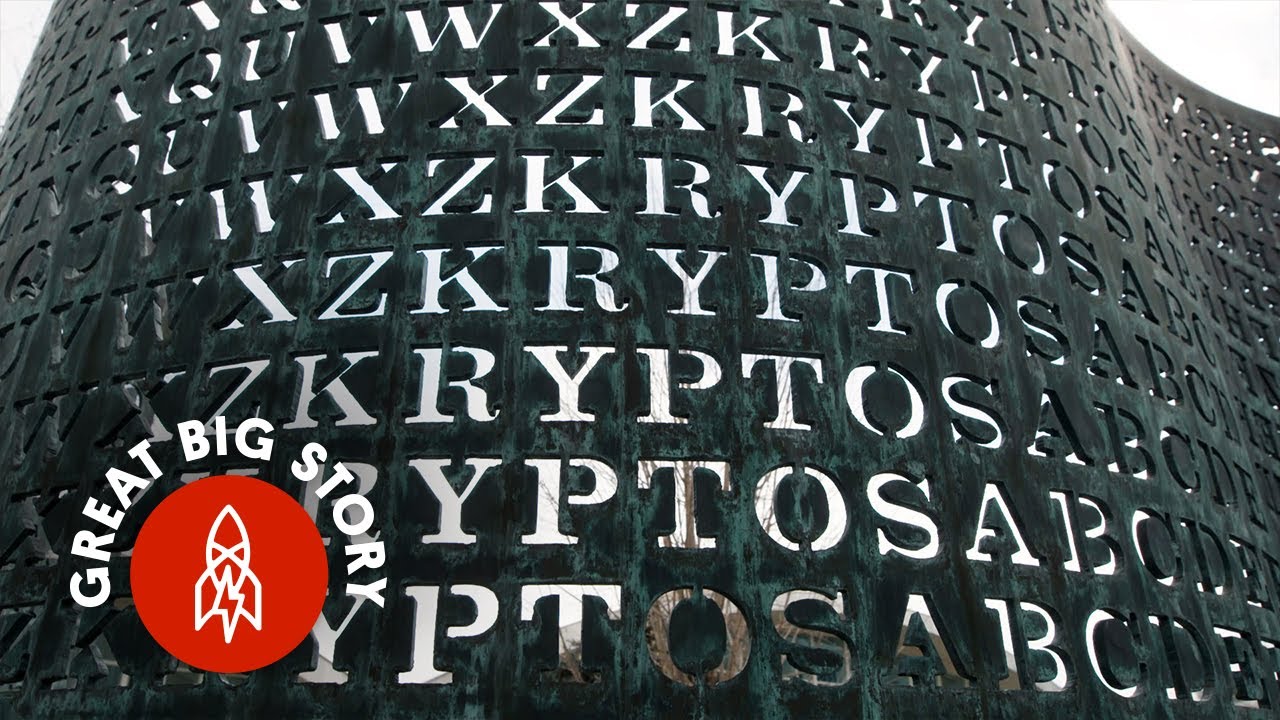
Jim Sanborn installed “Kryptos” in the courtyard at Langley in November 1990, and it has been taunting cryptographers ever since. The S-shaped copper screen carries 869 characters of ciphertext, built with guidance from retired CIA cryptographer Ed Scheidt using altered Vigenère ciphers and transposition tricks. Three of its four encoded passages have fallen. The fourth has beaten everyone who’s tried it, including the agency’s own analysts.
- K4, the sculpture’s fourth and final passage, consists of just 97 characters and remains completely unsolved after 30 years.
- CIA analyst David Stein cracked three passages with pencil and paper in 1998; computer scientist Jim Gillogly independently solved them with software in 1999.
- Sanborn has doled out partial clues over the years — “BERLIN” (2010), “CLOCK” (2014), and “NORTHEAST” (January 2020) — without breaking the deadlock.
The Sculpture Behind the Mystery
Kryptos sits in the courtyard where CIA employees pass it every day, a physical puzzle hiding in plain sight at one of the country’s most guarded addresses. Sanborn didn’t build the cipher alone — he leaned on Ed Scheidt, a CIA cryptographer who’d just retired, to design encryption schemes strong enough to survive scrutiny from professionals with security clearances and plenty of free time. The result carved into copper is four separate encrypted passages, labeled K1 through K4, each demanding a different kind of attack.
Three Down, One to Go
The first crack came from inside the building. David Stein, a CIA analyst, worked out three of the four passages in 1998 using nothing but pencil and paper — though the agency kept that solution under wraps for a while. The public got there a year later when Jim Gillogly, a computer scientist, ran the ciphertext through software and matched Stein’s results independently in 1999. Between them, K1, K2, and K3 were done. That left K4: 97 characters that have swallowed every attempt thrown at them since.
Ninety-seven characters. Thirty years. Still zero.
The Clues Sanborn Keeps Rationing Out
Sanborn isn’t hiding from the people chasing his puzzle — he’s just not handing them the answer. He periodically meets with dedicated solvers, including game developer and cryptologist Elonka Dunin, at his studio in Maryland, where she and others maintain the tracking groups and public resources that keep the amateur codebreaking community organized. Over the years he’s dropped just enough to keep them hooked without letting them finish: in 2010 he confirmed that letters 64 through 69 of K4 decode to “BERLIN,” in 2014 he added that letters 70 through 74 spell “CLOCK,” and as recently as January 2020 he revealed that letters 26 through 34 spell “NORTHEAST.” Each clue narrows the field a little. None of them has cracked the code.
K4 Maintains Continued Resistance
What makes K4 different from its solved siblings isn’t obvious length — 97 characters is short by cipher standards — it’s the combination of technique Sanborn and Scheidt built into it. The same blend of substitution and transposition that fell to pencil-and-paper analysis on the earlier passages has held up against everything from manual cryptanalysis to brute-force computing for three decades. That gap between “short enough to seem solvable” and “unsolved for 30 years” is exactly what has turned Kryptos into a subculture of its own, pulling in codebreakers who treat Sanborn’s occasional hints the way other communities treat a scavenger hunt clue — as fuel, not answers. The instinct to chase down a supposedly unbreakable puzzle isn’t unique to cryptography either; it’s the same pull that draws people toward secretive, closed-off institutions generally, the kind covered in The Most Secretive Unit in United States, where the appeal is precisely that outsiders aren’t supposed to get in.
Sanborn has been clear that keeping people guessing is part of the point. He controls the pace of every clue, and there’s no indication he’s under any pressure to speed things up — the CIA itself has let K4 sit unsolved on its own front lawn for three decades without treating it as a problem to fix. For an agency built around the kind of layered secrecy explored in pieces like Inside the US-Iran Shadow War for Control of the Middle East, an unsolved cipher in the courtyard is practically on brand.
As of March 2020, K4 stands exactly where it’s stood since the sculpture went up: 97 characters, four confirmed words scattered across three separate hints, and no solution. Sanborn has said he’ll eventually reveal the answer if he thinks he’s not going to be able to do it himself — but he hasn’t given anyone a timeline, and Elonka Dunin’s tracking groups are still waiting on the next scrap he decides to drop.




ACKEE Fruit : Trying the Notoriously Delicious Fruit in JAMAICA (& Susumba Fruit Review + Recipe)
INSIDE the $40M LARGEST APARTMENT in New York City
13 DIY Kawaii School Supplies!
Gorgeous Three Bedroom Tiny Home
BILLIONAIRE for a week – Most EXPENSIVE of DUBAI