

 InfoSearched
A YouTube series built entirely around one question — how small can you live and still love it — gets another entry worth watching.
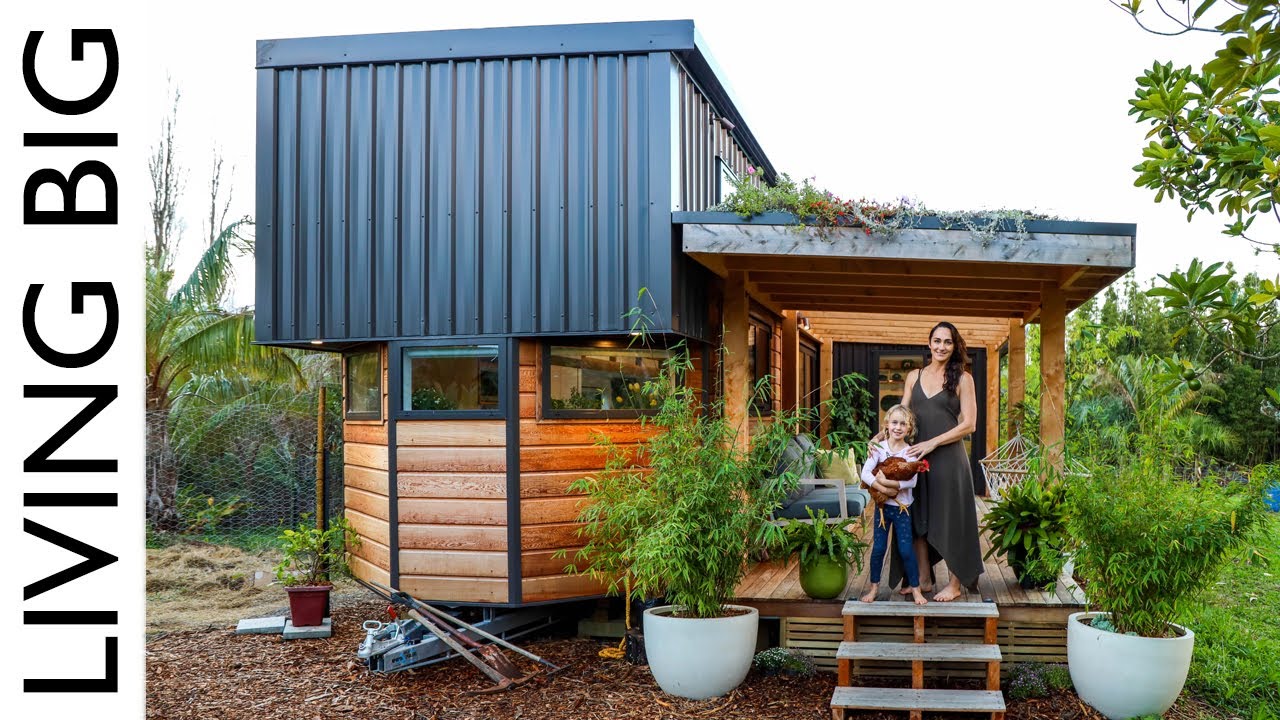
“This Dream Tiny House Is A Total Game Changer” is the latest upload from Living Big In A Tiny House, the long-running YouTube documentary series created and hosted by New Zealand-based filmmaker Bryce Langston. Since launching, the channel has built its audience one home tour at a time, pairing a homeowner’s downsizing story with a walkthrough of the custom carpentry and space-saving tricks that make their build work. This episode follows that same formula, profiling a dwelling its owner clearly built to challenge what people assume a tiny house has to look like.
- The video is an episode of Living Big In A Tiny House, hosted and produced by Bryce Langston, a channel dedicated to profiling custom small-footprint homes around the world.
- The series’ standard format centers on the resident’s personal story, the practical carpentry solutions used to maximize a tight floor plan, and a breakdown of what the build actually cost.
- Off-grid utility systems — solar power, rainwater harvesting, and similar self-sufficiency setups — are recurring features across the channel’s episodes, reflecting a broader trend in owner-built tiny homes.
Tiny House Living Simplifies Life
Langston’s approach never treats a tiny house as a novelty item. Each episode opens with the owner explaining why they downsized in the first place — a divorce, a mortgage they refused to sign, a desire to build with their own hands — before the camera moves room to room. That structure is what separates the channel from a real-estate walkthrough: viewers get the reasoning behind a Murphy bed or a fold-down desk, not just the reveal.
The channel’s back catalog spans dwellings on wheels, off-grid cabins, and architect-designed micro-homes, which is exactly why an episode titled “This Dream Tiny House Is A Total Game Changer” fits so naturally into the lineup. Viewers who enjoyed this build often gravitate toward similar owner-built projects, like the couple profiled in We Built Our Dream Home, FROM A KIT!, where the appeal is the same: a homeowner solving space problems with their own two hands rather than an architect’s blank check.
Carpentry Tricks That Do Double Duty
What consistently earns these builds their “game changer” reputation is furniture and joinery engineered to do more than one job. A staircase that hides drawers, a dining table that folds flat against a wall, a loft bed with a headroom trick borrowed from sailboat design — these are the details Langston lingers on, because they’re the difference between a home that feels cramped and one that feels considered.
Every episode eventually lands on the same number the owner can’t avoid saying out loud: what the whole thing cost to build.
That cost breakdown matters because it’s the payoff for viewers who watch the series less for the aesthetics and more for the math — how a self-built structure this size compares to a conventional mortgage. It’s the same instinct that drives interest in builds like TIMELAPSE 5min. Metal House | Costs, Pros-Cons, The Container House Killer?, where the appeal is watching someone else’s receipts as much as their design choices.
Off-Grid Systems as a Design Priority
Solar arrays and rainwater catchment aren’t afterthoughts in this genre — they’re often the reason the owner chose to go tiny in the first place. Cutting the utility bill to near zero, or eliminating it altogether, is frequently the whole point of the exercise, and Langston’s episodes tend to walk through exactly how those systems were wired, plumbed, and paid for. Anyone drawn to that angle of self-sufficiency will recognize the same instincts at work in Spectacular FLOATING HOME is Self-Built & Off-Grid, another build defined as much by its independence from the grid as by its square footage.
Retractable walls, sliding glass, and fold-out decks show up across the channel for a practical reason beyond the wow factor: in a home under 200 square feet, borrowing outdoor space for a few warm months can functionally double the livable footprint. It’s a trick tiny house builders lean on constantly, and it’s part of why this format keeps finding new homes worth profiling.
Langston has built an entire channel out of proving the same point over and over — that a home doesn’t need square footage to earn the word “dream,” it just needs someone stubborn enough to build it right. This episode is the latest proof, and if the channel’s release pace holds, there’s already another tiny house somewhere in the queue waiting for its own walkthrough.






Catch And Cook Without Tools Day 23 & 24 Of 30 Day Survival Challenge
There’s A Poop Crisis At The Border
Brewing Beer from Dirt and Grass
I Hung Out With Some Thieves To Learn How Not To Get Robbed
The 12-year-old Pursuing Her Passion as a Tattoo Artist