

 InfoSearched
James Prigioni spent years hearing that his backyard would never feed anyone — then he started filming the harvests.
On his channel, The Gardening Channel With James Prigioni, the suburban grower revisits the skeptics who told him wood-chip mulch, permaculture layering, and food-forest density were a waste of a perfectly good lawn. In “They told me gardening like This wouldn’t work, I didn’t listen,” Prigioni walks through the same backyard that critics once dismissed, now stacked with fruit trees, berry bushes, and vegetables growing in tight, layered guilds instead of neat rows.
- Prigioni built his system around heavy wood-chip mulch and permaculture layering instead of tilled monoculture rows.
- The video showcases a high-density backyard food forest producing organic fruits, vegetables, and berries without synthetic fertilizer or chemical sprays.
- His golden retriever, Tuck, appears alongside him during the harvest tour, a recurring presence in his garden videos.
The Skepticism He Started With
Prigioni’s premise is simple: when he first began converting his yard, the pushback wasn’t subtle. People told him to just buy his produce at the store rather than fight for it in the dirt. When he started piling wood chips instead of digging conventional beds, the response shifted from confused to outright doubtful — this, neighbors and fellow gardeners insisted, would not work.
He didn’t argue back. Instead, he let the beds mature over successive seasons, building soil biology under the mulch rather than fighting it with tillage and store-bought fertilizer. The video’s entire structure is built around that vindication — walking the same ground that drew criticism and showing what it looks like once the system is established.
They told me gardening like this wouldn’t work. I didn’t listen.
Wood Chips, Layers, and a Working Food Forest
The core of Prigioni’s approach is what permaculture growers call a food forest: fruit trees on top, berry shrubs and cane fruit in the middle layer, and vegetables or ground covers filling in below, all planted close enough to shade out weeds and hold moisture. Wood-chip mulch covers the soil throughout, breaking down slowly to feed the microbial life underneath instead of relying on synthetic inputs.
Growers exploring the same layered strategy on a smaller footprint can see a parallel version of it in how to grow raspberries, blueberries, and blackberries in containers, which applies the same berry-heavy logic to a patio-sized setup rather than a full yard conversion.
Working With Nature Instead of Against It
Prigioni frames the entire operation around one working principle: let natural balance do the pest and fertility management that chemicals usually handle. Companion planting pairs species that repel pests or fix nitrogen for their neighbors, and the dense planting itself discourages the kind of open, bare soil that invites weeds and erosion. No sprays, no synthetic fertilizer — just organic soil building and enough biodiversity that the system stabilizes on its own.
That same instinct toward low-input, self-sustaining land use shows up in living a radically simple permaculture life on 1/4 acre, where a quarter-acre plot is run on similar organic principles rather than conventional lawn-and-garden maintenance.
The Harvest as the Argument
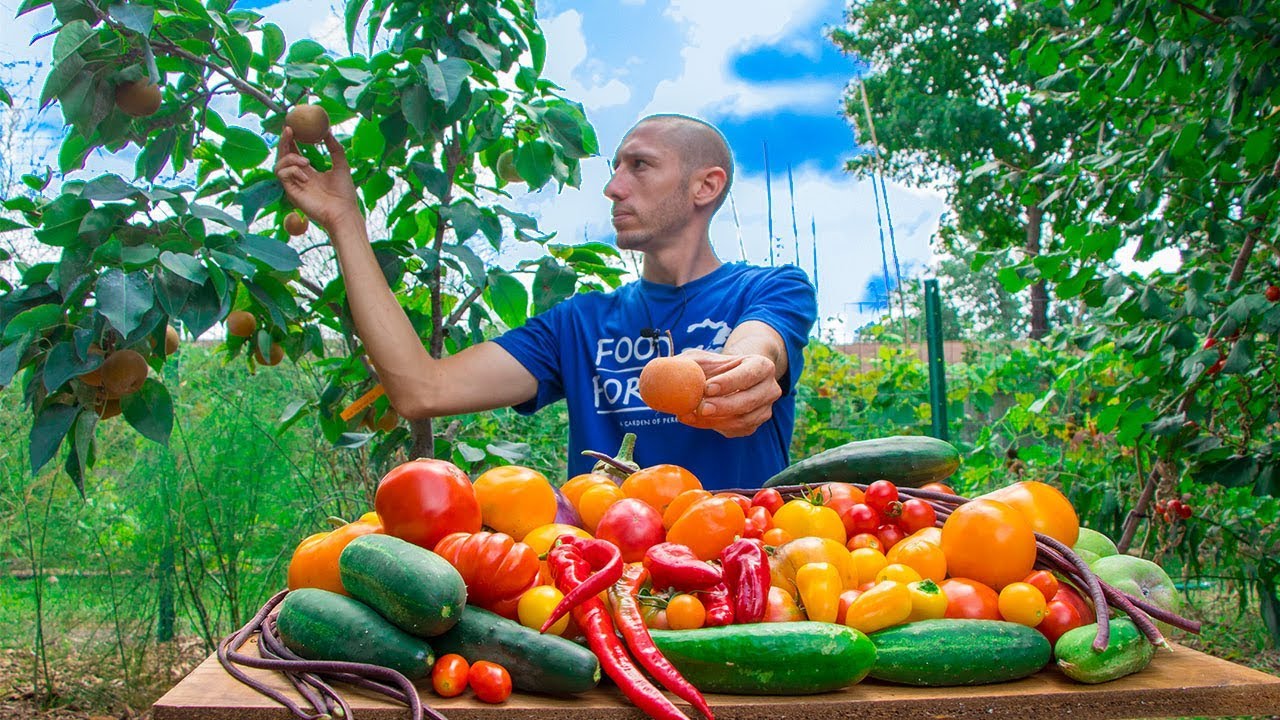
Rather than debate the critics point by point, Prigioni lets the yield do the talking. The video tours the results directly — fruit, vegetables, and berries coming off a plot that skeptics once assumed couldn’t sustain real production. It’s less a rebuttal than a walk-through, with Tuck trailing behind him through beds that were bare soil and doubt a few seasons earlier.
Prigioni’s channel has built its following on exactly this format — start with the doubt, then show the beds a year or two later once the mulch has broken down and the layers have filled in. This particular harvest tour is one more entry in that pattern, and given how consistently he documents seasonal progress, the next upload is likely another walk through the same food forest a few months further along.









This Single Level Tiny House Is Perfect For Disabled & Retirement Aged People
I Attempted the Air Force Special Warfare PAST Test (without practice)
$12,000 HOUSE – One Man Renovation
Skateboarding In A Global Pandemic | COVID-19 Los Angeles
Leopards learn how to Catch Catfish