

 InfoSearched
A man locked himself in total darkness for nearly a week straight, and his brain started rewriting the rules.
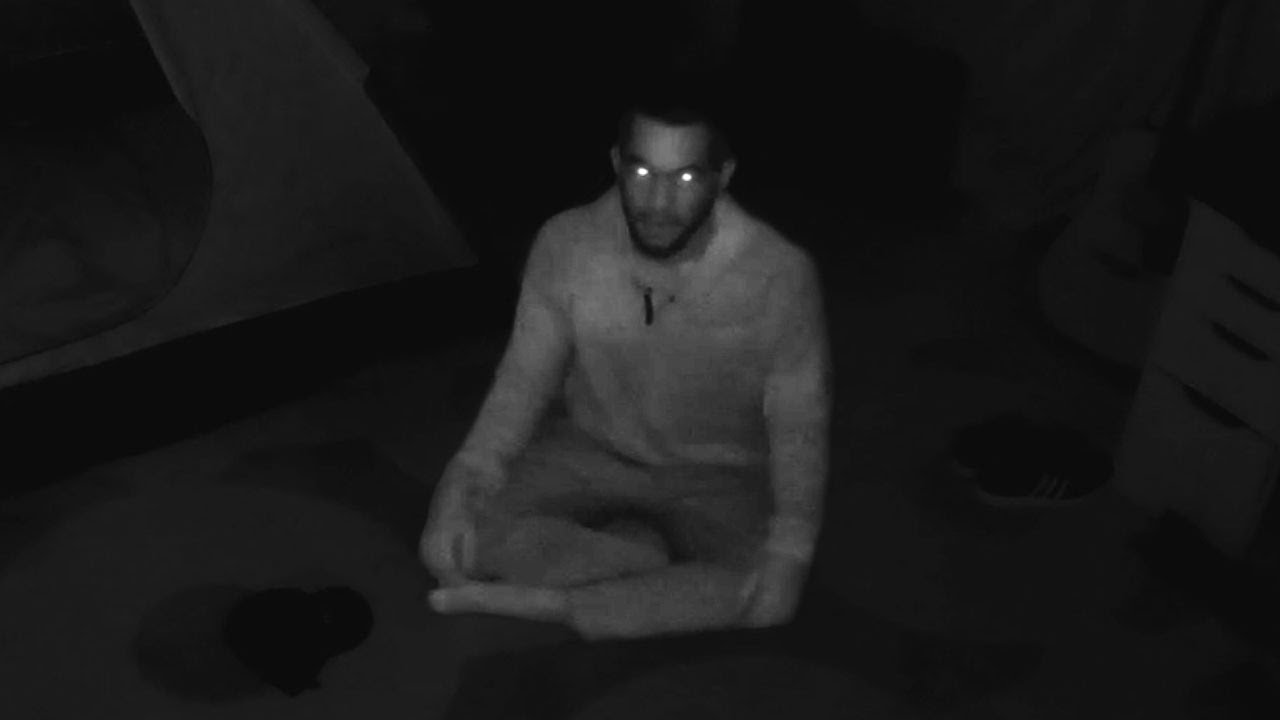
At 11:59 p.m. on December 31, 2019, the digital documentary channel Disrupt sealed a participant inside a completely lightless room and left him there for 155 hours — just short of a full week. No windows, no screens, no glowing power buttons, nothing. The resulting film, “I spent a week in darkness, here’s what I saw,” tracks what happens to a person’s mind and body when every trace of light is stripped away for that long.
- The experiment began December 31, 2019, at 11:59 p.m. and ran for 155 continuous hours in a sealed, pitch-black room.
- Producers eliminated every light source — no sunlight, no window access, no screens or standby indicators of any kind.
- It followed Disrupt’s earlier viral experiment, “I spent a week in a VR headset, here’s what happened,” extending the channel’s format of extreme, self-imposed sensory experiments.
The Setup
Disrupt built its reputation on isolating a single variable and living inside it on camera. After the VR-headset experiment showed how far the channel could push a controlled deprivation format, the team went further: instead of removing a sense through a device, they removed an entire sense from the environment itself. The room was stripped of every conceivable light leak — no LED indicators, no daylight seeping through a curtain gap, nothing electronic left glowing in a corner.
The rules were simple and absolute for the full 155 hours: total blackout, no exceptions. That single constraint turned an ordinary room into something closer to a sensory-deprivation chamber, the kind of environment survivalists and endurance testers — like the subjects in the Air Force Special Warfare PAST Test — train to tolerate under very different pressures.
Disorientation Sets In
The first stretch of the week was the roughest, by the participant’s own account. Moving through a space with zero visual reference points meant stumbling, misjudging distances, and losing track of simple things like where a door or a wall actually was. That disorientation didn’t stay confined to waking hours — it bled into sleep too, producing a low, persistent anxiety that didn’t have an obvious source to point to.
Time perception was one of the first casualties. Without daylight cycles or screens to anchor a sense of “now,” the days blurred into an undifferentiated stretch, and the participant described losing any reliable feel for how much time had actually passed.
The Senses Recalibrate
By the middle of the week, something shifted. With sight removed from the equation, the remaining senses sharpened noticeably. The texture of the air, the sound of insects outside the room, the vibration of footsteps, the faint rustle of movement — all of it became far more vivid than it would register under normal conditions.
With my eyes useless, my ears, nose, and touch became more sensitive, and the passing breeze, vibrations of footsteps, or the sound of things being moved around, became vivid in the absence of the visual stimuli.
That recalibration is a documented feature of extended sensory deprivation, not a fluke — deny the brain its dominant input long enough and it starts leaning harder on whatever’s left. It’s the same principle that shows up in blackout survival gear built for total-darkness sleep, like the setup reviewed in the Coleman Instant Up 10P Lighted Northstar Darkroom Tent, just pushed to a far more extreme and involuntary degree.
Hallucinations and Dream States
As the hours stacked up, the participant began reporting visual hallucinations — images generated internally with no external light to have produced them. He also described his dreams becoming unusually vivid and immersive, almost like a separate layer of consciousness he could move through and, at times, direct. Freed from visual cues entirely, his subconscious appeared to fill the vacuum with imagery that felt, in his words, more tangible than ordinary dreaming.
Those effects line up with what’s been documented in isolation and confinement studies for decades: strip away external sensory input long enough, and the brain manufactures its own. The 155-hour runtime gave Disrupt enough footage to trace that progression in real time, from early panic to eventual, almost meditative adaptation.
Disrupt built its channel on turning one uncomfortable premise into a week-long, camera-documented endurance test, and the darkness experiment did exactly that — a single man, one sealed room, 155 hours, and a mind that started generating its own light show once the real thing was gone for good.






The Man Behind the Most Grueling Footrace on Earth
How Hong Kong Protesters Evade Surveillance With Tech
The Godmother Of Drumming Plays “Down With The Sickness”
INSIDE BARBARA CORCORAN’S $13M PENTHOUSE
Slow motion of 50 cal sniper shot