

 InfoSearched
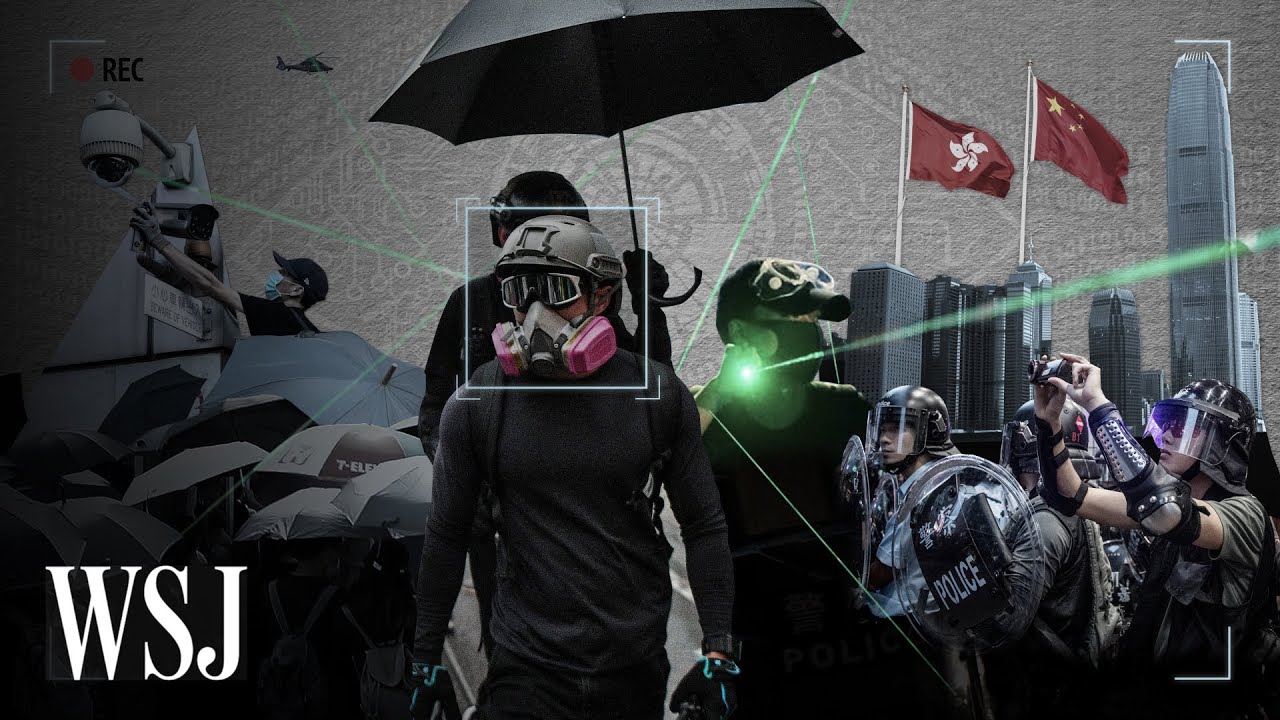
Leaderless and facing a surveillance state, Hong Kong’s protesters built their own counter-intelligence playbook out of burner SIMs, laser pointers and spray paint.
Since the anti-extradition bill demonstrations erupted in 2019, Hong Kong’s streets have doubled as a live-fire test of digital tradecraft. With no central leadership to target, police and Beijing-aligned monitoring systems have instead tried to identify individuals — through facial recognition, phone tracking and transit records — turning every march into a cat-and-mouse contest over who can stay anonymous.
- Protesters relied on Telegram and the LIHKG forum to coordinate crowd movements and vote on tactics without exposing their identities.
- Frontline tactics included laser pointers aimed at cameras and police lines, spray-painted CCTV lenses, and “umbrella walls” used to block facial-recognition shots.
- On August 24, 2019, protesters in Kwun Tong tore down newly installed “smart lampposts” over fears their sensors and Bluetooth beacons were being used for mass tracking.
Building a Digital Blind Spot
Telegram became the backbone of protest logistics, used to broadcast meeting points, warn of police movements and put tactical decisions to an instant vote. LIHKG, a Reddit-style forum popular in Hong Kong, filled a similar role for open debate and crowd-sourced decision-making, letting a movement with no formal leaders still move as one.
To keep that traffic out of reach of state monitoring, activists layered VPNs on top of their messaging apps and swapped registered SIM cards for prepaid, cash-bought ones that couldn’t be tied back to a name. Many also disabled Face ID and Touch ID on their phones in favor of passcodes, closing off the legal gray area that lets police physically force open a locked device with a fingerprint or a glance.
AirDrop as a Broadcast Channel
One of the more inventive workarounds documented by The Wall Street Journal was protesters’ use of Apple’s AirDrop feature to blast flyers, maps and warnings to every iPhone within Bluetooth range on subway trains and in stations — no phone number, cell signal or app account required. It let organizers reach total strangers in a crowded MTR car instantly, with nothing for authorities to trace back to a sender.
Fearing facial recognition and digital tracking, activists operated under a constant cat-and-mouse dynamic with police and state monitoring systems.
Blinding the Cameras on the Street
Away from screens, the tactics got physical. Demonstrators pointed handheld laser pointers at surveillance cameras and police lines to overload the optical sensors feeding facial-recognition systems, while others spray-painted camera lenses outright. Crowds also formed “umbrella walls,” raising open umbrellas in unison to block cameras and photographers from getting a clean shot of any individual face.
Transit anonymity mattered just as much as street anonymity. Rather than tap through turnstiles with a registered smart Octopus card — which logs a rider’s travel history — many protesters bought single-use cash tickets at MTR stations, leaving no digital trail of where they entered or exited the system.
The Smart Lamppost Backlash
The sharpest flashpoint came on August 24, 2019, in Kwun Tong, where protesters climbed and dismantled a bank of newly installed municipal “smart lampposts.” City officials had described the poles as tools for traffic and weather data, but demonstrators pointed to their embedded cameras and Bluetooth beacons as evidence they doubled as a tracking network, and tore several down rather than wait to find out.
The lamppost takedown became a template for how the movement treated infrastructure it didn’t trust — not a protest against a policy, but a physical removal of the hardware itself. Whether Hong Kong authorities install a next generation of sensors with more transparency about their data use, or push back harder against tampering, remains the open question hanging over every new pole that goes up on a Kowloon street corner.









Cats vs Invisible Maze
Human-Powered Helicopter
We Built Our Dream Home, FROM A KIT!
Why people are choosing to quit social media
Whale jumps out of nowhere during sight seeing tour.